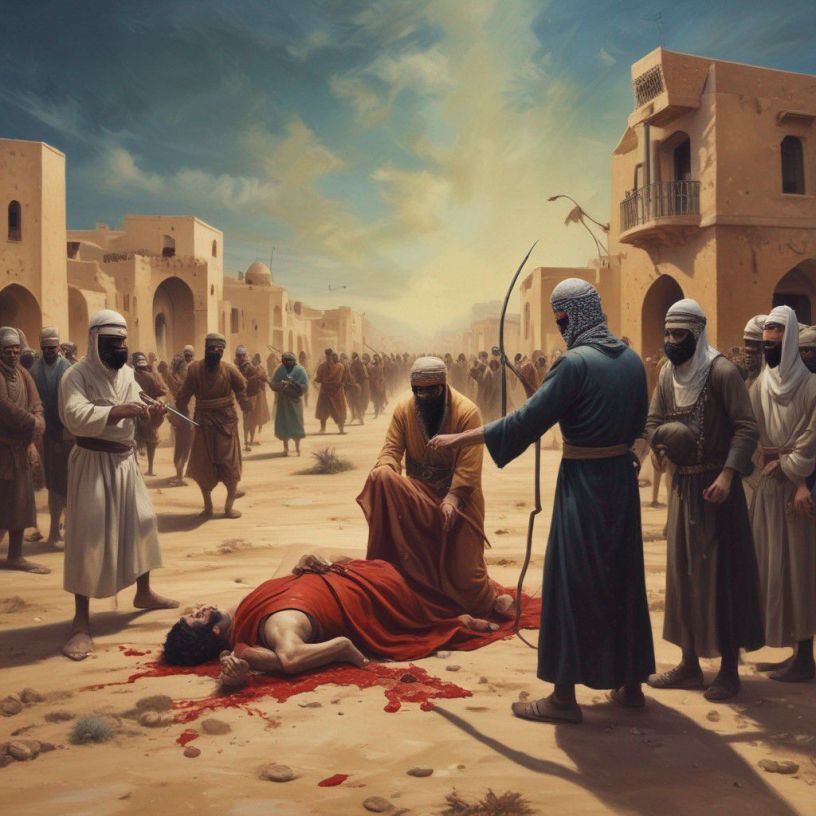
The rapid expansion of Islam across North Africa in the 7th and 8th centuries is a fascinating chapter in history. Often portrayed as a simple “Join or Die” scenario, the reality is far more nuanced. While military might played a role, the conquest was fueled by a combination of strategic advantages and a complex relationship with the existing populations.
The Warriors of the Desert:
The Arab armies of the Rashidun and Umayyad Caliphates were a formidable force. Their recent conquests and strong religious zeal fueled their military prowess. Facing them were the Byzantines, who controlled parts of North Africa, but were weakened by internal struggles. The Arabs’ desert warfare tactics, honed in the harsh terrains of the Middle East, proved highly effective against the often-heavily armored Byzantines. The vastness of the Sahara also became their ally, making it difficult for the Byzantines to track and engage their swift armies.
Beyond the Battlefield:
Military conquest wasn’t the only factor at play. The Berbers, the indigenous North African people, were divided. Some Berber groups saw the Arabs as potential allies against the Byzantines. Islam, with its message of equality and social mobility, also held appeal for some Berbers. This, along with the pragmatic benefits of aligning with the victors, facilitated conversion.
Conversion, Not Coercion:
It’s important to remember that conversion to Islam wasn’t always immediate or forced. The process of Islamization continued for centuries after the initial conquests. Religious tolerance played a role, with conquered populations allowed to maintain their own faiths in some cases, as long as they paid taxes. This approach fostered a gradual integration of Islamic beliefs and practices into the existing culture.
A Legacy Beyond Conquest:
The Islamic conquest of North Africa had a profound and lasting impact on the region. It ushered in a new era of political and cultural unity, while also leaving a rich architectural and intellectual legacy. While the methods employed by groups like ISIS/ISIL rely solely on brutality, the historical spread of Islam demonstrates how religion, strategy, and interaction with local populations can lead to a more complex and long-lasting influence.
The Debate Continues:
The historical understanding of the Arab Conquests and the spread of Islam is a subject of ongoing scholarly debate. While military conquest undoubtedly played a role, some historians emphasize the importance of trade networks and the peaceful interactions between Arab merchants and local populations. Additionally, the role of prominent Islamic figures and the establishment of educational centers in newly conquered territories are seen as significant factors. Further research continues to shed light on the complexities of this pivotal moment in North African history.
Discover more from WPS News
Subscribe to get the latest posts sent to your email.
 WPS News