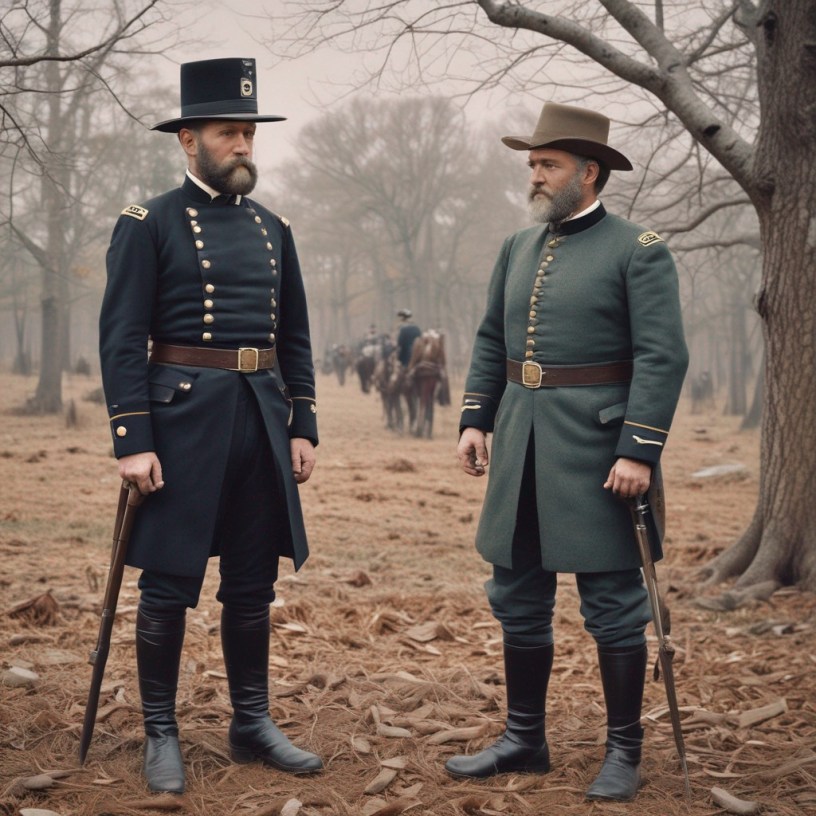
The American Civil War (1861-1865) and World War II in Europe (1939-1945) were two major conflicts that shaped the course of history in profound ways. Both wars involved deep-seated racial ideologies that influenced the actions of the belligerents – the Confederates in the Civil War and the Nazis in WWII. Furthermore, the aftermath of these conflicts saw the United States grappling with the legacies of traitors and war criminals in different ways.
Racist Theosophy of the Confederates and Nazis
The Confederates in the American Civil War and the Nazis in World War II shared a common thread of racist ideology that sought to justify their actions through a warped sense of racial superiority. The Confederates believed in the institution of slavery as essential to their way of life, viewing African Americans as inferior and deserving of subjugation. This belief was enshrined in their secession documents and was a central tenet of their cause.
Similarly, the Nazis under Adolf Hitler espoused a racist doctrine that culminated in the Holocaust, the systematic genocide of six million Jews and millions of others deemed undesirable by the regime. The Nazis believed in the concept of a “master race” and sought to eradicate those they deemed racially inferior, such as Jews, Romani people, and disabled individuals.
Comparing the Wars
The American Civil War and WWII in Europe differed in scope, scale, and global impact. The Civil War was a domestic conflict fought primarily over the issue of slavery and the secession of Southern states from the Union. It resulted in over 600,000 deaths and the abolition of slavery in the United States.
In contrast, WWII was a global conflict involving multiple countries and theaters of war. It resulted in the deaths of over 70 million people and the devastation of much of Europe. The war ended with the defeat of the Axis powers, including Nazi Germany, and the establishment of the United Nations to prevent future conflicts.
Dealing with Traitors and War Criminals
After the American Civil War, the United States faced the challenge of reconstructing the Southern states and reintegrating former Confederates into the Union. While Confederate leaders were granted amnesty and pardons by President Andrew Johnson, the process of Reconstruction was marred by continued racial violence and discrimination against African Americans.
In contrast, after WWII, the Allies held the Nuremberg Trials to prosecute prominent Nazi leaders for war crimes and crimes against humanity. The trials established the principle of individual accountability for atrocities committed during wartime and set a precedent for future international criminal tribunals.
Cultural Legacy of the Civil War in the USA
As of 2020, the United States continues to grapple with the cultural legacy of the Civil War, particularly regarding issues of race, identity, and historical memory. Debates over the display of Confederate symbols, the renaming of military bases named after Confederate generals, and the teaching of Civil War history in schools reflect the ongoing struggle to confront the nation’s past and its implications for the present.
In conclusion, the American Civil War and WWII in Europe were defining moments in history that shaped the course of nations and societies. Both conflicts were marked by racist ideologies that influenced the actions of the belligerents and left a lasting impact on subsequent generations. The ways in which the US dealt with traitors and war criminals in the aftermath of these conflicts reflect the complex and contested nature of historical memory and national identity.
Discover more from WPS News
Subscribe to get the latest posts sent to your email.
 WPS News