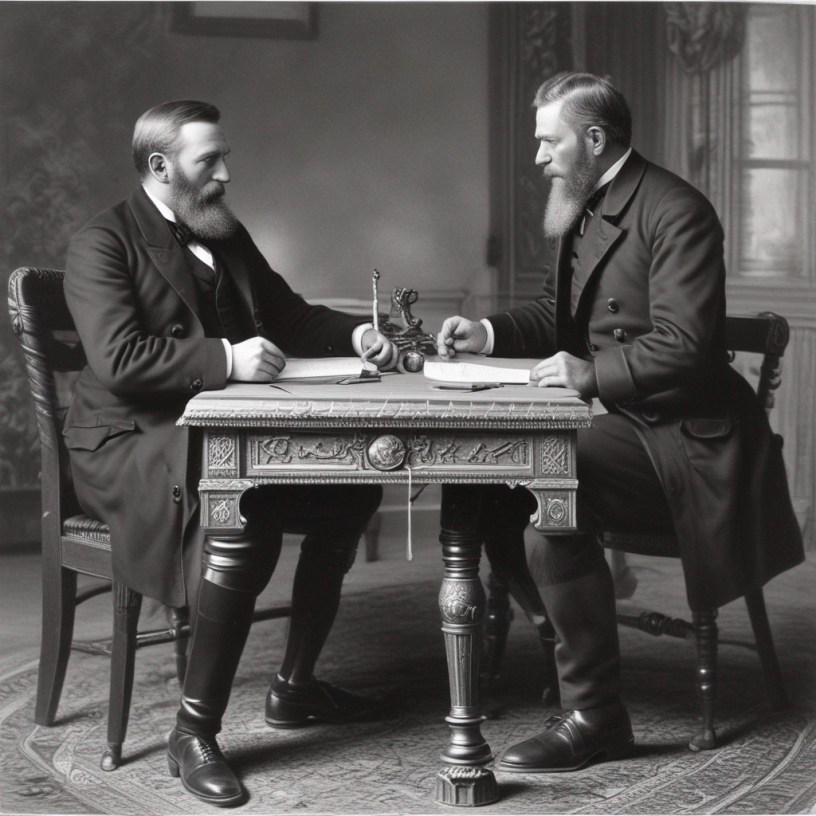
In the aftermath of the American Civil War and World War II, the approaches taken by political leaders towards the defeated Confederate leadership and Nazi officials differed significantly. President Andrew Johnson’s leniency towards Confederate leaders stood in stark contrast to the uncompromising stance adopted by President Harry Truman, General George Marshall, Prime Minister Winston Churchill, and Soviet leader Joseph Stalin against the Nazis. This essay explores the reasons behind these differing approaches and their potential impact on the current outcome of the two racist philosophies as of 2020.
Andrew Johnson’s Lax Approach:
President Andrew Johnson, who succeeded Abraham Lincoln after his assassination, pursued a policy of Reconstruction that aimed at quickly reintegrating the Southern states back into the Union. Johnson granted amnesty and pardons to many Confederate leaders, including Jefferson Davis, and sought to restore the pre-war status quo as much as possible. His leniency towards the former Confederates was motivated by a desire for national unity and to prevent further division in the country.
Truman, Marshall, Churchill, and Stalin’s Unforgiving Stance:
In contrast, following World War II, President Harry Truman, General George Marshall, Prime Minister Winston Churchill, and Soviet leader Joseph Stalin were resolute in holding Nazi officials accountable for their crimes. The Allies conducted the Nuremberg Trials to prosecute prominent Nazi leaders for war crimes, crimes against humanity, and genocide. This marked a significant departure from the lenient approach taken towards the defeated Confederates after the Civil War.
Truman, Marshall, Churchill, and Stalin recognized the need for justice and accountability to prevent the resurgence of Nazism and ensure that those responsible for the atrocities committed during the war were held to account. The Nuremberg Trials established a precedent for international law and the prosecution of individuals for crimes on a global scale.
Impact on the Current Outcome of Racist Philosophies:
The differing approaches towards Confederate leaders and Nazis have had lasting implications on the current outcome of the two racist philosophies as of 2020. Johnson’s leniency towards the Confederates allowed for the perpetuation of the Lost Cause narrative and the glorification of the Confederate cause in some parts of American society. The lack of accountability for Confederate leaders contributed to a legacy of racial segregation and inequality that continues to impact American society.
In contrast, the Allies’ uncompromising stance against the Nazis and the prosecution of war criminals at Nuremberg helped to delegitimize and condemn the racist ideology of Nazism. The trials served as a stark reminder of the horrors of the Holocaust and the consequences of racial hatred and discrimination. The pursuit of justice against the Nazis contributed to the establishment of international norms and institutions aimed at preventing future atrocities and promoting human rights.
Conclusion:
The contrasting approaches taken towards Confederate leaders and Nazis by political leaders in the aftermath of the American Civil War and World War II have had a profound impact on the legacy of racism and intolerance in their respective societies. The lessons learned from history underscore the importance of accountability, justice, and remembrance in confronting racist ideologies and promoting a more just and inclusive society.
As of 2020, the differing outcomes of these approaches can be seen in the continued struggles over historical memory, racial justice, and the legacy of racism in the United States and Europe. The choices made by leaders in the past continue to shape the present, highlighting the enduring importance of confronting the legacies of racism and intolerance to build a more equitable and peaceful future.
Discover more from WPS News
Subscribe to get the latest posts sent to your email.
 WPS News