Lani, a captivating individual with great stage presence, was once a supervisor at Addison Apple, although not directly overseeing Allen Guadalupe. Known for her beauty and ability to command attention in group settings, she had a particular fondness for blue jeans. Allen Guadalupe recounts a valuable lesson learned from Lani that sheds light on the collapse of the Occupy movement on a global scale.
Reflecting on the advice passed down from previous generations to avoid discussions on politics and religion, Lani shared her mother’s admonition against engaging in these topics. The ethos of maintaining peace and harmony within the household, prevalent among the GI and Silent generations post-World War II, was ingrained in both Lani and Allen Guadalupe. However, Allen Guadalupe, a latchkey kid of earlier times, found himself delving into these forbidden territories in search of his identity.
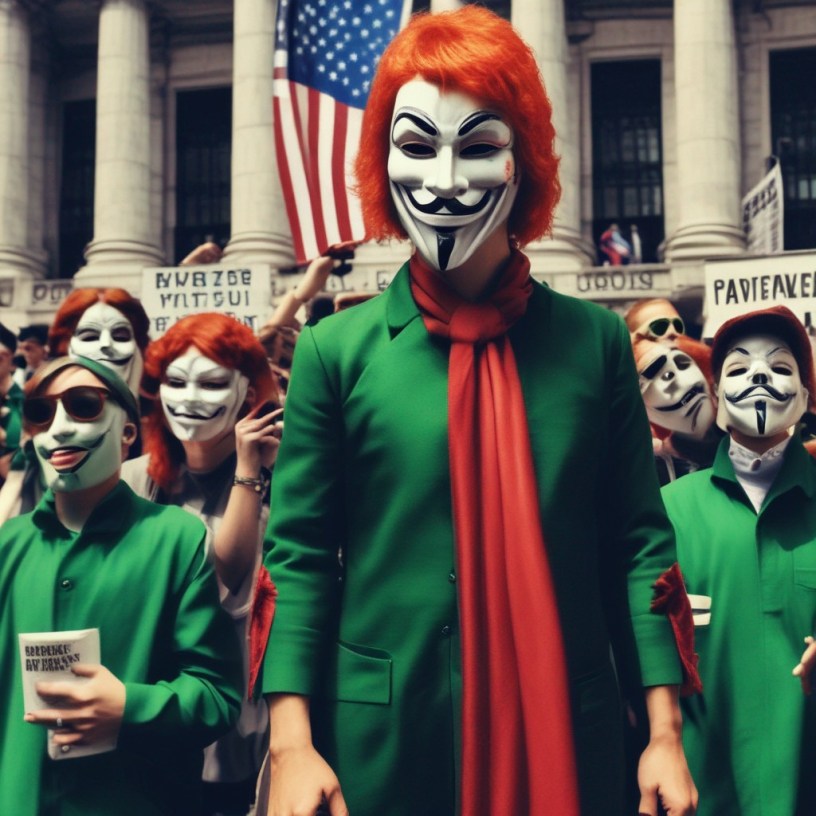
The narrative shifts to the era from the aftermath of the Vietnam War until the present day, where religion and politics dominate the conversations of Baby Boomers and Generation X, albeit with differing perspectives. Fast forward to 2011, the year of the Occupy Movement, a global initiative advocating for political and income equality. While the movement primarily focused on political discourse, religion was either brushed aside or met with disdain, leading to its eventual downfall.
Allen Guadalupe posits that the failure of Occupy can be attributed to its neglect of the intersection between politics and religion. By prioritizing diverse political ideologies while disregarding or disrespecting religious beliefs, the movement alienated potential allies and supporters. The relentless emphasis on political activism, epitomized by the slogan “Occupy Wall Street,” overshadowed the need for a more inclusive and holistic approach.
Moreover, the author underscores the intense frustration and anger that fueled the Occupy Movement. It served as a cathartic release of pent-up grievances against the corporate takeover of the American political process. As Xers, Millennials, and Gen Z individuals mobilized against the perceived failures of the system, the movement evolved from coalition-building to a visceral outpouring of discontent.
After the initial months, Occupy lost its focus on collaboration and shifted towards expressing raw emotion and outrage. The growing sentiment of business entities being “too big to fail” and individuals being deemed expendable underscored the societal disillusionment that permeated the movement. Even the Obama administration, once seen as a beacon of hope, faced scrutiny for its ties to mega banks, further fueling public discontent.
The author highlights the challenges faced by Occupy activists, including police crackdowns on peaceful protests and a media narrative that often sensationalized or misrepresented their efforts. Despite the movement’s ultimate collapse, the legacy of Occupy serves as a reminder of the power of grassroots mobilization and the complexities inherent in navigating the intersection of politics, religion, and societal change.
In conclusion, Allen Guadalupe’s reflections on Lani’s wisdom offer valuable insights into the multifaceted dynamics that shaped the Occupy Movement. By acknowledging the interconnected nature of political activism, religious discourse, and social upheaval, individuals can strive for a more inclusive and sustainable approach to effecting meaningful change in society.
Today marks the 13th Anniversary of Occupy Wall Street .
Occupy Wall Street (OWS) was a left-wing populist movement against economic inequality, corporate greed, big finance, and the influence of money in politics that began in Zuccotti Park, located in New York City’s Financial District, and lasted for fifty-nine days—from September 17 to November 15, 2011. — Wikipedia contributors, “Occupy Wall Street,” Wikipedia, The Free Encyclopedia, https://en.wikipedia.org/w/index.php?title=Occupy_Wall_Street&oldid=1227841294 (accessed June 18, 2024).
The Occupy movement was an international populist socio-political movement that expressed opposition to social and economic inequality and to the perceived lack of real democracy around the world. — Wikipedia contributors, “Occupy movement,” Wikipedia, The Free Encyclopedia, https://en.wikipedia.org/w/index.php?title=Occupy_movement&oldid=1228004865 (accessed June 18, 2024).
Discover more from WPS News
Subscribe to get the latest posts sent to your email.
 WPS News