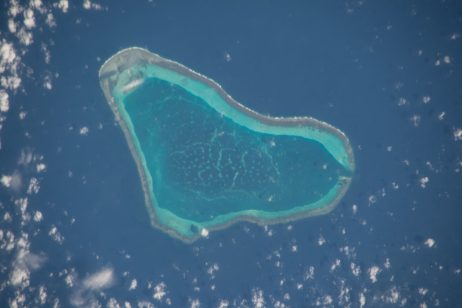
The Scarborough Shoal Standoff: A History of Tension in the South China Sea (Last Updated: September 28, 2024)
The Scarborough Shoal, a tiny boomerang-shaped outcrop in the South China Sea, has been a flashpoint for tension between China and the Philippines for over a decade. Here’s a timeline of key events that have unfolded since the first incident:
- 2012: A standoff erupts after Philippine authorities arrest Chinese fishermen operating near the shoal. The Philippines, citing its sovereign rights within its Exclusive Economic Zone (EEZ), impounds the fishing vessel. China retaliates by deploying maritime surveillance vessels, escalating tensions. The Philippines eventually releases the fishermen, but tensions remain high.
- 2013: The Philippines initiates arbitration proceedings against China’s expansive claims in the South China Sea under the United Nations Convention on the Law of the Sea (UNCLOS).
- 2016: The Permanent Court of Arbitration in The Hague issues a landmark ruling, declaring China’s claims to historic rights over most of the South China Sea to be without legal basis. The ruling also affirms the Philippines’ sovereign rights within its EEZ, including the Scarborough Shoal. China rejects the ruling.
- 2017: Following the Hague ruling, there’s a period of relative calm. However, Chinese coast guard and fishing vessels continue to maintain a presence near the shoal, occasionally harassing Filipino fishermen.
- 2019: A new incident flares up when a Philippine patrol vessel confronts a Chinese survey ship operating within the Philippines’ EEZ near the Scarborough Shoal. The standoff continues for several weeks before the Chinese vessel eventually withdraws.
- 2020: Throughout 2020, reports emerge of an increased Chinese presence near the shoal, with concerns growing about China’s intentions. There are also reports of Chinese militia vessels harassing Filipino fishermen and intimidating Philippine coast guard forces.
- Present (September 2024): The situation remains tense, with continued reports of Chinese activity near the Scarborough Shoal. The Philippines has expressed concern about China’s growing assertiveness and its disregard for international law.
Analysis of War Risk:
While the Scarborough Shoal situation is undeniably concerning, it’s difficult to definitively assess the immediate threat of war. Here’s a look at some factors to consider:
- China’s Growing Military: China has been rapidly modernizing its military, particularly its naval capabilities. This has led to concerns about China’s potential to use force to assert its claims in the South China Sea.
- Escalating Tensions: The increasing frequency and intensity of incidents like those at Scarborough Shoal raise the risk of miscalculation or unintended escalation.
- US Involvement: The United States has a long-standing commitment to freedom of navigation in the South China Sea and has repeatedly challenged China’s expansive claims. The US maintains a strong military presence in the region, which could serve as a deterrent to Chinese aggression.
- Diplomatic Efforts: Despite the tensions, both China and the Philippines have engaged in diplomatic efforts to manage the situation. Both countries are aware of the devastating consequences of a full-blown military conflict.
Conclusion:
The situation at the Scarborough Shoal is a stark reminder of the ongoing tensions in the South China Sea. While the immediate threat of war may be difficult to gauge, China’s increasing assertiveness and disregard for international law remain a cause for concern. Continued diplomatic efforts, coupled with a firm commitment to upholding international law, are crucial to avoid a wider conflict in the Indo-Pacific.
The tension sparked by China’s encroachment on Philippine territory began twelve years ago. Children have grown up since China unilaterally decided to steal resources from its less populated neighbors. China’s “Gray Zone” tactics have thus far been effective. The world largely ignored China’s encroachments until very recently. Since 2023, everyone in the region has been increasing their military expenditures due to China’s actions. While many have suggested that this situation resembles a path to war, that may not necessarily be the case. Xi Jinping could pass away, and a new CCP leader might prioritize China’s internal issues. As John Connor famously said, “The future’s not set. There’s no fate but what we make for ourselves.”
Sources:
- The Permanent Court of Arbitration: The South China Sea Arbitration (2016)
- Council on Foreign Relations: China’s Maritime Dispute with the Philippines
- The Diplomat: Why the Scarborough Shoal Dispute Matters
Disclaimer: This blog post is for informational purposes only and does not constitute professional analysis.
Discover more from WPS News
Subscribe to get the latest posts sent to your email.
 WPS News