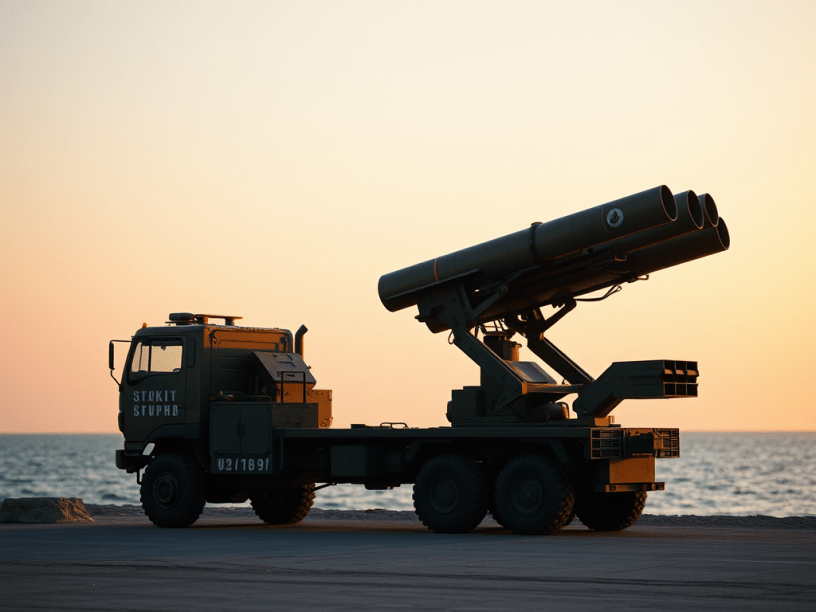
The Philippines, an archipelago nation strategically located in the South China Sea, faces a complex security landscape. Territorial disputes, maritime security challenges, and the ever-evolving nature of warfare necessitate a robust and modernized defense system. In this context, the recent call by the Armed Forces of the Philippines (AFP) Chief of Staff, General Romeo Brawner Jr., for the acquisition of the US-made Typhon Missile System signifies a critical step towards bolstering the country’s missile defense capabilities.
The impetus for a comprehensive missile defense system stems from the ongoing modernization program of the AFP. This program, guided by the Comprehensive Archipelagic Defense Concept (CADC), aims to transform the AFP into a more credible and capable force. The CADC recognizes the archipelagic nature of the Philippines and emphasizes the need for a multi-layered defense strategy encompassing air, maritime, and land domains. A critical component of this strategy is the development of a potent missile defense system.
General Brawner’s request for the Typhon Missile System highlights the specific capabilities the AFP seeks to acquire. The Typhon system is a land-based surface-to-surface missile system known for its versatility. It can launch various missiles, including the Tomahawk Land Attack Missile and the Standard Missile-6. The Tomahawk Land Attack Missile offers long-range precision strike capabilities, while the Standard Missile-6 provides robust anti-air defense against aerial threats.
The integration of such a system into the Philippine defense apparatus would significantly enhance the country’s ability to address contemporary security challenges. The long-range strike capabilities of the Tomahawk Land Attack Missile would enable the AFP to deter and counter potential aggressors. This deterrence could prove particularly valuable in the context of the ongoing territorial disputes in the South China Sea. Additionally, the Standard Missile-6’s anti-air defense capabilities would strengthen the Philippines’ capacity to safeguard its airspace from missile attacks and hostile aircraft.
The envisioned “integrated defense” outlined in the CADC goes beyond the mere acquisition of weapon systems. It emphasizes the importance of developing a network of sensors, radars, and communication systems that can effectively detect, track, and engage incoming threats. The Typhon Missile System, when integrated with such a network, would form a crucial node in this integrated defense architecture.
However, the pursuit of a robust missile defense system is not without its challenges. The high cost of acquiring and maintaining such advanced weaponry is a significant consideration. The Philippines must carefully weigh the economic implications of such an endeavor while ensuring the long-term sustainability of its defense modernization program.
Furthermore, the geopolitical complexities of the region must be navigated with prudence. The introduction of advanced missile systems could potentially trigger concerns among neighboring countries. The Philippines must strive for transparency in its defense modernization efforts and engage in confidence-building measures to alleviate any apprehensions.
In conclusion, the Philippines’ quest for a comprehensive missile defense system, as exemplified by the request for the Typhon Missile System, is a strategic imperative. It aligns with the goals of the AFP modernization program and the CADC, bolstering the country’s deterrence capabilities and safeguarding its territorial integrity. While challenges exist in terms of cost and regional considerations, a well-planned and transparent approach can ensure the successful development of a robust missile defense system, ultimately contributing to a more secure and stable Philippines.
Source: PH needs comprehensive missile defense system: AFP chief
Discover more from WPS News
Subscribe to get the latest posts sent to your email.
 WPS News