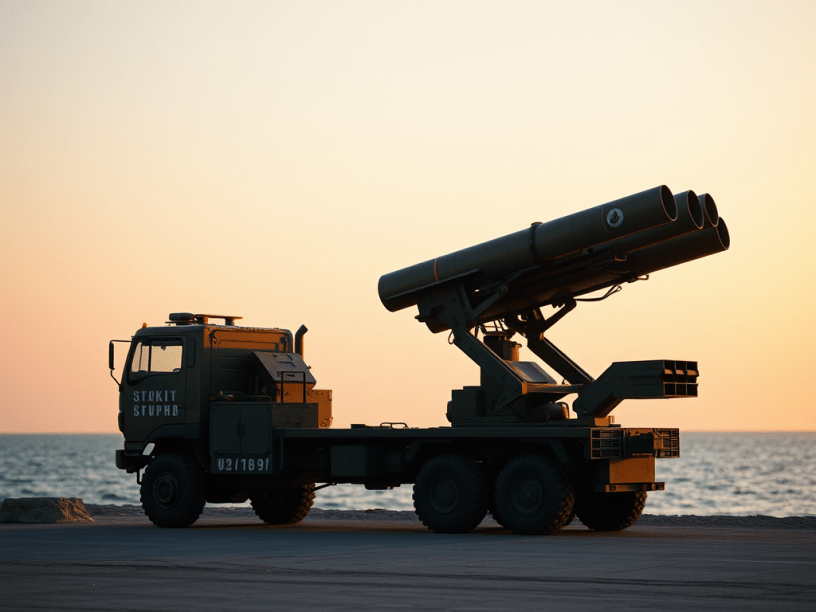
The Philippines News Agency (PNA) recently reported on the country’s pursuit of a comprehensive missile defense system [1]. This initiative, outlined in the Comprehensive Archipelagic Defense Concept (CADC), is part of the ongoing modernization program for the Armed Forces of the Philippines (AFP) [1]. The AFP chief, Gen. Romeo Brawner Jr., has requested the Typhon Missile System from the US, capable of firing Tomahawk Land Attack Missiles and Standard Missile-6 [1].
China has consistently voiced opposition to the Philippines’ efforts to bolster its defenses. This stance appears hypocritical considering China’s own vast arsenal of missiles that can easily reach the Philippines from the Chinese mainland.
A One-Sided Threat Perception
China’s objection to the Philippines’ acquisition of missile defense capabilities raises a critical question: Why does China view the Philippines’ limited missile defense system as a threat, while simultaneously ignoring its own offensive missile stockpile?
China’s position seems to be a tactic of deflection. By portraying the Philippines’ defensive measures as a threat, China seeks to downplay its own role in destabilizing the Indo-Pacific region. China’s militarization of the South China Sea and its disregard for international law are far greater threats to regional peace and stability than anything the Philippines is considering.
The Need for Balance
Maintaining peace in the Indo-Pacific requires a balance of power. The Philippines, a nation with legitimate security concerns, has the right to defend itself. China’s opposition to the Philippines’ efforts to strengthen its defenses smacks of hypocrisy in light of China’s own aggressive military posture.
China should prioritize promoting peace and stability in the region. This would involve respecting international law, resolving territorial disputes peacefully, and engaging in constructive dialogue with its neighbors. The Philippines’ modest efforts to acquire a defensive missile system should not be seen as a provocation, but rather as a reasonable response to the heightened tensions in the region.
WPS. Spark
This situation highlights the complex geopolitical landscape of the Indo-Pacific. The Philippines’ need for self-defense is undeniable, yet China’s objection exposes a troubling tendency to deflect responsibility for regional instability. We urge all parties involved to prioritize peaceful resolutions and work towards a more stable Indo-Pacific for the benefit of all nations.
Source: PH needs comprehensive missile defense system: AFP chief
Discover more from WPS News
Subscribe to get the latest posts sent to your email.
 WPS News