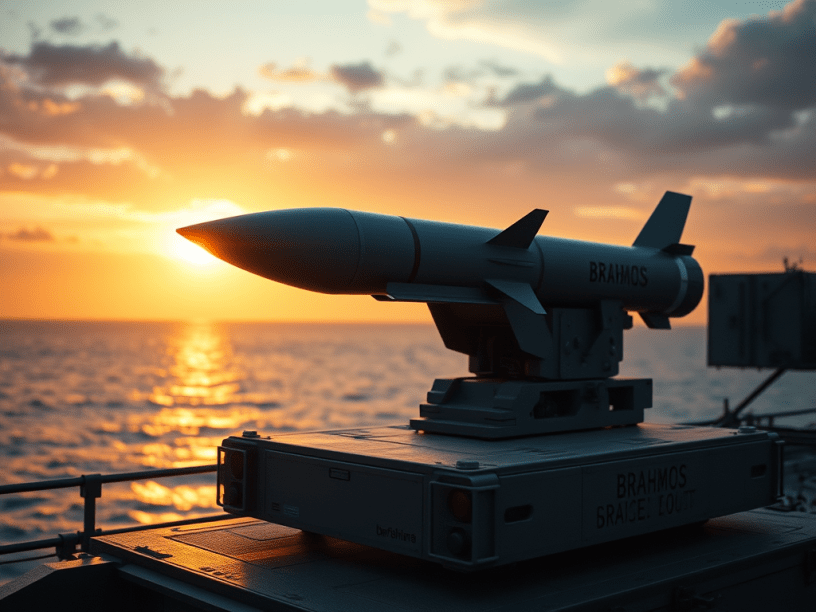
The Philippines has been navigating a complex geopolitical landscape in the South China Sea, with rising tensions with China over territorial disputes. In this context, the potential acquisition of BrahMos missiles from India has garnered significant attention.
What are BrahMos Missiles?
The BrahMos is a supersonic cruise missile developed jointly by India and Russia. (Source: Asian Military Review, April 2024) It boasts impressive capabilities:
- Supersonic Speed: With a speed exceeding Mach 2.8 (over three times the speed of sound), the BrahMos can evade most air defense systems.
- Long Range: Depending on the variant, the BrahMos can strike targets up to 290 kilometers away, significantly extending the Philippines’ reach in the South China Sea.
- Dual-Capable: The BrahMos can be launched from land, sea, and air platforms, offering flexibility in deployment. Land-based mobile launchers provide a dispersed and survivable launch capability.
- Anti-Ship Prowess: Primarily designed for anti-ship warfare, the BrahMos poses a significant threat to enemy vessels in the contested waters.
Unconfirmed Acquisition by the Philippines
While reports in April 2024 suggested the delivery of BrahMos missiles to the Philippines by India, (Source: Asian Military Review, April 2024) there has been no official confirmation from either government. This lack of confirmation leaves several questions unanswered:
- Number of Missiles: The number of missiles allegedly delivered remains unknown, impacting the overall impact on Philippine defense capabilities.
- Deployment Timeline: Even if acquired, integrating the BrahMos system into the Philippine military would require training and infrastructure development, potentially delaying operational deployment.
- Cost Considerations: The BrahMos is known to be an expensive weapon system. The financial implications for the Philippines remain unclear.
Strategic Implications
Despite the lack of confirmation, the potential acquisition of BrahMos missiles carries significant strategic weight:
- Deterrence: The long-range, anti-ship capabilities of the BrahMos could deter aggressive actions by China in the South China Sea.
- Alliance Signaling: Acquiring BrahMos missiles could be seen as a signal of the Philippines’ closer alignment with India, potentially strengthening regional security partnerships.
- Geopolitical Tensions: The introduction of such a potent weapon system could further escalate tensions in the region, requiring careful diplomatic handling.
Looking Ahead
The potential acquisition of BrahMos missiles by the Philippines is a story still unfolding. While the technical capabilities are impressive, several factors, including confirmation of the purchase, deployment timeline, and cost considerations, need to be addressed. The strategic implications highlight the complex geopolitical landscape in the South China Sea, and the Philippines’ efforts to navigate it.
Further Reading:
- Asian Military Review: https://www.voanews.com/a/amid-china-tensions-india-delivers-supersonic-cruise-missiles-to-philippines-/7581242.html
- Hoover Institution: https://www.hoover.org/ (Not directly related to BrahMos missiles)
- Newsweek: https://www.newsweek.com/china-us-philippines-weapon-system-missiles-asia-1940387 (Discusses US missile launcher deployment, not BrahMos)
Discover more from WPS News
Subscribe to get the latest posts sent to your email.
 WPS News