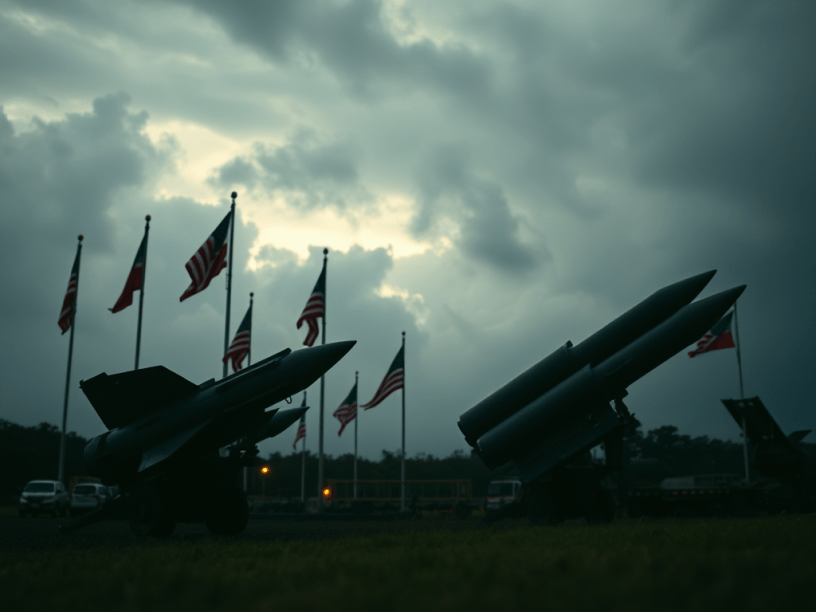
The recent deployment of US missiles in the Philippines has cast a long shadow, drawing comparisons to the tense standoff of the Cuban Missile Crisis in October 1962. While the situations differ in specifics, unsettling parallels emerge, prompting us to critically examine the potential for escalation in the Philippines case.
The Cuban Precedent: Brinkmanship and Brink of War
The Cuban Missile Crisis was a 13-day confrontation between the US and the Soviet Union over the placement of Soviet nuclear missiles in Cuba, just 90 miles from US shores. This act was seen as a direct threat to US security, and the world watched with bated breath as both superpowers engaged in a high-stakes game of brinkmanship. Naval quarantines, military mobilizations, and back-channel diplomacy brought the world to the precipice of nuclear war.
Similarities and Differences in the Philippine Scenario
The deployment of US missiles in the Philippines, while not nuclear, raises concerns about China’s security perception. China views it as a potential first-strike capability and a challenge to its growing regional influence. Here’s a breakdown of the points of comparison and contrast:
- Proximity: Unlike the Cuban situation, the US missiles in the Philippines are not geographically close enough to launch a direct attack on China’s mainland. However, the psychological impact of having US missiles in China’s backyard is significant.
- Military Capability: The Cuban missiles were offensive nuclear weapons, while the US missiles in the Philippines are defensive in nature (supposedly). However, China questions this characterization and fears the system’s long-range missile capabilities.
- Escalation Potential: The Cuban Missile Crisis was fueled by direct nuclear threats. The Philippine situation is currently less volatile, but the potential for miscalculation or an accident creating a chain reaction should not be discounted.
Lessons from History: Diplomacy Over Provocation
The Cuban Missile Crisis serves as a stark reminder of how quickly a regional conflict can escalate. Back-channel diplomacy ultimately defused the situation in 1962. In the Philippines case, open communication and transparency between the US, China, and the Philippines are crucial. Here are some key takeaways:
- Open Communication Channels: All parties must maintain open communication channels to prevent misunderstandings and miscalculations. Building trust requires a commitment to peaceful dialogue and a willingness to see things from each other’s perspective.
- Transparency and Assurance Mechanisms: The US needs to be transparent about the capabilities and purpose of the missile system. Likewise, the Philippines need to assure China that the missiles are not a threat. Confidence-building measures, such as joint military exercises or inspections of the missile sites, could go a long way in easing tensions.
- Focus on Regional Stability: Both the US and China, as major regional powers, have a responsibility to prioritize stability in Southeast Asia. This requires a commitment to peaceful conflict resolution and adherence to a rules-based order in the South China Sea.
Conclusion: Averting Another October Crisis
The Cuban Missile Crisis stands as a chilling reminder of the devastating consequences of nuclear brinkmanship. While the Philippine situation may not be an exact replica, the historical echoes are undeniable. Learning from past mistakes and prioritizing diplomacy over provocation are critical to preventing another October crisis. The US, China, and the Philippines must work together to find a peaceful resolution that ensures regional security for all.
This OP-ED is intended to spark a conversation about the importance of diplomacy and responsible leadership in navigating sensitive international relations. We, at WPS.News, believe in fostering dialogue and understanding to build a more peaceful and secure future.
Discover more from WPS News
Subscribe to get the latest posts sent to your email.
 WPS News