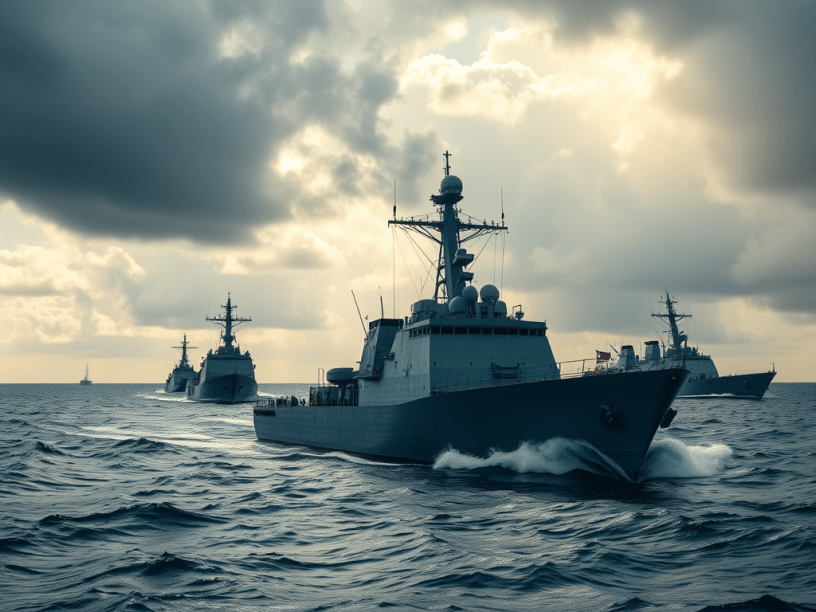
Heightened Tensions in the West Philippine Sea as Chinese Vessels Spark Concerns
November 7, 2024
The West Philippine Sea has become a focal point of geopolitical tension, following reports of increased Chinese naval activity near the Philippine Rise. Local officials and maritime security experts are expressing growing concerns over the implications these incursions may have for regional stability and national security.
In response to the escalating situation, the Armed Forces of the Philippines (AFP) have ramped up military readiness, engaging in extensive drills to fortify their operational capabilities. These measures come as the AFP aims to assert its presence and safeguard the nation’s maritime interests in this strategically vital area.
Demonstrating a commitment to collective security, the Philippines has been conducting joint sea and air exercises with allied nations including Australia, Japan, and New Zealand. These coordinated maneuvers, closely monitored by regional observers, serve as a strong statement of unity and collaboration among allied forces in the face of rising tensions. The exercises are viewed as a deterrent against the ongoing surveillance and potential aggressive movements from China’s navy, which has been observed closely trailing these joint activities.
As military activities escalate, authorities are urging citizens to remain informed about the developments shaping the geopolitical landscape in the West Philippine Sea. The current situation underscores the urgency for regional stability and a unified stance against any actions that threaten freedom of navigation in these critical maritime routes.
For ongoing updates on the situation, please visit West Philippine Sea Updates.
Stay tuned to WPS.News for the latest developments in this evolving story.
Op-Ed: Timing of Chinese Vessels in the Philippine Rise Raises Alarms
The recent appearance of Chinese vessels near the Philippine Rise, coinciding with Donald J. Trump’s election as the 47th President of the United States, cannot be dismissed as mere coincidence. This unsettling development invites scrutiny as it aligns with the broader narrative of geopolitical maneuvering in the West Philippine Sea, a region already fraught with tension.
Trump’s presidency is marked by unpredictable foreign policy, and his approach towards China has always been a mixed bag of confrontation and negotiation. As he steps into office, it’s likely that some factions within China may perceive this as an opportune moment to assert their influence and test the resolve of both the Philippines and the new U.S. administration. The historical context of U.S.-China relations adds a layer of complexity, especially with the Philippines straddling crucial maritime passages.
The timing of Chinese vessels surfacing just a day after Trump’s victory could signal a bold assertion of power, maintaining a presence in contested territories while gauging the reaction from the newly elected U.S. leader. Such moves may aim to exploit perceived vulnerabilities during a transition of power, further complicating diplomatic interventions and military readiness in the region.
This bold maneuver by Beijing should serve as a wake-up call for the Philippines and its allies. It highlights the urgent need for cohesive strategies to address not only immediate security concerns but also long-term implications inherent in the shifting global power dynamics. As nations prepare to navigate this new political landscape, it becomes increasingly vital for regional players to present a united front, ensuring that the waters of the West Philippine Sea remain secure and navigable for all.
As we grapple with these developments, the question remains: Will the incoming Trump administration recognize the strategic significance of this unfolding situation, or will it allow the Chinese narrative to dominate the discourse? The stakes are high, and vigilance is essential as we move forward into a new chapter in U.S.-Philippine-China relations.
Discover more from WPS News
Subscribe to get the latest posts sent to your email.
 WPS News