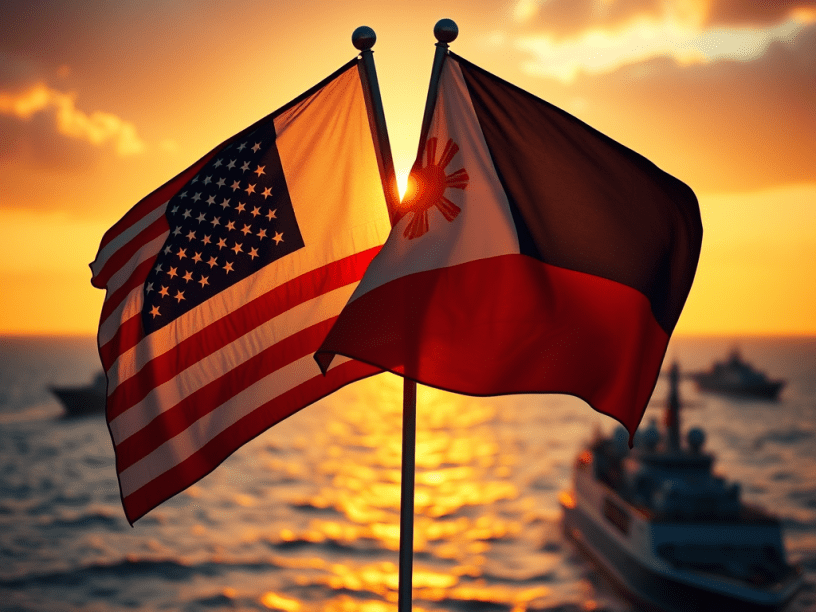
During Donald Trump’s presidency from January 2017 to January 2021, his administration adopted a complex approach to foreign policy that included various elements affecting U.S.-Philippines relations, particularly concerning China.
Overview of Trump’s Past Actions Pertaining to China and the Philippines:
1. Support for the Philippines: Trump’s administration generally maintained a strong defense and security partnership with the Philippines, emphasizing mutual defense agreements. This relationship is critical for the Philippines, especially in countering China’s assertive maritime claims in the South China Sea.
2. The 2016 UNCLOS Ruling: In July 2016, the Permanent Court of Arbitration ruled in favor of the Philippines, stating that China’s claims to historical rights within the “nine-dash line” had no legal basis. Trump’s administration welcomed the ruling but did not take strong action to enforce it against China. Instead, he often focused on bilateral negotiations and economic agreements, which did not directly confront China’s maritime assertiveness.
3. Military Exercises: Under Trump, the U.S. continued joint military exercises with the Philippines. This was a means to enhance military cooperation and readiness amid growing Chinese activities in the region.
4. Trade Relations: The Trump administration engaged in a broader strategy involving trade tariffs, which complicated international relations in Asia, including with the Philippines. However, the U.S. remained a critical trade partner for the Philippines.
What to Expect in a Future Trump Administration:
If Trump were to be elected for another term, the Philippines could expect several potential trends based on his past approach:
1. Continued Military Support: A future Trump administration may reaffirm military cooperation with the Philippines, maintaining a focus on security assistance and joint exercises as a counterbalance to China’s influence in the region.
2. Ambiguity Toward Confrontation: Similar to his previous term, Trump’s approach may continue to be characterized by a reluctance to directly confront China militarily, opting instead for economic agreements and negotiation-based diplomacy.
3. Focus on Nationalism and Economic Ties: Trump’s “America First” policy might lead to increased emphasis on economic relations. The Philippines could benefit from a focus on mutually beneficial trade agreements, as long as they align with U.S. interests.
4. Support for Regional Allies: In light of ongoing geopolitical tensions, especially regarding the South China Sea, the Philippines might find continued, albeit cautious, vocal support from a Trump administration for its territorial claims against Chinese expansionism.
5. Potential Strained Relations with China: Given the rhetoric and policies from Trump during his first term regarding Chinese trade practices and military expansion, a future administration led by him might adopt a more confrontational stance against China, aligning more closely with allies in the region like the Philippines.
In summary, while the Philippines can generally expect continued support from a future Trump administration in terms of military collaboration and diplomatic reassurance against China, the administration is likely to remain cautious about direct confrontations and enforcement of international rulings, favoring a more pragmatic approach that emphasizes bilateral relations and economic partnerships.
Discover more from WPS News
Subscribe to get the latest posts sent to your email.
 WPS News