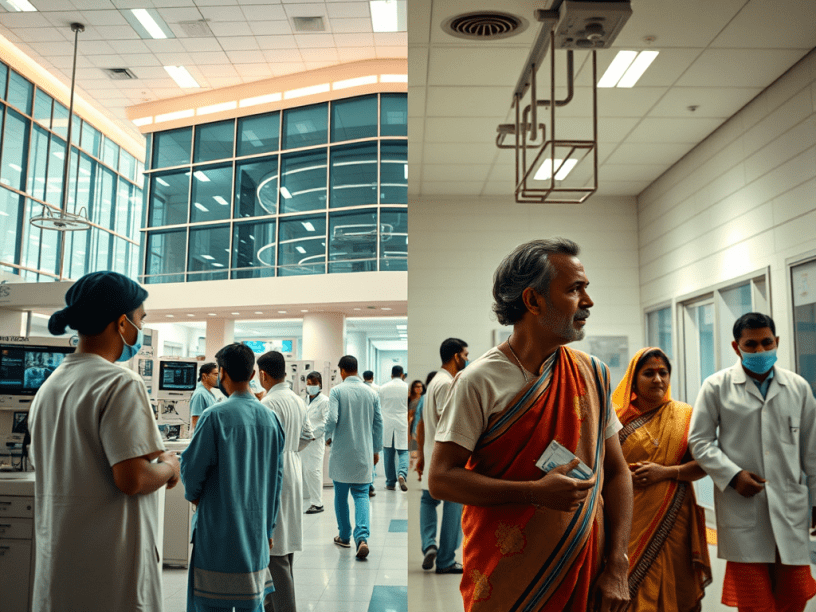
Where is Socialized Medicine Absent? A Look at Countries with Private Healthcare Systems
Socialized medicine, also known as universal healthcare, is a system where the government finances and provides healthcare services to its citizens. This can take many forms, but generally involves a single-payer system or a multi-payer system with heavy government involvement.
While socialized medicine is prevalent around the world, there are still a number of countries that rely primarily on private healthcare systems. In this blog post, we’ll explore some of these countries and their healthcare landscapes.
It’s important to remember that healthcare systems are complex and constantly evolving. This list is not exhaustive and may not reflect the nuances of every country’s system.
Here are some countries with predominantly private healthcare systems:
- United States: The U.S. healthcare system is a complex mix of public and private programs. However, private health insurance plays a dominant role, with employers often sponsoring health plans for their workers. The government also provides healthcare services to some groups, such as the elderly and low-income individuals, through programs like Medicare and Medicaid.
- Philippines: The Philippines has a multi-payer system with a mix of public and private providers. However, out-of-pocket spending on healthcare is high, and many Filipinos struggle to afford necessary medical care.
- India: India’s healthcare system is also a multi-payer system, with a large role played by the private sector. The government does provide some healthcare services, but these are often limited in scope and quality.
- Mexico: Mexico has a multi-payer system with a strong public sector component. However, the public system is often overburdened, and many Mexicans seek care in the private sector.
- Egypt: Egypt’s healthcare system is a mix of public and private providers. The public system is heavily subsidized by the government, but it often suffers from long wait times and a lack of resources.
Beyond these examples, there are many other countries around the world with private healthcare systems. Some of these systems are more comprehensive than others, and some offer varying degrees of government involvement.
It’s important to note that private healthcare systems can also have advantages. For example, they may provide patients with more choice in terms of providers and treatments. However, private systems can also be expensive and can lead to disparities in access to care.
The choice between a socialized and private healthcare system is a complex one. There is no one-size-fits-all answer, and the best system for a particular country will depend on a variety of factors.
Here are some additional points to consider:
- The level of a country’s economic development: Wealthier countries are generally better able to afford socialized medicine.
- The country’s cultural values: Some cultures place a higher emphasis on individual choice and responsibility, which may make them more receptive to private healthcare systems.
- The historical development of the healthcare system: Many countries’ healthcare systems have evolved over time, and the path they have taken can influence their current structure.
Discover more from WPS News
Subscribe to get the latest posts sent to your email.
 WPS News