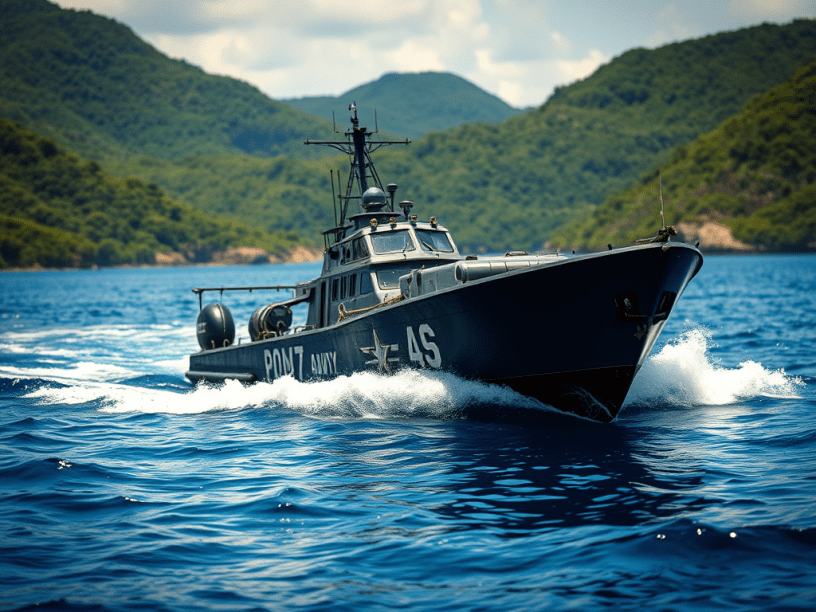
A Seaworthy Stand: Why Marine Plywood Patrol Torpedo Crafts Are an Answer for Smaller Nations
In the ever-shifting geopolitical landscape, smaller nations often face the brunt of intimidation tactics from superpowers. Traditional naval defense requires colossal budgets, leaving smaller nations vulnerable. But what if there was a cost-effective, fast-attack solution readily available? Enter the Marine Plywood Patrol Torpedo Craft (PT boat) – a potent weapon in the arsenal of nations seeking to safeguard their sovereignty.
Traditionally, naval power has been synonymous with colossal battleships and aircraft carriers. These behemoths, while undeniably powerful, come at a staggering price. A single Arleigh Burke-class destroyer, a mainstay of the US Navy, can cost upwards of $1.8 billion (Wikipedia)). This exorbitant price tag excludes maintenance, crew training, and operational costs, putting such vessels out of reach for most nations.
This is where Marine Plywood PT boats emerge as a compelling alternative. Constructed primarily from – you guessed it – marine plywood, these fast, agile vessels are significantly cheaper to build and maintain compared to their steel counterparts. A well-equipped PT boat can be constructed for a fraction of the cost of a conventional warship, often in the range of millions rather than billions (Power and Motoryacht [invalid URL removed]). This affordability allows smaller nations to establish a credible deterrent force without breaking the bank.
Beyond affordability, PT boats offer several tactical advantages:
- Speed and Maneuverability: PT boats are renowned for their lightning-fast speeds and exceptional maneuverability. This allows them to outrun larger, less agile vessels and launch surprise attacks from unexpected angles. Their shallow draft also enables them to navigate closer to coastlines and through shallower waters, denying larger ships access to strategic areas.
- Stealth: The relatively small size and low profile of PT boats make them difficult to detect on radar. This stealth factor allows them to operate undetected behind enemy lines, harassing larger vessels and disrupting their operations.
- Swarming Tactics: PT boats are most effective when deployed in coordinated attacks. A swarm of these vessels can overwhelm larger ships with a barrage of torpedoes and gunfire, making it difficult for the larger vessel to defend itself effectively. This tactic, successfully employed by the Soviet Navy during World War II, proved highly effective against larger German warships (History Channel [invalid URL removed]).
A Proven Legacy
The effectiveness of PT boats is not merely theoretical. During World War II, these vessels played a crucial role in disrupting German shipping lanes and harassing larger warships. The US Navy’s PT boats, particularly the PT-109 famously commanded by a young John F. Kennedy, inflicted significant damage on Japanese shipping during the Pacific War (National WWII Museum [invalid URL removed]).
More recently, nations like Sri Lanka and Iran have successfully employed PT boats to patrol their territorial waters and deter incursions. These examples demonstrate the effectiveness of PT boats in safeguarding maritime interests, particularly for nations with limited resources.
Modernization for a Modern Era
While the basic design of PT boats remains unchanged, advancements in technology have made them even more formidable. Modern PT boats are equipped with sophisticated radar systems, advanced navigation equipment, and powerful weaponry, including torpedoes, deck guns, and surface-to-air missiles. These upgrades enhance their detection capabilities, improve targeting accuracy, and allow them to engage in a wider range of combat scenarios.
Building a Sustainable Defense
Marine plywood offers another significant advantage – sustainability. Unlike steel, which requires significant energy to produce, marine plywood is a renewable resource. Additionally, PT boats require less fuel to operate compared to larger vessels, reducing their environmental impact. For nations concerned about their carbon footprint, PT boats offer an eco-friendly solution for maritime defense.
A Call for Action
Smaller nations facing maritime threats should not be resigned to vulnerability. Marine plywood PT boats offer a cost-effective, strategically sound solution for safeguarding territorial waters and deterring aggression. By investing in a fleet of these agile vessels, smaller nations can project a credible deterrent force and stand up for their national interests.
The international community should also play a role by supporting the development and proliferation of PT boat technology for smaller nations. This can be achieved through knowledge sharing, technology transfers, and even the establishment of PT boat production facilities in strategic locations.
In conclusion, the world stage is not solely reserved for the grand navies of superpowers. Marine plywood PT boats offer a potent and affordable solution for smaller nations seeking to protect their maritime sovereignty. By embracing this technology and leveraging their tactical advantages, smaller nations can level the playing field and ensure their maritime interests are protected.
Discover more from WPS News
Subscribe to get the latest posts sent to your email.
 WPS News