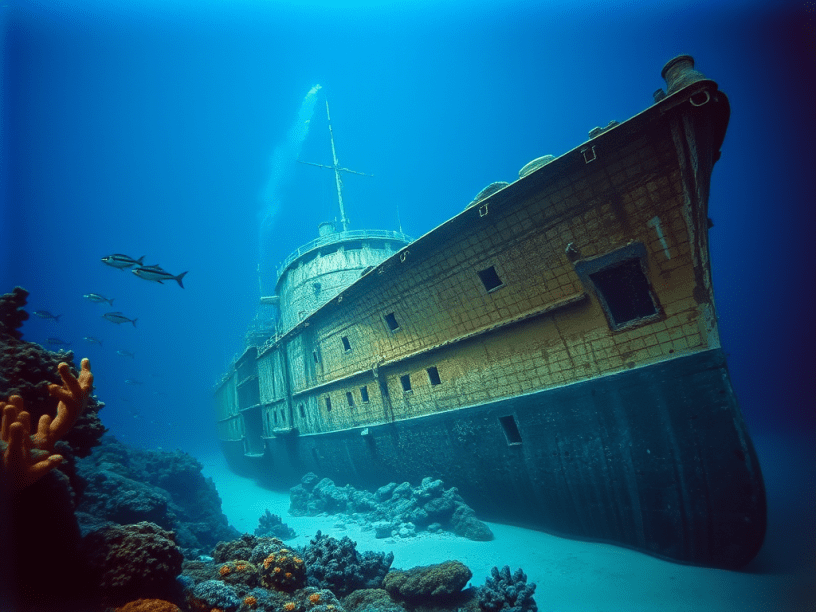
The Philippines, an archipelago nation in Southeast Asia, is a haven for scuba divers. Beyond the vibrant coral reefs and diverse marine life, the Philippines boasts a unique underwater attraction: shipwrecks from World War II. These submerged vessels, scattered across various bays and islands, serve as a captivating window into the past, offering a thrilling blend of history, adventure, and marine exploration.
One of the most renowned spots for wreck diving in the Philippines is Coron Bay in Palawan. This picturesque bay is home to a fleet of Japanese warships sunk by American bombers in 1944. The wrecks, remarkably well-preserved due to the lack of strong currents and minimal sedimentation, lie at depths accessible to divers of varying skill levels. The most popular wrecks include the Akitsushima, a former aircraft carrier, and the Kogyo Maru, a transport ship. Divers can explore the decks, engine rooms, and cabins, encountering marine life that has made these wrecks their home.
Another significant wreck diving destination is Subic Bay, located north of Manila. Subic Bay was a former US naval base that was subsequently abandoned. The bay now shelters a diverse collection of shipwrecks, ranging from Spanish galleons from the colonial era to American vessels from the Vietnam War. Wreck highlights include the USS New York, a battleship partially submerged in shallow waters, and the San Quentin, a Spanish warship that offers a glimpse into a bygone era.
Shipwreck diving in the Philippines is not merely about exploring submerged vessels; it’s about experiencing history firsthand. Divers can encounter remnants of wartime equipment, like guns, ammunition, and even personal belongings of soldiers. These encounters evoke a sense of respect for the human cost of war and serve as a powerful reminder of the past.
However, it’s crucial to approach wreck diving with responsibility and respect. Proper training and certification are essential, as some wrecks can have complex layouts and potential hazards. Divers should be familiar with safe wreck diving practices to avoid disturbing the wrecks or marine life.
Beyond historical significance, shipwreck diving in the Philippines is an ecological adventure. Wrecks have become artificial reefs, teeming with marine life. Divers can encounter a wide variety of fish species, including schooling jacks, colorful nudibranchs, and even occasional sightings of sharks or turtles. The wrecks provide habitat for these creatures, contributing to the overall biodiversity of the marine environment.
In conclusion, wreck diving in the Philippines offers an unparalleled experience for scuba enthusiasts and history buffs alike. From the well-preserved warships of Coron to the diverse collection of Subic Bay, these underwater havens provide a captivating glimpse into the past. With responsible diving practices, exploring these wrecks fosters a deeper appreciation for history, ecology, and the marvels of the underwater world.
Discover more from WPS News
Subscribe to get the latest posts sent to your email.
 WPS News