By, Cliff Potts, WPS News, Editor-in-Chief
Baybay City | January 10, 2025
As General Robert H. Barrow, a former Commandant of the US Marine Corps, famously stated, “Amateurs talk tactics, professionals talk logistics.” The current situation in the Philippines compels us to consider the risk of being amateurs. Recently, the Chinese Coast Guard’s largest vessel, CCG 5901, made its presence felt in our waters near Zambales, a province situated along the western coast of Luzon in the West Philippine Sea. In an interview with ABS-CBN News, Professor Renato de Castro articulated that the passage of this vessel was a demonstration of Beijing’s displeasure towards Manila.1
While I would never presume to direct the Philippine Navy or President Marcos Jr. on how to manage national affairs, the chatter across social media warrants attention and deeper exploration.
One pressing topic within contemporary military strategy is the potential for a limited strike operation aimed at disabling, rather than sinking, a foreign naval vessel within friendly Exclusive Economic Zones (EEZ) or territorial waters. Such operations ignite crucial discussions concerning international law, military ethics, and tactical practicality.
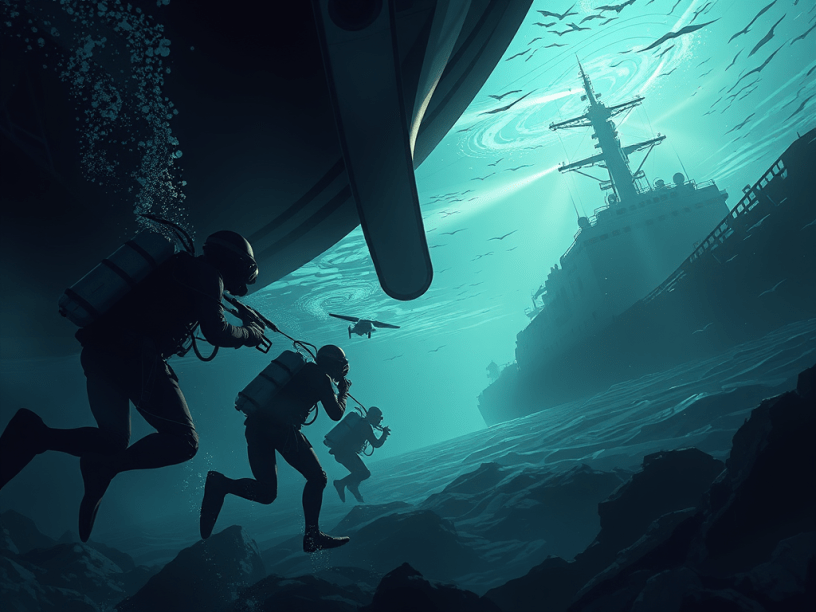
A method under consideration involves deploying Underwater Demolition Teams (UDTs) to approach a target vessel stealthily. Equipped with advanced underwater technology, these operatives would navigate undetected beneath the surface to strategically place explosives aimed at damaging the vessel’s screw shafts and rudder—effectively incapacitating its mobility without causing it to sink. This approach not only aligns with the intent to minimize damage but also seeks to maintain a delicate balance of power at sea.
The efficacy of such operations depends heavily on precise intelligence and robust technological support, including the use of advanced underwater drones and reconnaissance systems. UDTs, trained in clandestine infiltration and demolition, can leverage the element of surprise while reducing interaction with surface forces. Furthermore, the ambiguity surrounding the identity of the aggressor may serve as a deterrent against escalation, albeit with risks stemming from the intricate nature of maritime law and potential misinterpretations by other nations.
As naval warfare continues to evolve, the capability for targeted operations underscores the need for strategic foresight and careful consideration of ethical implications in military engagements.
Footnotes:
Discover more from WPS News
Subscribe to get the latest posts sent to your email.
 WPS News