By WPS News Literary Writer
Baybay City, Philippines | January 19, 2024 (Poe’s 216th Birthday)
Edgar Allan Poe, a name synonymous with macabre literature and gothic poetry, led a life that was as tumultuous as the themes of his most famous works. Born on January 19, 1809, Poe faced adversity from a young age, experiencing the trauma of losing his mother to tuberculosis and being separated from his siblings. Throughout his life, he struggled with poverty, a situation that deeply influenced his writing and left an indelible mark on American literature.
Poe’s financial struggles were well-documented, as he navigated a career marked by instability and hardship. As an author, poet, and critic, he often found himself at the mercy of a publishing industry that offered scant rewards. Despite his immense talent, he faced numerous rejections and was often underpaid for his contributions. This financial strain culminated in several periods of distress, where he sought work as an editor and contributed to various magazines, all while battling personal demons and the specter of alcoholism.
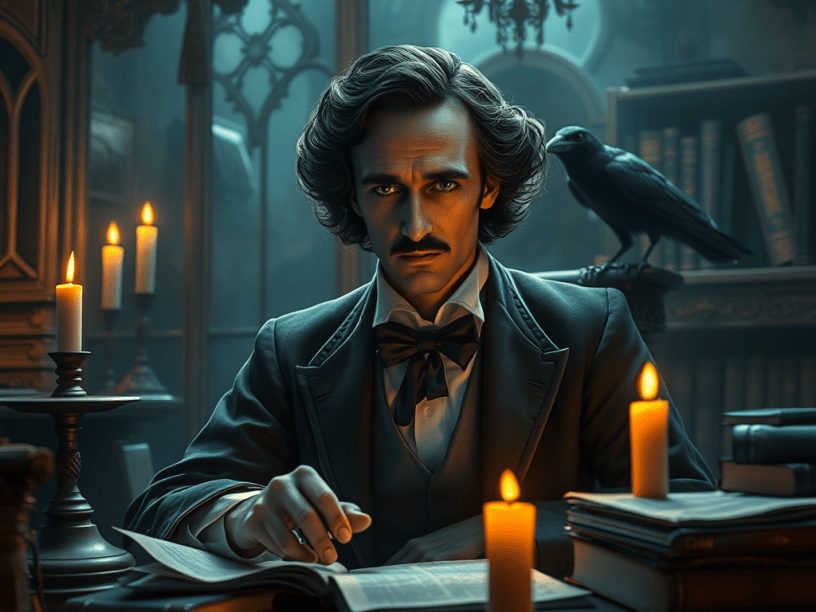
One of Poe’s most iconic works, “The Raven,” epitomizes the beauty and darkness that characterize his oeuvre. Published in 1845, the poem quickly garnered attention for its haunting melody and lyrical sophistication. Yet, in stark contrast to the impact it would eventually have on literature and popular culture, “The Raven” was sold for a mere $1.09 USD. This paltry sum starkly highlights the disparities between Poe’s artistic worth and his financial reality. The poem, featuring the enigmatic refrain of “Nevermore,” encapsulates themes of grief, loss, and madness—concepts that resonated profoundly with readers then and continue to do so today. It emerged as a cornerstone of American poetry, affirming Poe’s innovative style and his ability to explore the human psyche.
Despite the poem’s initial modest financial return, “The Raven” played a pivotal role in cementing Poe’s legacy as one of America’s most significant writers. It not only showcased his mastery of verse and the exploration of psychological depth but also opened doors for future generations of poets and authors who would seek inspiration from his work. In the years that followed, “The Raven” would achieve status not just as Poe’s most renowned poem, but as a classic of English literature, illustrating the enduring resonance of dark themes and complex emotions.
Tragically, Poe’s life was cut short. He died on October 7, 1849, under mysterious circumstances, leaving behind a fragmented legacy intertwined with his struggles. His life story is a melancholic reminder of the often unrecognized sacrifices made by writers. In an era when literary acclaim was rarely aligned with financial stability, Poe’s experiences exemplify the hardships faced by artists dedicated to their craft.
In conclusion, Edgar Allan Poe’s journey from an impoverished writer to the creator of “The Raven” is a poignant narrative of talent overshadowed by personal challenges. The poem not only stands as a testament to his literary genius but also invites readers to reflect on the complexities of artistic creation amid adversity. Today, Poe’s influence is undeniable, ensuring that his work, once undervalued, now holds a cherished place in the tapestry of literature, loved and studied by countless enthusiasts around the world.
Discover more from WPS News
Subscribe to get the latest posts sent to your email.
 WPS News