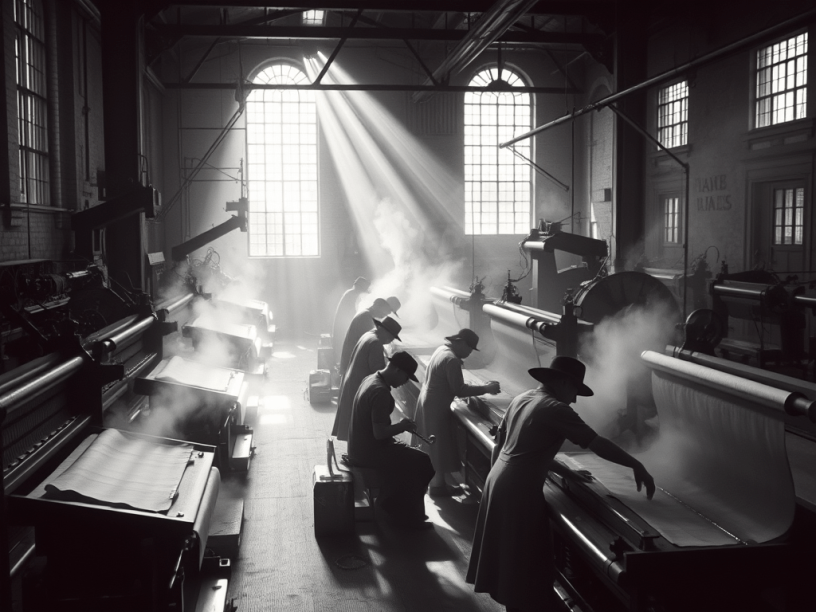
The 18th and early 19th centuries witnessed a period of profound transformation unlike anything the world had ever seen. This era, known as the Industrial Revolution, saw a dramatic shift from manual labor and small-scale production to mechanized processes and factory systems. This blog post will delve into the key aspects of the Industrial Revolution, exploring the mechanization of production, the rise of factories, and the profound impact these changes had on society, leading to urbanization and significant social change.
Mechanization of Production:
Prior to the Industrial Revolution, goods were primarily produced by hand in workshops or individual homes. Skilled artisans employed traditional methods and tools to create a limited number of items. However, the 18th century saw a surge of inventions that would forever alter the landscape of production. Key advancements included the development of the power loom (1784) and the spinning jenny (1764), which revolutionized textile production. Steam power, harnessed through the invention of the steam engine (1712), provided a reliable and powerful source of energy to drive machinery. These innovations not only increased production speed and efficiency but also paved the way for mass production.
Rise of Factories:
With the advent of mechanized production, workshops began to evolve into factories. These centralized facilities housed the new machinery and brought together large numbers of workers under one roof. Factories offered several advantages:
- Economies of scale: By producing large quantities of goods, factories could drive down production costs and offer lower prices to consumers.
- Division of labor: Workers were assigned specific tasks within the production process, leading to increased efficiency and specialization.
- Standardization: Factories facilitated the production of standardized goods, ensuring consistent quality and interchangeability of parts.
The rise of factories marked a significant shift in the way goods were produced. It transformed manufacturing from a skilled craft to a more regimented, assembly-line style of production.
Impact on Society: Urbanization and Social Change:
The Industrial Revolution triggered a wave of social and economic changes. The demand for factory labor drew people from rural areas to cities, leading to rapid urbanization. Cities grew at an unprecedented rate, often lacking the infrastructure to accommodate the influx of population. This resulted in overcrowded and unsanitary living conditions for many working-class families.
The social fabric also underwent significant alterations. The traditional system of apprenticeship declined as factories favored unskilled labor for simpler tasks. Working conditions in factories were often harsh, with long hours, low wages, and dangerous working environments. Child labor was also prevalent during this period.
Despite the hardships, the Industrial Revolution also brought about positive changes. It ushered in an era of economic growth and prosperity. New jobs were created, and the standard of living for many improved as consumer goods became more readily available and affordable. The Industrial Revolution laid the foundation for the modern industrial world we live in today.
Conclusion:
The Industrial Revolution was a pivotal period in human history. It transformed the way goods were produced, reshaped societies, and paved the way for the modern world. While the era brought about challenges and hardships, it also laid the groundwork for economic growth, technological advancement, and a higher standard of living for many. Understanding the Industrial Revolution is crucial to comprehending the development of the modern world and the ongoing process of industrialization that continues to shape our lives today.
Discover more from WPS News
Subscribe to get the latest posts sent to your email.
 WPS News