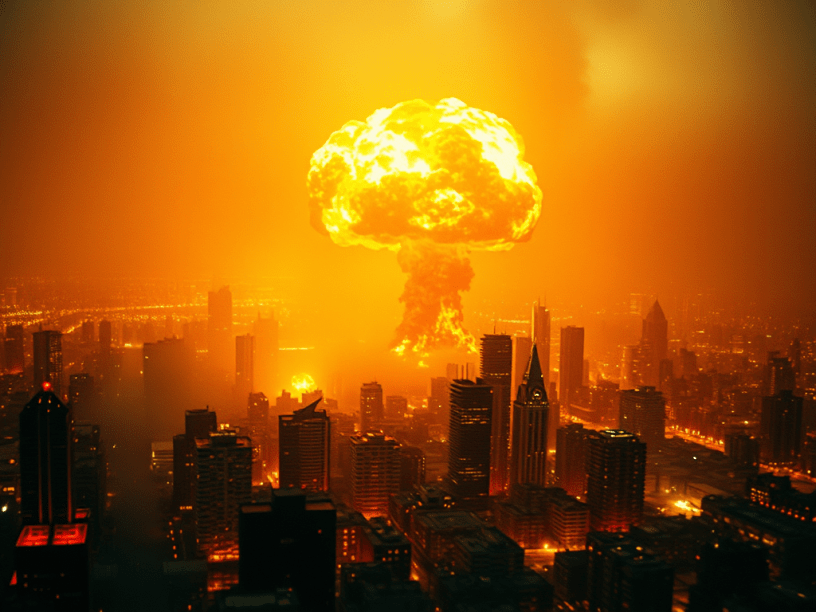
The specter of nuclear war, once confined to the realms of science fiction and Cold War paranoia, has re-emerged as a chilling reality in our interconnected world. While the catastrophic consequences of a full-scale nuclear exchange are widely understood, the potential impacts of a limited nuclear conflict are less clear. Yet, even a restricted use of nuclear weapons would unleash a chain of events with far-reaching and devastating consequences.
The idea of a “limited” nuclear war is a dangerous illusion. Nuclear weapons, by their very nature, are indiscriminate and have the potential to cause widespread destruction. Even a small-scale nuclear conflict could escalate rapidly, leading to a full-scale exchange. Moreover, the concept of a limited nuclear exchange presupposes the ability of warring parties to control the escalation of hostilities, a proposition that is highly questionable.
The immediate effects of a nuclear detonation are horrifying. A nuclear explosion generates intense heat, a powerful blast wave, and lethal radiation. The scale of destruction depends on the weapon’s yield, but even a relatively small nuclear device can cause catastrophic damage to a city. Fires, caused by the intense heat, would create a firestorm, engulfing the target area in a massive inferno. The resulting smoke and soot would be injected into the atmosphere, blocking sunlight and causing global temperatures to plummet. This phenomenon, known as “nuclear winter,” would disrupt agriculture, leading to widespread famine and economic collapse.
Beyond the immediate physical devastation, a nuclear war would have profound psychological and societal impacts. The fear and anxiety caused by such an event would be immense. The breakdown of law and order, coupled with the loss of essential infrastructure, would create a humanitarian crisis of unprecedented proportions. The long-term health consequences of radiation exposure would be catastrophic, leading to increased rates of cancer and genetic mutations.
A nuclear conflict would also have severe geopolitical implications. The use of nuclear weapons would shatter the existing international order and create a new era of instability. The risk of nuclear proliferation would increase as other states seek to acquire these weapons for their own security. The global economy, already fragile, would be plunged into a deep recession. The resulting economic hardship could lead to increased tensions and conflicts, further destabilizing the world.
It is essential to recognize that there is no such thing as a “winnable” nuclear war. Any use of nuclear weapons would be a defeat for humanity. The only way to prevent the catastrophic consequences of a nuclear conflict is to prevent nuclear weapons from being used in the first place. This requires a concerted effort by all nations to reduce nuclear arsenals, strengthen arms control agreements, and promote diplomacy and dialogue.
The risks associated with a limited nuclear war are simply too great to contemplate. The potential consequences for humanity are unimaginable. It is imperative that we work together to create a world free from the threat of nuclear annihilation. The future of our planet and the well-being of generations to come depend on it.
China thinks they can win a limited nuclear war!
Discover more from WPS News
Subscribe to get the latest posts sent to your email.
 WPS News