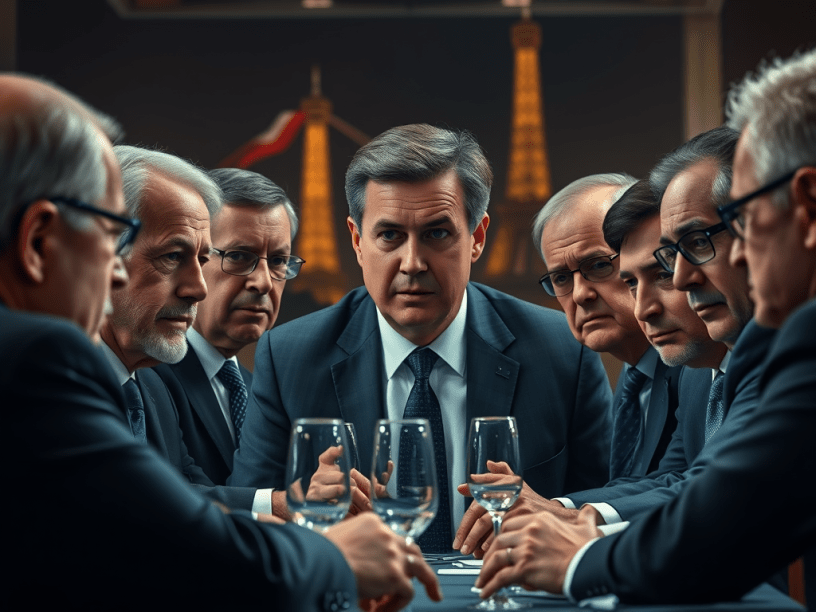
In a developing situation concerning the war in Ukraine, European leaders are convening for an emergency summit next week, prompted by rising apprehensions about the United States engaging directly with Russia in peace negotiations that could exclude European involvement. The summit, anticipated to take place in Paris, is underscored by critical remarks from UK Labour leader Sir Keir Starmer, who labeled this moment a “once-in-a-generation” opportunity to address national security concerns and emphasized the necessity for Europe to enhance its role within NATO.
The urgency of the summit arises after comments from Donald Trump’s special envoy to Ukraine, Keith Kellogg, suggesting that while European leaders would be consulted, they would not participate in the US-Russia discussions aimed at concluding the ongoing conflict. Prominent US officials, including Secretary of State Marco Rubio, are set to engage with Russian and Ukrainian negotiators in Saudi Arabia, raising alarm among European allies regarding their exclusion from the peace process.
Sir Keir Starmer aims to unify US and European perspectives toward a cohesive strategy for peace in Ukraine. He articulated his commitment to ensuring that divisions do not weaken their alliance against shared threats, particularly from Russia. Starmer’s statement reflects a broader sentiment among European officials regarding a perceived shift in the US’s approach to European security and its implications for collective defense efforts.
Polish Foreign Minister Radoslaw Sikorski noted that the summit, called by President Emmanuel Macron, has not yet been publicly confirmed, highlighting the high-stakes nature of the crisis. The urgency is also echoed by Ukrainian President Volodymyr Zelensky, who, speaking at the Munich Security Conference, called for the establishment of a “European army” in light of growing concerns over the US potentially withdrawing its support.
The backdrop to these events includes Trump’s recent announcement of renewed negotiations with Putin, which he discussed with Zelensky, stirring fear of agreements made without Ukrainian input. This situation is evocative of past controversies, notably Trump’s 2018 Helsinki meeting with Putin, where he faced backlash for appearing to favor Russian narratives over US intelligence findings.
Additionally, the discourse surrounding European defense spending has intensified, with figures like UK Foreign Secretary David Lammy advocating for greater investment in military capabilities to counter existential threats despite the complexities of pursuing a negotiated peace in Ukraine. As tensions escalate, the forthcoming summit is poised to shape the future diplomatic landscape regarding the conflict, underscoring Europe’s critical role and the necessity for cohesive strategies among its leaders and allies.
This news report was published by David Mercer and Joe Pike on BBC News, capturing the dynamic political climate on February 16, 2025, as Europe grapples with its security role and partnership with the United States in the backdrop of the ongoing war in Ukraine.
Discover more from WPS News
Subscribe to get the latest posts sent to your email.
 WPS News