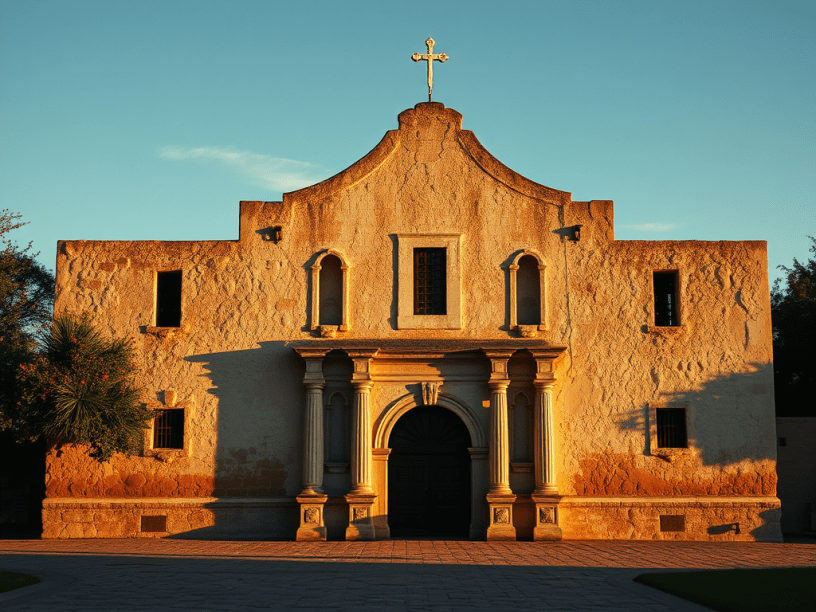
The Siege of the Alamo took place from February 23 to March 6, 1836.
The Alamo: A Symbol of Texas Independence
The Siege of the Alamo, a pivotal event in the Texas Revolution, remains a powerful symbol of courage, sacrifice, and the struggle for independence. Located in San Antonio, Texas, the Alamo mission was transformed into a fortified outpost by Texan rebels in 1836.
In February of that year, a small band of Texan and Tejano (Mexican-American) defenders, led by William Travis, James Bowie, and Davy Crockett, occupied the Alamo. Their goal was to hold off the advancing Mexican army under the command of General Santa Anna.
The Mexican army, vastly outnumbering the defenders, laid siege to the Alamo. For thirteen days, the Texans endured relentless bombardment and attacks. Despite their overwhelming odds, the defenders fought with unwavering determination.
On March 6, 1836, the Mexican forces launched a final assault on the Alamo. After a fierce and bloody battle, the defenders were overrun. All of the Texan and Tejano defenders were killed, their bodies left unburied.
The fall of the Alamo sent shockwaves throughout the Texas territory. The sacrifice of the Alamo defenders became a rallying cry for Texans, inspiring them to fight for their independence. The battle cry “Remember the Alamo” became a symbol of resistance and a testament to the courage of those who died defending their homeland.
Although the Alamo fell, its legacy lives on. The siege of the Alamo is remembered as a defining moment in Texas history, a testament to the human spirit, and a symbol of the enduring struggle for freedom.
Santa Ana: A Turbulent Reign in Mexico
1821: Santa Ana joins Agustín de Iturbide’s Plan de Iguala, which seeks to end Spanish colonial rule in Mexico. He becomes a prominent figure in the Mexican War of Independence.
1829: Santa Ana is elected President of Mexico. His presidency is marked by political instability and economic turmoil.
1832: Santa Ana is forced into exile after a failed coup attempt.
1833: Santa Ana returns to Mexico and retakes power. He institutes a centralist government, angering states seeking greater autonomy.
1836: The Texas Revolution erupts, leading to the Battle of the Alamo. Santa Ana’s forces are victorious, but the Mexican victory is short-lived. Texas declares its independence.
1837: Santa Ana is captured by Texan forces at the Battle of San Jacinto. He is forced to sign the Treaty of Velasco, recognizing Texas’ independence.
1846: The Mexican-American War begins. Santa Ana returns to power and leads the Mexican forces against the United States. However, Mexico suffers a series of defeats, culminating in the capture of Mexico City in 1848.
1853: Santa Ana is elected President of Mexico for the last time. His presidency is marked by corruption and economic instability.
1855: Santa Ana is overthrown and forced into exile. He dies in exile in Havana, Cuba, in 1867.
Note: Santa Ana’s reign was characterized by political instability, military coups, and economic hardship. His legacy is complex and controversial, with some viewing him as a patriot who fought for Mexican independence, while others criticize his authoritarian rule and military failures.
Discover more from WPS News
Subscribe to get the latest posts sent to your email.
 WPS News