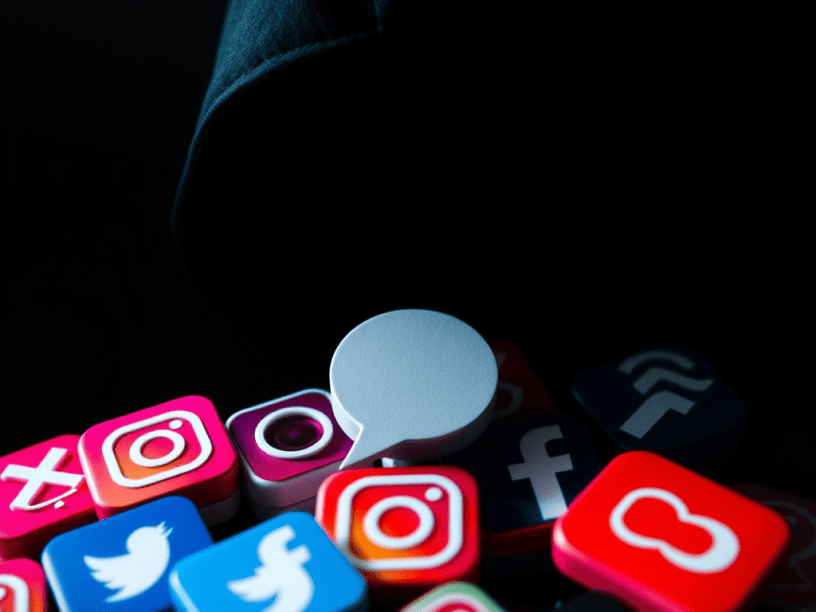
In recent years, the controversial practice of shadowbanning has emerged as a troubling trend among social media platforms, particularly on X (formerly known as Twitter), Instagram, and Facebook. Shadowbanning refers to the deliberate act of limiting the reach of users’ posts without their knowledge, making their content invisible to others while allowing the users themselves to continue posting as if nothing has changed. This covert form of censorship has garnered significant attention and sparked debates about freedom of speech and the power wielded by companies like X and Meta.
A closer look at the phenomenon reveals that shadowbanning is often linked to users’ engagement behaviors and the nature of their content. Users may find their posts experiencing reduced visibility as a result of factors such as excessive liking, repetitive use of hashtags, or engaging with accounts flagged as harmful. Reports from sources like TechCrunch and Al Jazeera highlight that this practice can result in severe drops in engagement, particularly for political content or voices that challenge the dominant narratives supported by platform executives.
While platforms like X and Instagram deny the existence of explicit shadowbanning policies, they have implemented systems that rank and filter content. This can lead to unacknowledged suppression of particular viewpoints, especially those of users considered to threaten existing power structures. Critics argue that Elon Musk’s ownership of X has intensified this trend, with accusations that content from left-leaning personalities is systematically silenced while right-wing rhetoric receives amplifying support. The opaque nature of these moderation policies further exacerbates frustrations among users who feel they have been unjustly marginalized.
To combat the problem of shadowbanning, users are encouraged to be vigilant about their online presence. Reports suggest that individuals should regularly check their engagement metrics and be mindful of the content they share to avoid triggering algorithmic penalties. Transparent communication from social media platforms regarding the nature of content moderation and the criteria for visibility would also help alleviate user concerns and foster a healthier discourse.
Moreover, users can take action by diversifying their social media channels and turning to platforms that prioritize open expression and free speech. Alternative social media services, such as Odysee and Fanbase, offer more favorable environments for those disillusioned with mainstream platforms’ censorship practices. Advocating for digital rights and awareness of the implications of big data and social media serving as gatekeepers of information is crucial to ensuring that diverse voices are not silenced in the digital public square.
As ongoing discussions around shadowbanning unfold, it is imperative for users to engage actively in debates about social media’s role in shaping public discourse. In an era where algorithm-driven visibility can make or break political narratives, the responsibility lies with both the platforms and their users to uphold the principles of free expression and openness.
Sources:
- Lipson, Charles. “The ‘Twitter Files’ Are Damning for US Agencies.” The Spectator, 10 Dec. 2022.
- Rekdal, Andreas. “What Is a Shadowban and Why Does It Matter?” Built In, 14 June 2022.
- Otten, Tori. “Gee, Guess What Twitter Just Did to Accounts Critical of Elon Musk?” The New Republic, 9 Jan. 2024.
- Ingram, David. “Elon Musk Accused of Censoring Conservatives on X Who Disagree with Him About Immigration.” NBC News, 9 Jan. 2024.
- Ciccomascolo, Giuseppe. “Sam Altman Reveals Sister Previously Accused Him of WiFi Hacking and ‘Shadowbanning Her.’” CCN, 8 Jan. 2025.
- Olmsted, Edith. “Did Elon Musk Suspend Pro-Kamala Group to Help Trump Win?” The New Republic, 30 July 2024.
- Hirschfeld, Andy. “The Right-Wing Lurch of X Under Elon Musk.” Al Jazeera, 13 Aug. 2024.
- Lomas, Natasha. “X Users Are Still Complaining about Arbitrary Shadowbanning.” TechCrunch, 18 Mar. 2024.
- de Guzman, Chad. “What to Know About Meta’s ‘Political Content’ Limit—and How to Turn It Off on Instagram.” TIME, 27 Mar. 2024.
- Solar, Amaterasu. “Why Am I Shadow Banned on X?” Amaterasu’s Analysis, 24 Feb. 2025.
Discover more from WPS News
Subscribe to get the latest posts sent to your email.
 WPS News