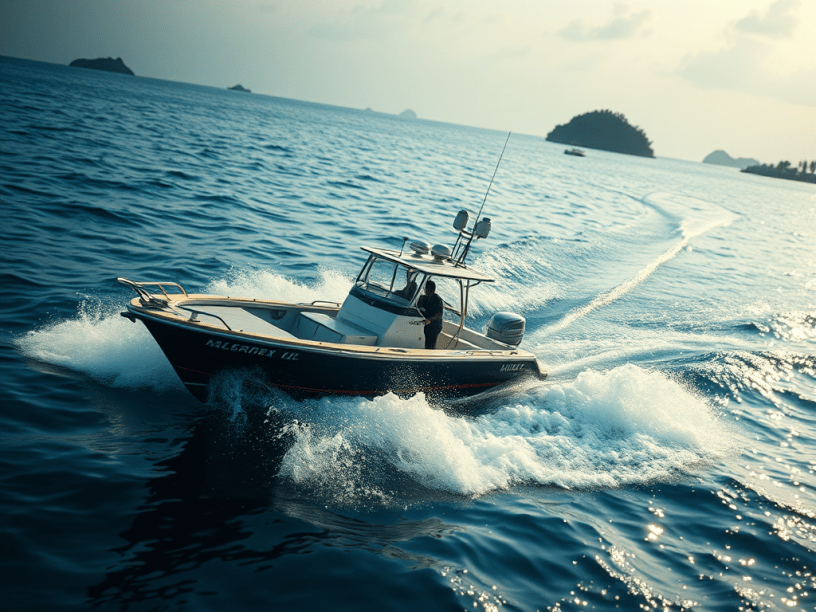
Navigating the Littoral: A Deep Dive into Small Boats and Special Warfare Tactics for the West Philippine Sea
The West Philippine Sea (WPS), a vital maritime zone for the Philippines, presents unique challenges for national security. Its vast archipelagic geography, dotted with islands, shoals, and reefs, demands a nuanced approach to territorial defense. Here, conventional warships struggle to navigate shallow waters and maneuver through tight spaces. This strategic reality necessitates a focus on small boats, nimble vessels ideal for operating in the littorals (coastal regions).
This essay delves into four prominent small boat types employed for special warfare operations in the WPS:
- Small Boats: A broad category encompassing a wide range of lightweight, maneuverable vessels.
- Swift Boats: High-speed, heavily armed patrol boats designed for fast-paced missions.
- PT Boats: Torpedo boats known for their surprise attacks and daring maneuvers. (While not actively used by the Philippine Navy today, their historical significance warrants inclusion)
- Outrigger Boats: Traditional Filipino vessels known for their stability and agility in rough seas.
Each type offers distinct advantages for specific operations, and understanding their capabilities is crucial for crafting effective special warfare tactics in the WPS.
Small Boats: The Versatile Workhorses
Definition and Capabilities: The term “small boat” encompasses a diverse range of vessels, typically under 20 meters in length. These include rigid-hulled inflatable boats (RHIBs), patrol boats, and fast attack craft (FACs). Their defining characteristic is their agility and maneuverability, allowing them to navigate shallow waters, tight passages, and around obstacles with ease. This makes them ideal for:
- Close-quarters combat: Their small size allows them to get close to enemy positions for surprise attacks and boarding actions.
- Special insertions and extractions: They can discreetly transport personnel to and from hostile shores for covert operations.
- Patrols and surveillance: Their maneuverability makes them suitable for patrolling narrow waterways and monitoring activities in isolated areas.
Special Warfare Applications in the WPS: The versatility of small boats makes them invaluable assets for special warfare units in the WPS. Philippine Marine Corps (PMC) Force Recon companies and the Naval Special Warfare Group (NAVSWAG) utilize them extensively for:
- Island hopping: Quickly moving between islands for rapid response and interdiction missions.
- Raids on enemy-held islands: Their stealth and agility facilitate surprise attacks on enemy outposts.
- Reconnaissance and surveillance: Operating in close proximity to enemy positions without detection.
Limitations: While highly maneuverable, small boats are vulnerable to rough seas and offer limited firepower compared to larger vessels. Additionally, their small size restricts the number of personnel and equipment they can carry, limiting their logistical capacity.
Swift Boats: Speed Demons on the Littoral
Definition and Capabilities: Swift boats are a specific type of small boat known for their high speeds and heavy armament. Typically ranging from 15 to 30 meters in length, they are equipped with powerful engines allowing them to reach speeds exceeding 40 knots. They carry a variety of weaponry, including machine guns, grenade launchers, and even some configurations mounting autocannons. This combination of speed and firepower makes them ideal for:
- Hot pursuit missions: Interdicting enemy vessels attempting to flee or harassing larger ships.
- Fire support: Providing close-range cover for ground troops engaged in firefights on land.
- Escorting convoys: Protecting vulnerable cargo ships from fast-attack craft or pirates.
Special Warfare Applications in the WPS: The Philippine Navy employs swift boats for various special warfare operations, including:
- Anti-access/area denial (A2/AD) operations: Disrupting enemy access to specific areas of the WPS by patrolling strategic choke points.
- Search and rescue (SAR) missions: Their speed makes them valuable for reaching distressed personnel at sea quickly.
- Delivery of special forces teams: Their firepower provides a degree of cover for special forces insertions onto contested islands.
Limitations: While well-armed, swift boats are still vulnerable to larger warships and shore-based defenses. Their high speeds come at the cost of limited range and endurance, restricting their operational reach.
PT Boats: A Legacy of Daring Raids (Historical Context)
Definition and Capabilities: Patrol torpedo (PT) boats are a historical type of small, fast attack vessel known for their role in World War II. Typically under 50 meters in length, they were equipped with torpedoes for surprise attacks on larger ships. Their lightweight construction and powerful engines allowed for exceptional maneuverability and high speeds, enabling them to launch devastating attacks and escape enemy fire.
Historical Significance in the WPS: While not currently employed by the Philippine Navy, PT boats played a significant role in the country’s maritime history. During World War II, the Philippine Navy operated a small number of PT boats, participating in combat operations against the Japanese Imperial Navy. These vessels demonstrated their effectiveness in coastal warfare, striking at enemy shipping and disrupting their supply lines.
Outrigger Boats: Traditional Wisdom for Modern Warfare
Definition and Capabilities: Outrigger boats are traditional Filipino vessels known for their stability and agility in rough seas. They are characterized by their distinctive design, featuring a main hull and a smaller float (outrigger) connected by a crossbeam. This design provides exceptional stability, allowing them to operate in shallow waters and withstand harsh weather conditions. While typically powered by sails, modern outrigger boats can also be equipped with outboard motors for increased speed and maneuverability.
Special Warfare Applications in the WPS: Outrigger boats offer unique advantages for special warfare operations in the WPS, particularly in remote and inaccessible areas. Their shallow draft and stability make them ideal for navigating through reefs and shoals, while their speed and maneuverability facilitate rapid insertions and extractions. Philippine special forces units have utilized outrigger boats for:
- Reconnaissance and surveillance: Operating in areas inaccessible to larger vessels.
- Delivery of supplies: Transporting equipment and supplies to isolated outposts.
- Evacuation of personnel: Rescuing stranded personnel from remote locations.
Limitations: Outrigger boats are relatively small and have limited cargo capacity, restricting their operational capabilities. Additionally, their reliance on outboard motors can be problematic in areas with limited fuel supplies.
Conclusion
Small boats, swift boats, PT boats, and outrigger boats each offer distinct advantages for special warfare operations in the WPS. Their versatility, speed, maneuverability, and adaptability make them indispensable assets for forces operating in this complex maritime environment. By understanding the capabilities and limitations of these vessels, the Philippine military can develop effective tactics and strategies to protect its territorial integrity and interests in the West Philippine Sea.
Discover more from WPS News
Subscribe to get the latest posts sent to your email.
 WPS News