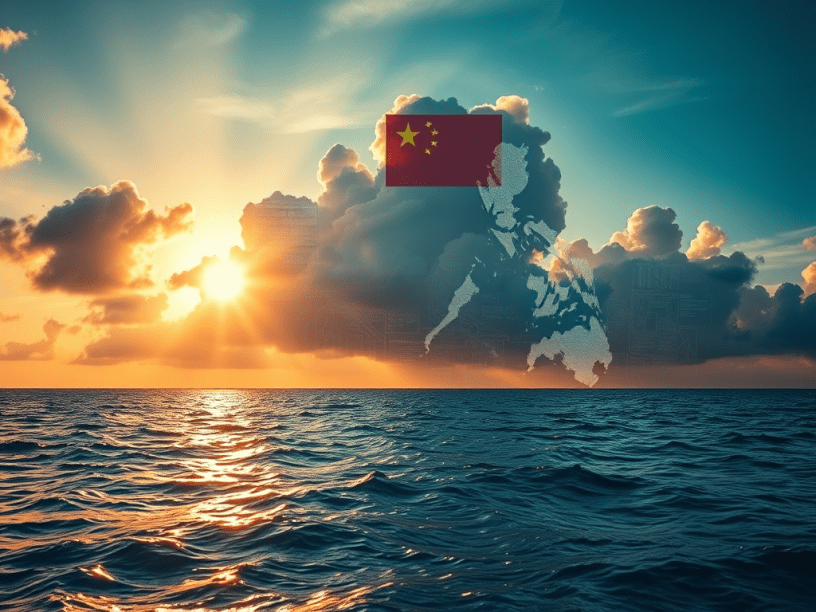
In a world increasingly intertwined with technology, the emergence of AI-generated propaganda poses a significant threat to the integrity of national discourse and sovereignty—particularly in the contentious waters of the West Philippine Sea. The recent comments by Davao City Mayor Sebastián “Baste” Duterte serve as a troubling reminder of the political maneuvering at play, as he dismisses Philippine concerns over Chinese aggression as mere “propaganda.”
“That’s just propaganda,” Duterte said at a recent political rally, downplaying the very real threats in the region as tactics to draw the Philippines into conflicts that are not in its interest. He argues for a measured approach—one that leans dangerously close to promoting the idea of the Philippines as a satellite state of China. You see, this isn’t just about rocks and reefs in the South China Sea; it’s about the broader implications for sovereignty and the well-being of the Filipino people. History has shown us how well the Soviet satellite states fared as puppets of a larger power—where local needs and voices were silenced by the demands of the Kremlin. Lives were disrupted, freedoms curtailed, and in many cases, prosperity was left out in the cold.
Then come the technocrats, selling us the shiny promises of AI tools like “DeepSeek,” as recently discussed in various tech and news articles. There’s been a bit of a media frenzy, particularly from outlets like Reuters, heralding it as the latest weapon in the propaganda arsenal. But let’s pause for a moment. Is it really the game-changer it’s being touted as? While folks may be quick to jump on the bandwagon and tout its influence, let’s remember to keep our skepticism intact. After all, tools are only as powerful as the hands that wield them.
Reports of DeepSeek pushing a pro-China narrative—and here we delve into a world of speculation. Is it a tool of state propaganda or merely another cog in the vast machinery of global communication? Dive into it yourself and draw your own conclusions. This isn’t about blind acceptance; it’s about critical engagement. The capacity for discernment rests, as always, with the people.
As events unfold in the West Philippine Sea, it is imperative we reconnect with a time-honored adage: “Truth is the first casualty of war.” It’s a warning, reminding us that amidst the clamor of competing interests—be it from local politicians or foreign powers—genuine understanding can get lost in the shuffle. AI propaganda may distort our realities, but it is incumbent upon us to sift through the noise, stay vigilant, and ensure that the true stakes of our sovereignty—our rights and our resources—remain at the forefront of our conversations.
Sources:
- Esguerra, Darryl John. “Baste Duterte Dismisses West Philippine Sea Issue as ‘Propaganda’.” Philippine News Agency, 29 Apr. 2024, http://www.pna.gov.ph.
- Patton, Susannah. “Unpacking China’s Propaganda Narratives Against the Philippines.” The Interpreter, 6 June 2024, http://www.lowyinstitute.org.
- Jalli, Nuurrianti, and Angel Martinez. “Artificial Intelligence is Intensifying South China Sea Disputes in the Philippines.” Fulcrum, 25 Feb. 2025, http://www.iseas.edu.sg.
- Strangio, Sebastian. “Philippines, China Again Clash at Two Disputed South China Sea Shoals.” The Diplomat, 5 Dec. 2024, http://www.thediplomat.com.
- Lee-Brago, Pia. “Disinformation, IT Attacks Distort West Philippine Sea Narratives — DFA.” Philstar.com, 27 June 2024, http://www.philstar.com.
Discover more from WPS News
Subscribe to get the latest posts sent to your email.
 WPS News