On March 11, 2025, WPS News published an article titled “The Legacy of Galileo: Science vs. Church Authority” by Cliff Potts. After further review, we have found several inaccuracies in the article that we need to address.
First, the article implied that Galileo’s discoveries led directly to his excommunication in a way that oversimplifies the situation. While Galileo did challenge the Church’s views, he presented his ideas as absolute truth rather than as theories. This crucial detail shows that the conflict was more complicated than just a battle between science and religion.
Second, the article suggested that Galileo was mistreated and tortured during his recantation. However, records show that he was treated fairly well and was under house arrest, not in harsh conditions. This corrects the portrayal of Galileo’s experiences, which were less severe than described.
Moreover, the article stated that excommunicating Galileo was a clear indication of the Church’s opposition to science. In reality, the Church’s ruling was not an exercise of infallibility. It was a disciplinary action that did not reflect the Church’s overall support for scientific research during that time.
Additionally, we did not explain well that the Church funded and supported many scientists throughout history. Most people involved in science during Galileo’s time, including some Church members, contributed to significant scientific advances.
Finally, we want to sincerely apologize for not doing a better job at fact-checking the information before publication. It is important for us to provide accurate and reliable content. We appreciate your understanding and support as we strive to improve our reporting.
Thank you for your continued readership.
WPS News Team
The Legacy of Galileo: Science vs. Church Authority
The Fall of a Star: Why Galileo Was Excommunicated and What Followed
Galileo Galilei, the famed astronomer and physicist, is a towering figure in scientific history. His revolutionary ideas about the cosmos challenged the prevailing Aristotelian and Ptolemaic models, placing the Sun, not the Earth, at the center of the solar system. But Galileo’s brilliance came at a cost. His clash with the Catholic Church over heliocentrism led to his excommunication in 1633, a dramatic event that forever marked his life and the history of science.
The Seeds of Discord
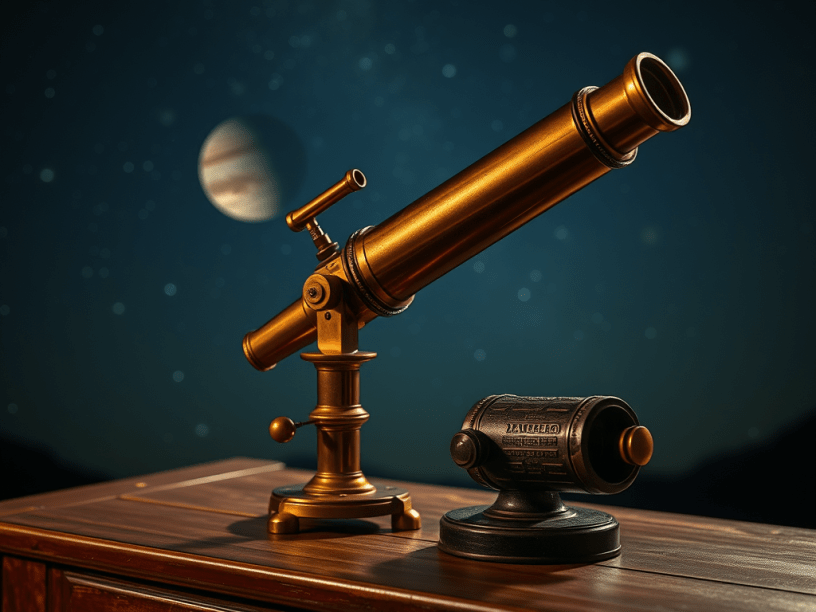
Galileo’s troubles began with his astronomical observations. In 1610, he turned his telescope towards the night sky, making groundbreaking discoveries. He observed the moons of Jupiter, phases of Venus, and sunspots, all of which supported the heliocentric model.
However, the heliocentric theory contradicted the Church’s interpretation of scripture, which placed the Earth at the center of God’s creation. Fearing heresy and public unrest, some Church authorities viewed Galileo’s ideas with suspicion.
Dialogue and Dialogue’s End
In 1632, Galileo published his book “Dialogue Concerning the Two Chief World Systems,” where he presented arguments for and against heliocentrism. Though seemingly neutral, the book clearly favored the heliocentric view. This act was seen as a challenge to the Church’s authority.
Galileo was summoned to Rome by the Inquisition, a powerful Church tribunal tasked with identifying and punishing heresy. After months of interrogation, he was forced to recant his heliocentric beliefs and was sentenced to house arrest for the remainder of his life.
The Aftermath: A Legacy Forged
Despite his forced recantation, Galileo never truly abandoned his beliefs. He continued his scientific work under house arrest, publishing crucial works on mechanics and motion. Though his excommunication silenced him publicly, his ideas spread throughout Europe, influencing future generations of scientists.
The Significance of Galileo’s Case
Galileo’s case marked a turning point in the relationship between science and religion. It highlighted the potential for conflict when scientific discovery challenged established religious beliefs. While the Church eventually reconciled with heliocentrism, the episode served as a cautionary tale about the dangers of suppressing scientific inquiry.
Galileo’s legacy is multifaceted. He is remembered as a brilliant scientist who dared to challenge the status quo. His excommunication stands as a reminder of the historical tension between scientific progress and religious dogma. But ultimately, Galileo’s ideas triumphed, paving the way for a modern understanding of the cosmos.
Discover more from WPS News
Subscribe to get the latest posts sent to your email.
 WPS News