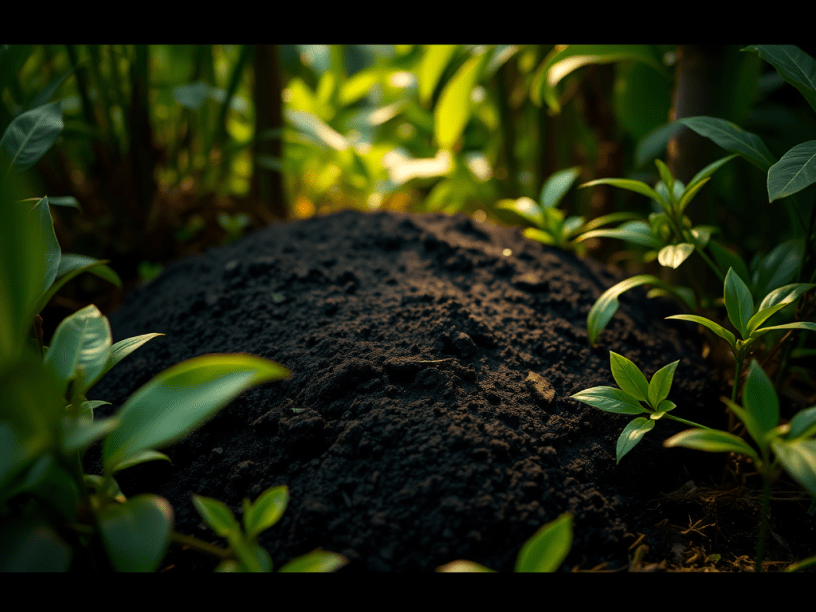
Nestled within the emerald embrace of the Amazon rainforest lies a hidden treasure trove – the Amazonian Dark Earth (Terra Preta de Indio). These fertile patches of soil stand in stark contrast to the surrounding nutrient-depleted rainforest floor, a testament to the ingenuity of past civilizations who unlocked the secrets of sustained agriculture in this challenging environment. This essay delves into the enigmatic world of Amazonian Dark Earth, exploring its origins, composition, and enduring legacy for modern agriculture.
A Canvas Painted Black: Unveiling the Origins of Dark Earth
The Amazon rainforest, despite its vibrant biodiversity, is a deceptively challenging environment for agriculture. The lush vegetation thrives on a constant cycle of nutrient exchange, where fallen leaves decompose rapidly, releasing essential nutrients back into the soil. However, this rapid decomposition leaves the underlying soil devoid of the organic matter and nutrients crucial for sustained plant growth. This is where the Amazonian Dark Earth enters the picture, a stark contrast to its surroundings. These patches of dark, fertile soil, enriched with charcoal and organic matter, can be several times more fertile than the surrounding rainforest floor.
The exact origins of Amazonian Dark Earth remain a subject of ongoing debate. However, archaeological evidence suggests that these fertile patches were created by indigenous cultures inhabiting the Amazon basin between 2,500 and 1,000 years ago. Several theories attempt to explain the creation of Dark Earth. One popular theory posits that these fertile patches were the result of a practice known as “slash-and-char.” Indigenous peoples would clear patches of rainforest, burning the cleared vegetation. This process not only created space for planting but also converted a portion of the biomass into charcoal. When incorporated into the soil, this charcoal acts as a powerful soil amendment. It retains essential nutrients, improves water retention, and fosters the growth of beneficial microbes, all contributing to the long-term fertility of the soil.
Another theory suggests that the creation of Dark Earth was intricately linked to the production of biochar, a charcoal-like substance specifically created for soil enhancement. Indigenous cultures may have used specialized techniques like slow pyrolysis to produce biochar from organic materials like bones, leaves, and manure. This biochar, then incorporated into the soil, would have functioned similarly to charcoal produced through slash-and-char, promoting long-term soil health.
Regardless of the specific methods employed, the creation of Amazonian Dark Earth represents a remarkable feat of ecological understanding. These ancient civilizations possessed an intuitive grasp of the complex interplay between fire, biomass, and soil fertility, a knowledge that allowed them to cultivate and sustain agricultural practices in a challenging environment.
A Composition of Riches: Unveiling the Secrets of Dark Earth’s Fertility
Amazonian Dark Earth holds within its dark, crumbly composition a unique blend of elements that contribute to its superior fertility. The most prominent component is charcoal, a byproduct of burning organic matter. Charcoal acts as a powerful soil amendment, offering a multitude of benefits. Its porous structure acts like a sponge, retaining essential nutrients like nitrogen, phosphorus, and potassium within the soil. This prevents these crucial nutrients from being leached away by rain, ensuring their availability for plant growth. Additionally, charcoal fosters the growth of beneficial soil microbes, which play a vital role in nutrient cycling and decomposition. These microbes break down organic matter, releasing nutrients usable by plants and further promoting sustained soil health.
Another key component of Dark Earth is organic matter, often in the form of decomposed plant material and animal waste. Organic matter provides a slow-release source of nutrients for plants. As it decomposes, it releases essential elements like nitrogen, phosphorus, and potassium, sustaining plant growth over an extended period. Additionally, organic matter improves soil structure, promoting aeration and drainage, both crucial for healthy root development.
The unique composition of Amazonian Dark Earth extends beyond these prominent components. Studies have revealed the presence of beneficial bacteria, fungi, and other microorganisms within the soil. This diverse microbial community plays a vital role in nutrient cycling, decomposition, and plant health. The presence of these microbes suggests the possibility that indigenous cultures may have intentionally inoculated their Dark Earth with beneficial organisms, further enhancing its fertility.
A Legacy that Endures: Lessons from the Amazon for Modern Agriculture
The Amazonian Dark Earth serves as a powerful testament to the ingenuity of past civilizations. Their understanding of fire, biomass, and soil fertility allowed them to cultivate and sustain complex societies in a challenging environment. For modern agriculture, the lessons gleaned from Dark Earth offer valuable insights for building more sustainable and resilient farming practices.
The ability of Dark Earth to retain nutrients presents a powerful alternative to current practices relying heavily on synthetic fertilizers. Synthetic fertilizers, while effective in boosting yields, can have a detrimental impact on the environment. Excessive use of fertilizers can lead to nutrient leaching, polluting waterways and disrupting natural ecosystems. Additionally, continued reliance on synthetic fertilizers can deplete soil health in the long term. By contrast, Dark Earth, with its ability to retain nutrients and foster beneficial microbes, offers a more sustainable approach to agriculture.
The practice of incorporating biochar into soil, inspired by the Dark Earth tradition, is gaining traction in modern agriculture. Biochar, a charcoal-like substance produced from organic matter, shares many of the same properties as the charcoal found in Dark Earth. It improves soil structure, water retention, and nutrient retention, leading to increased crop yields and reduced fertilizer use.
Furthermore, the Amazonian Dark Earth serves as a reminder of the importance of indigenous knowledge in sustainable agriculture. Indigenous communities have developed deep ecological understanding and practices over centuries. Their knowledge of plant diversity, soil management, and ecosystem balance offers valuable insights for modern agriculture.
As we face the challenges of climate change, food security, and environmental degradation, the lessons from the Amazonian Dark Earth become increasingly relevant. By embracing sustainable practices inspired by ancient wisdom, we can build a more resilient and environmentally friendly agricultural future. The legacy of the Amazonian Dark Earth continues to inspire and guide us toward a more sustainable path, reminding us that the secrets to a fertile future lie not only in technological innovation but also in the wisdom of the past.
Discover more from WPS News
Subscribe to get the latest posts sent to your email.
 WPS News