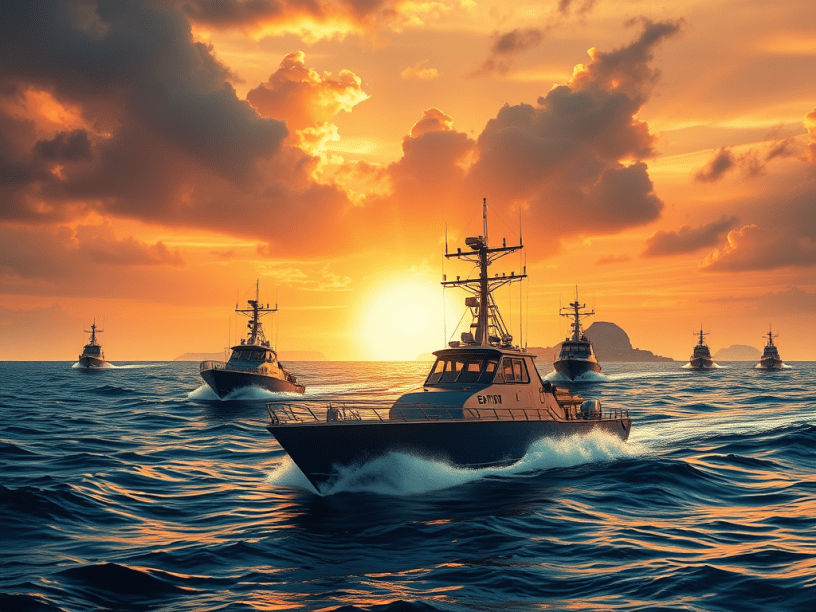
The West Philippine Sea is a vital area for the Philippines. However, China’s Anti-Access/Area Denial (A2/AD) strategy poses serious challenges to Philippine sovereignty. This strategy aims to deter adversaries and assert China’s control over contested waters.
China deploys advanced missile systems like anti-ship ballistic missiles and coastal defense cruise missiles. These weapons are placed on artificial islands, such as Fiery Cross Reef and Subi Reef. They create a formidable barrier against foreign naval operations. This approach limits the movements of Philippine vessels and allies in their own territorial waters.
Moreover, China enhances its A2/AD strategy with cyber capabilities. By targeting maritime communications, it can disrupt navigation systems and confuse opposing forces. This combination of kinetic and non-kinetic measures boosts China’s dominance in the region.
The implications for the Philippines are dire. The nation relies heavily on its maritime resources and trade routes. Increased PLAN capabilities compromise Manila’s ability to assert territorial claims within its Exclusive Economic Zone (EEZ). Filipino fishermen frequently face harassment, as Chinese vessels encroach on vital fishing grounds. This tactic undermines the Philippines’ economic interests and threatens food security.
The Philippines must not accept this status quo. There are strategies to counter China’s A2/AD posture effectively. The Philippine military can leverage small boats and special warfare tactics. These vessels are agile and can navigate the littoral zones where larger ships struggle. By utilizing small boats for reconnaissance and surprise operations, the Philippines can disrupt Chinese activities.
Additionally, joint exercises with ally nations can enhance the Philippines’ maritime capabilities. The U.S. and the Philippines have conducted joint patrols in contested areas. This shows a commitment to defending against Chinese aggression. Strengthening these alliances is critical. A unified front can deter further incursions and signal to China that aggression will face a robust response.
The use of outriggers and swift boats can also serve as effective tools in the Philippines’ strategy. Outriggers demonstrate stability and agility in shallow waters. Swift boats provide speed and firepower for rapid response missions. Incorporating these assets into operational planning can create a more dynamic approach to territorial defense.
The Philippines can draw inspiration from past conflicts. During World War II, small, agile boats played crucial roles in asymmetrical warfare. The historical significance of patrol boats demonstrates their effectiveness in coastal defense. The same logic applies today. A well-equipped and strategically focused naval presence can shift the balance of power.
As tensions escalate, the Philippines must remain proactive. A strong stance, like President Ferdinand Marcos Jr.’s commitment to protect Filipino fishermen, is vital. The administration should prioritize reinforcing naval capacities and enhancing maritime law enforcement.
In conclusion, the Philippines has the tools and strategies needed to counter China’s A2/AD stranglehold. By leveraging small boats, enhancing international partnerships, and adopting flexible tactics, the Philippines can safeguard its maritime rights. The regional balance of power can shift in favor of the Philippines, ensuring that its sovereignty is respected in the West Philippine Sea. With determination and strategic planning, victory against aggressive adversaries is not only possible—it is achievable.
Sources:
- Potts, C. (2024, July 3). The role of WWII US PT boats in the Pacific Theater. WPS News. https://wps.news/2024/07/03/stealth-runners/
- Potts, C. (2024, July 2). The Stealth Runner mission. WPS News. https://wps.news/2024/07/02/the-stealth-runner-mission/
- Potts, C. (2024, September 13). PT boats: Tiny terrors of the Pacific War! WPS News. https://wps.news/2024/09/13/pt-boats-tiny-terrors-of-the-pacific-war/
- Roop, W. P. (1923, March). The naval policy of the United States in the Pacific area. U.S. Naval Institute. https://www.usni.org/magazines/proceedings/1923/march/naval-policy-united-states-pacific-area
- Callahan, S. (2024). Fires from the shore: Supporting the fight for sea control. Marine Corps University Press. https://muse.jhu.edu/pub/419/article/938384
- Potts, C. (2025, February 23). West Philippine Sea: Chinese intrusions & joint patrols. WPS News. https://wps.news/2025/02/23/2025232b/
- Potts, C. (2025, March 9). Special warfare tactics for the West Philippine Sea. WPS News. https://wps.news/2025/03/09/special-warfare-tactics-for-the-west-philippine-sea/
Discover more from WPS News
Subscribe to get the latest posts sent to your email.
 WPS News