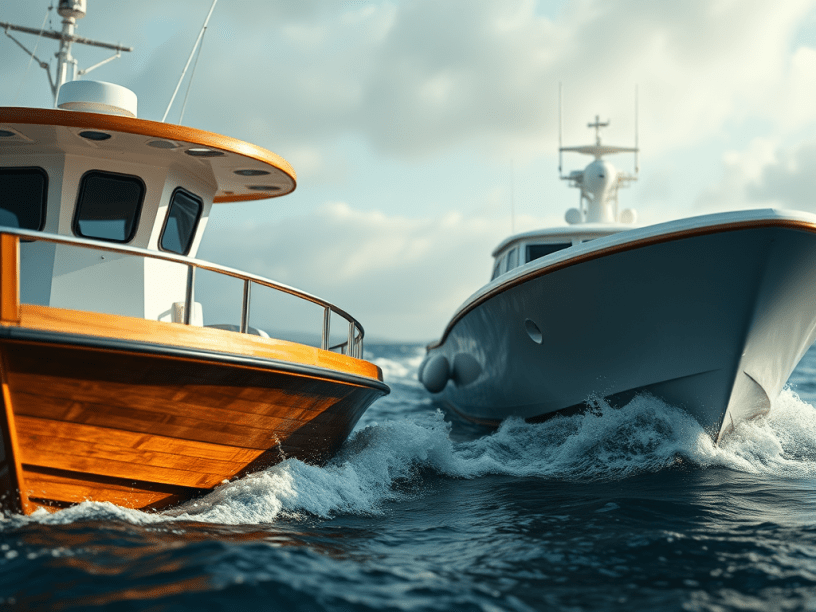
Fiberglass vs. Coconut: Choosing the Right Patrol Boat for Rough Seas
The Philippines, an archipelago nation, relies heavily on its maritime forces for patrol, security, and disaster relief. Selecting the ideal patrol boat for the job is crucial. Two popular choices are fiberglass and coconut wood hulls. But which reigns supreme in terms of sturdiness, collision resistance, and repairability? Let’s dive in and compare these two contenders.
Sturdiness:
- Fiberglass: Renowned for its lightweight yet rigid construction, fiberglass boats offer excellent overall rigidity. However, they can be susceptible to cracking or puncturing upon impact with sharp objects like reefs or debris.
- Coconut Wood: Coconut wood, particularly matured varieties like Ipil, boasts exceptional natural strength and resilience. These boats can handle rough seas better and are less prone to cracking compared to fiberglass under pressure.
Collision Resistance:
- Fiberglass: While strong, fiberglass can shatter upon high-impact collisions. The extent of damage depends on the boat’s design and the force of the impact. Repairs for significant cracks can be complex and expensive.
- Coconut Wood: Coconut wood’s natural flexibility allows it to absorb some of the impact force in a collision, minimizing the extent of damage. Repairs for minor cracks or abrasions are typically easier and more cost-effective compared to fiberglass.
Ease of Repair:
- Fiberglass: Repairing fiberglass damage requires specialized skills and materials like resins and fiberglass cloth. Patching small cracks is manageable, but extensive repairs can be time-consuming and require access to proper facilities.
- Coconut Wood: Coconut wood repairs are generally simpler. Skilled local carpenters can effectively address cracks or minor breaches using traditional techniques and readily available materials. This is a significant advantage, especially in remote locations with limited access to specialized repair facilities.
Additional Considerations:
- Maintenance: Fiberglass requires less frequent maintenance compared to coconut wood, which may need periodic waterproofing treatments.
- Weight: Fiberglass boats are lighter, offering better fuel efficiency. However, a heavier coconut wood boat might provide a more stable ride in rough seas.
- Environmental Impact: Fiberglass production can have a larger environmental footprint compared to utilizing a naturally occurring resource like coconut wood.
The Verdict:
The ideal choice depends on your specific needs. For patrols in rough seas or operations requiring frequent repairs in remote areas, coconut wood offers superior sturdiness and repairability. However, if lightweight construction and low maintenance are priorities, fiberglass might be a better fit.
The Philippine Advantage:
The Philippines has a rich tradition of shipbuilding using indigenous materials like coconut wood. Local expertise in crafting and repairing these boats is readily available, making them a cost-effective and sustainable option.
The Future of Patrol Boats:
Innovation is key. Perhaps future advancements will see the development of hybrid boats, combining the strength of coconut wood with the lightweight properties of composites like fiberglass.
Ultimately, the best choice is the one that best equips our maritime forces to safeguard our vast coastlines.
Discover more from WPS News
Subscribe to get the latest posts sent to your email.
 WPS News