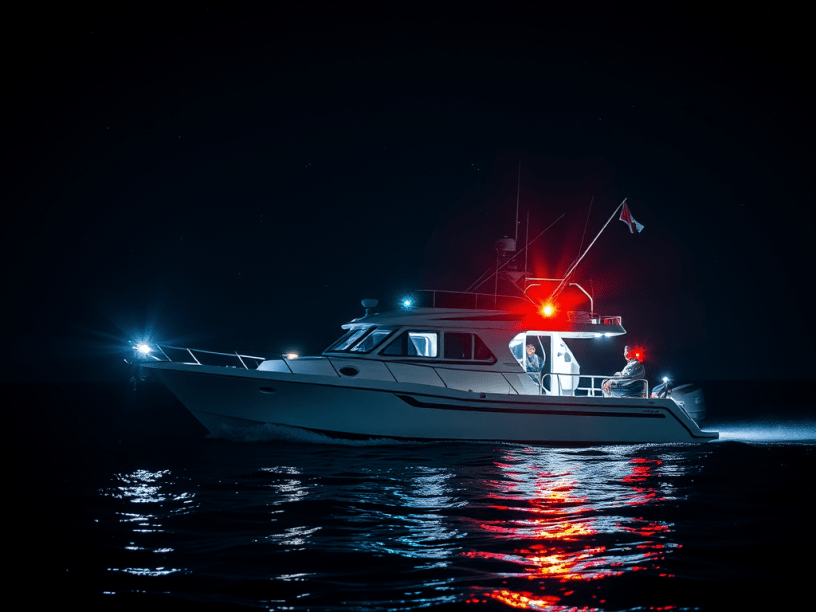
The vast expanse of the West Philippine Sea (WPS) serves as a vital economic zone and a strategic maritime corridor. However, navigating these waters can be fraught with challenges, especially for private patrol boats operating at night. Ensuring proper visibility and communication is crucial for safety, security, and effective mission execution. This essay explores the specific lighting requirements for private patrol boats operating in the WPS at night, highlighting their role in enhancing safety, security, and operational effectiveness.
The Importance of Proper Lighting
Operating a private patrol boat at night in the WPS presents a unique set of challenges. Limited visibility due to darkness, the vast distances involved, and the potential presence of other vessels all necessitate a well-designed lighting system.
- Safety: Proper lighting plays a critical role in ensuring the safety of the crew and the vessel itself. Adequate illumination of decks, walkways, and working areas minimizes the risk of slips, trips, and falls. Additionally, well-positioned navigation lights enhance visibility to other vessels, reducing the risk of collisions.
- Security: Effective lighting can be a valuable deterrent against illegal activities at sea. Bright lights can illuminate suspicious vessels or activity, allowing the crew to identify potential threats and take appropriate action.
- Operational Effectiveness: Proper lighting facilitates efficient night-time operations. Strategically placed lights enable the crew to perform tasks such as inspections, maintenance, and search and rescue missions with greater ease and accuracy.
Regulatory Framework
International regulations govern the use of lights on vessels to ensure safe navigation and prevent collisions at sea. The International Regulations for Preventing Collisions at Sea (COLREGs), adopted by the International Maritime Organization (IMO), stipulate specific requirements for the type, position, color, and visibility of navigation lights on different types of vessels. These regulations apply to all vessels operating on international waters, including private patrol boats in the WPS.
Essential Lighting for Private Patrol Boats
While COLREGs provide a general framework, private patrol boats in the WPS may require additional lighting elements to address the specific challenges of the environment. Here’s a breakdown of the essential lighting components for such vessels:
- Navigation Lights: These lights are mandatory under COLREGs and serve as the primary means of communication between vessels at night. The specific requirements for navigation lights depend on the size and type of vessel. A typical private patrol boat might require the following:
- Masthead light: A white light visible from all directions over an arc of 225 degrees.
- Sidelights: A green light visible from starboard (right) and a red light visible from port (left).
- Stern light: A white light visible from behind the vessel over an arc of 130 degrees.
- Towing light: A yellow light visible from all directions when towing another vessel.
- Searchlights: These powerful lights provide temporary illumination of a specific area. They are useful for search and rescue operations, identifying suspicious vessels, and illuminating boarding areas. When using searchlights, it’s important to be mindful of other vessels in the vicinity to avoid causing temporary blindness.
- Deck Lighting: Proper illumination of decks, walkways, and working areas minimizes the risk of accidents for the crew. Non-glare white lights are preferred to ensure crew visibility without compromising night vision.
- Floodlights: Mounted on the mast or other strategic locations, floodlights provide additional illumination for overboard operations, refueling, or when a wider area needs to be lit.
- Navigation Bridge Lighting: The navigation bridge requires adequate lighting for crew to effectively monitor instruments, charts, and communication equipment while maintaining night vision. Dimmable red or amber lights are suitable for this purpose.
- Interior Lighting: Cabins, engine rooms, and other compartments require adequate lighting for crew comfort and safety. Consider using dimmable lights to allow for adaptation between bright and dark environments.
Additional Considerations
- Color Temperature: Selecting the appropriate color temperature for lighting is crucial. Cool white lights (around 5000 Kelvin) enhance visibility at night, while warmer white lights (around 3000 Kelvin) are less disruptive to night vision.
- Glare Reduction: Glare can be a major hindrance at night. Utilizing shielded lights and diffusers can minimize glare and improve crew comfort.
- Durability and Reliability: Marine environments can be harsh, so lighting fixtures should be built to withstand salt spray, vibration, and extreme weather conditions.
- Energy Efficiency: Choosing energy-efficient LED lighting can significantly reduce fuel consumption and operating costs for private patrol boats.
Conclusion
Properly designed and implemented lighting systems are essential for safe, secure, and effective night-time operations of private patrol boats in the West Philippine Sea. By adhering to international regulations, considering the specific challenges of the marine environment, and selecting appropriate lighting fixtures, private patrol boat operators can significantly enhance the safety, security, and operational effectiveness of their vessels.
Discover more from WPS News
Subscribe to get the latest posts sent to your email.
 WPS News