WPS News Political Correspondent
Baybay City | May 2, 2025
As one of the founding figures of sociology, Emile Durkheim’s theories continue to resonate profoundly within contemporary discussions about society and collective identity. Born in France in 1858, Durkheim dedicated his life to understanding the intricate dynamics that bind individuals into cohesive communities. His examination of war, often viewed through a modern lens as a troubling phenomenon, highlights a more complex interpretation: that warfare can serve as a powerful force for social unity and reinforce collective values and identities within societies.
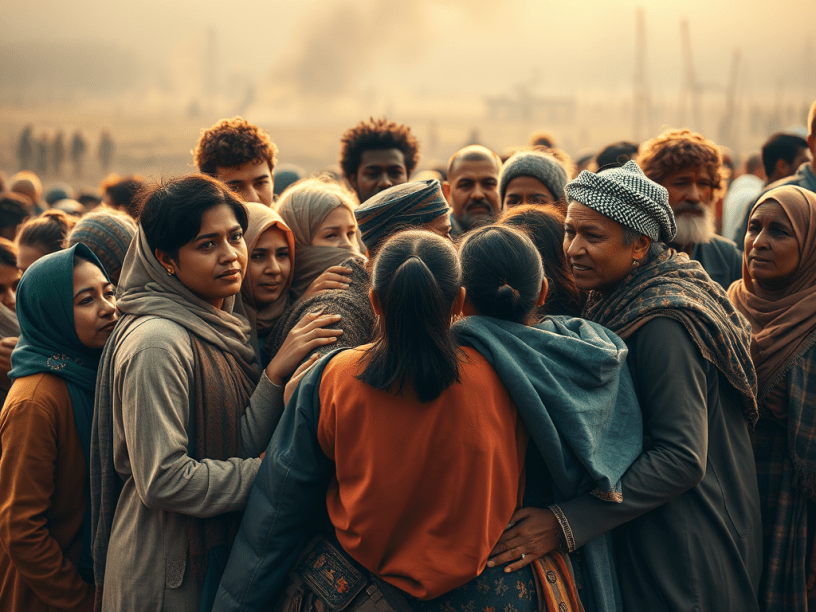
Durkheim viewed war not merely as a series of violent conflicts but as a social phenomenon that catalyzes a unique cohesion among individuals. When communities face external threats, they often rally together, prioritizing collective interests over personal ones. This sense of unity can transcend social, economic, and cultural differences, creating a sharper focus on shared goals and ideologies. As societies consolidate their values during periods of conflict, individuals find purpose in belonging to something greater than themselves, often resulting in an enhanced sense of national pride and identity.
In his groundbreaking work, The Division of Labor in Society, Durkheim elaborates on how social solidarity emerges in response to changes in society, including those brought about by warfare. He distinguished between two types of solidarity: mechanical and organic. Mechanical solidarity is typical of pre-industrial societies, where individuals share similar beliefs and values. In contrast, organic solidarity characterizes modern societies, where interdependence due to specialization fosters cohesion. War acts as a catalyst, temporarily evoking mechanical solidarity in increasingly diverse societies, uniting people through a shared experience of struggle and sacrifice.
Moreover, Durkheim argued that war could reinforce collective consciousness—the set of shared beliefs and values that epitomize a society. When individuals participate in war, whether directly or indirectly, they contribute to the formation of narratives that are woven into the collective memory of a society. This shared experience cultivates a sense of belonging and reinforces social norms and values, which are crucial for maintaining social order.
However, it is essential to acknowledge that while war can foster unity, it also has the potential to generate significant societal discord. The psychological impact of warfare—evident in the trauma and loss experienced by many—challenges the simplistic notion of unity. Furthermore, the aftermath of conflict often reveals deep-seated divisions within societies that may have been masked during wartime. Thus, Durkheim’s exploration of war prompts a nuanced interpretation: while it can rally individuals and create a shared identity, it can also exacerbate existing tensions and highlight socio-economic inequalities.
In today’s globalized world, the relevance of Durkheim’s theories is more pronounced than ever. Conflicts continue to shape national identities and social dynamics, as seen in contemporary events that evoke strong emotional responses across societies. The resurgence of nationalism in various regions reflects how collective identities forged during conflict can be both a uniting factor and a source of division, complicating the notion of societal solidarity.
Emile Durkheim’s work serves as a reminder that the forces that shape societies are multifaceted. By investigating war as a social phenomenon, we can better understand the complexities of human behavior and societal structures. His insights encourage ongoing discussions about the implications of wartime experiences, urging us to reconcile the dualities of collective unity and individual trauma.
As we reflect on Durkheim’s legacy, it becomes clear that his ideas challenge us to consider the broader implications of conflict on social cohesion and identity. His assertion that war can unify individuals prompts us to explore how shared experiences forge bonds, even as we remain vigilant to the underlying fractures such experiences may exacerbate. In a world where conflict persists, Durkheim’s analytical lens provides valuable perspectives on the human condition, emphasizing the ever-evolving interplay between society, identity, and the phenomena that shape our collective existence.
Discover more from WPS News
Subscribe to get the latest posts sent to your email.
 WPS News