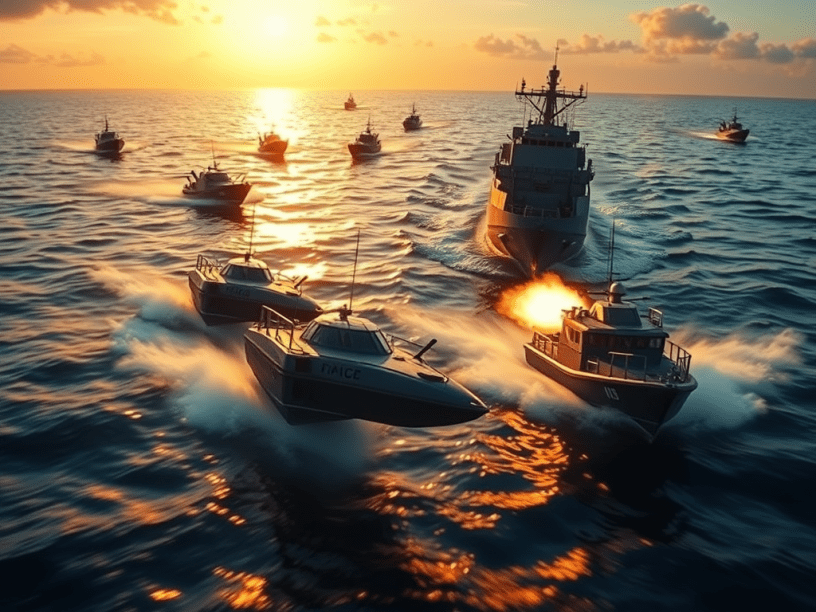
The West Philippine Sea (WPS) is a crucial maritime zone for the Philippines, rich in resources and vital for trade. However, the presence of a much larger foreign force contesting these claims presents a significant challenge. In such an asymmetric scenario, conventional warfare becomes impractical. This essay explores the concept of a “Guerrilla War at Sea,” a David vs. Goliath approach inspired by the Filipino folk hero “Panday Pira,” who used wit, ingenuity, and guerilla tactics to overcome a superior force.
Here’s how the Philippines can wage a successful Guerrilla War at Sea against a larger opponent:
1. Building a Network of Small, Agile Vessels:
- Fast Attack Crafts (FACs): Invest in a fleet of small, maneuverable FACs equipped with anti-ship missiles, torpedoes, and rapid-fire cannons. Their speed and size make them difficult targets for larger vessels.
- Armed Civilian Vessels (ACVs): Leverage the Filipino fishing industry’s vast network by equipping select vessels for defensive purposes. These ACVs, disguised as ordinary fishing boats, can harass and disrupt enemy operations.
- Submarines: While acquiring submarines might be a long-term goal, consider acquiring or leasing smaller, quieter models for covert operations and intelligence gathering.
2. Utilizing Guerilla Tactics and Swarm Warfare:
- Hit-and-Run Attacks: Train Filipino personnel in hit-and-run tactics, striking enemy vessels with surprise attacks utilizing FACs and ACVs. Exploit the vastness of the WPS to disappear after each strike.
- Swarm Tactics: Coordinate attacks by multiple FACs and ACVs, overwhelming enemy defenses with sheer numbers and making it difficult for them to focus fire.
- Mine Warfare: Utilize strategically placed mines to disrupt enemy movement and force them into less favorable routes.
3. Fortifying Defense Capabilities:
- Coastal Defense Systems: Invest in mobile or semi-mobile shore-based anti-ship missiles and coastal artillery to deter enemy incursions into Philippine territorial waters.
- Underwater Defense Systems: Deploy strategically placed torpedo launchers or minefields to create additional obstacles for enemy vessels.
4. Exploiting Technological Asymmetry:
- Asymmetric Warfare Technologies: Explore and acquire cost-effective, commercially available technologies like armed drones or long-range anti-tank missiles for use against larger enemy vessels.
- Cyberwarfare: Develop capabilities to disrupt enemy communication systems and electronic warfare to confuse and hamper their operations.
- Social Media Warfare: Utilize social media to document the Garellawar at Sea, garnering public support domestically and internationally, putting pressure on the larger force.
5. International Cooperation and Diplomacy:
- Strategic Partnerships: Forge alliances with like-minded nations with similar interests in maintaining a free and open Indo-Pacific region. This can provide access to intelligence, training, and potentially even limited military support.
- Legal Warfare: Utilize international law to assert Philippine claims in the WPS. Pursue arbitration rulings and utilize legal channels to delegitimize the presence of the larger force.
- Public Diplomacy: Engage in active public diplomacy by explaining the Garellawar at Sea narrative to the international community, highlighting the asymmetric nature of the conflict and garnering international sympathy.
Challenges and Limitations:
The Guerrilla War at Sea approach has its limitations.
- Casualties: Guerrilla tactics are inherently risky and can lead to casualties, both military and civilian. Mitigating this risk requires meticulous planning and prioritizing non-violent methods of disruption whenever possible.
- Sustainability: Maintaining a prolonged Guerrilla war requires resources and manpower. Strategies must be sustainable in the long term.
- Escalation: There’s always a risk of escalation. Careful planning and measured responses are crucial to avoid a full-blown war.
Conclusion:
The Guerrilla War at Sea is not a silver bullet, but a strategic approach that allows the Philippines to leverage its strengths and exploit the weaknesses of a larger force. It emphasizes resourcefulness, innovation, and a commitment to long-term struggle. This approach, coupled with international cooperation and diplomacy, holds the potential to deter aggression, protect Philippine interests in the WPS, and ultimately achieve a peaceful resolution.
Additional Considerations:
- Information Warfare: Implement a robust information-gathering network to track enemy movements and intentions.
- Psychological Warfare: Employ psychological warfare tactics to demoralize the enemy and undermine their public support for the operation.
- Civil Defense: Prepare coastal communities for potential retaliation and ensure their safety during the Garellawar.
Remember: The Guerrilla War at Sea is a concept that needs ongoing development and refinement. Open discussions, wargames, and simulations are crucial for developing effective strategies and tactics.
WPS.News Disclaimer:
WPS.News publishes a variety of content related to the West Philippine Sea, including news articles, opinion pieces, and analyses. The views expressed in this essay are those of the author and do not necessarily reflect the official position of WPS.News.
This essay explores the controversial concept of “Guerrilla War at Sea” as a potential strategy for the Philippines to defend its interests in the WPS. It is important to note that this approach carries significant risks and raises complex legal and ethical questions. WPS.News encourages responsible and informed discourse on all issues related to the West Philippine Sea. We believe in peaceful solutions and advocate for diplomacy and adherence to international law as the primary means to resolve disputes.
WPS.News is committed to providing a platform for diverse perspectives on the West Philippine Sea. We encourage readers to engage in respectful dialogue and consider all sides of the issue.
Additional Resources:
- Department of Foreign Affairs – Philippines: https://passport.gov.ph/
- Permanent Court of Arbitration: https://pca-cpa.org/
- Stockholm International Peace Research Institute (SIPRI): https://www.sipri.org/
We hope this essay has sparked constructive debate on how the Philippines can best protect its interests in the West Philippine Sea.
Discover more from WPS News
Subscribe to get the latest posts sent to your email.
 WPS News