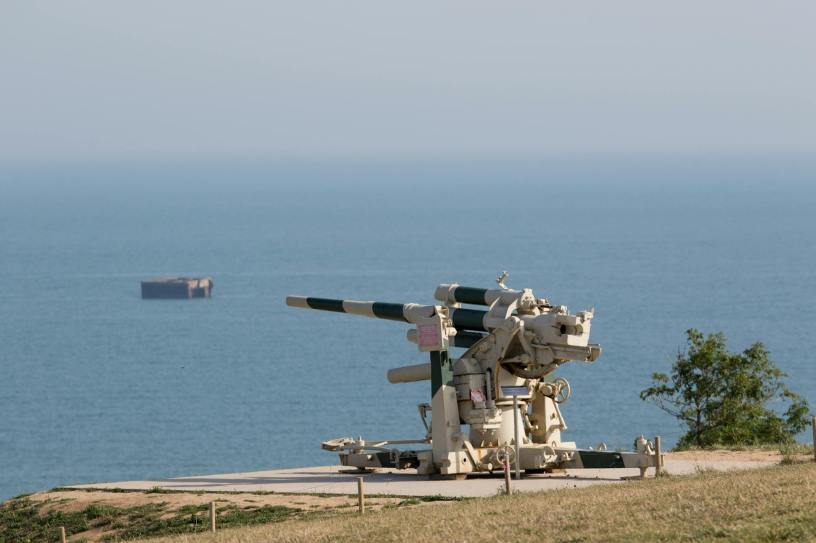
On June 6, 1944, the Normandy coast became the fulcrum of history, where the Allied invasion—codenamed Operation Overlord—ignited the liberation of Western Europe from Nazi tyranny. As we mark the 81st anniversary of D-Day, Europeans reflect on the profound sacrifices of their great-grandfathers, grandfathers, and fathers, whose courage reshaped a continent and secured the freedoms we cherish today.
The scale of D-Day remains staggering: over 156,000 troops from Britain, the United States, Canada, and other Allied nations stormed five beaches—Juno, Sword, Gold, Omaha, and Utah—under a hail of German fire (Beevor, 2009). British and Commonwealth forces faced fierce resistance at Gold and Sword, while American troops endured devastating losses at Omaha, where cliffs and bunkers turned the shore into a killing field (Ambrose, 1994). French Resistance fighters, risking torture and execution, disrupted German supply lines and provided vital intelligence, ensuring the invasion’s success (Wieviorka, 2008). Norwegian sailors and Polish airmen, among countless others, contributed to a pan-European effort that transcended borders.
For the generation that fought, D-Day was both a crucible and a turning point. Veterans like 99-year-old Albert Price, who served with the Royal Engineers, recall the chaos and camaraderie. “We were ordinary lads, but we knew what we were fighting for,” Price shared in an interview with this newspaper (Price, personal communication, May 2025). In France, the cost of liberation was etched into towns like Caen, reduced to rubble by Allied bombardment and German resistance (Hastings, 1984). Dutch and Belgian families, still under occupation, whispered of hope as radios broadcast news of the landings, their liberation months away but now conceivable.
Today, fewer than 1,000 D-Day veterans remain alive across Europe, their numbers dwindling each year (Imperial War Museum, 2025). Their stories, preserved in oral histories and memorials, resonate deeply with descendants. “My father was a teenager in the Resistance,” says Claire Lefèvre, a librarian from Lille. “He carried messages on his bicycle, knowing he could be shot. That was his war” (Lefèvre, personal communication, May 2025). Such memories underscore the personal toll of a conflict that spared no family, from the Channel Islands to the Baltic.
D-Day was not the war’s end but its decisive pivot. The liberation of Paris, the brutal winter of the Ardennes, and the final collapse of the Third Reich followed, each victory built on Normandy’s foundation (Keegan, 1989). Yet its significance endures as a symbol of unity and resilience. In an era of rising nationalism and geopolitical strain, D-Day reminds Europeans that peace is not inevitable—it was won through collective sacrifice and a shared commitment to liberty.
This June, ceremonies across Normandy will draw dignitaries, veterans, and schoolchildren to rain-swept memorials. Wreaths will be laid, and names read aloud, echoing the cost of freedom. For Europeans, D-Day is a call to honor their forebears by safeguarding the values they died for: democracy, unity, and human dignity. As we remember, we must ask: do we still hold their legacy sacred?
References
Ambrose, S. E. (1994). *D-Day, June 6, 1944: The climactic battle of World War II*. Simon & Schuster.
Beevor, A. (2009). *D-Day: The battle for Normandy*. Viking.
Hastings, M. (1984). *Overlord: D-Day and the battle for Normandy*. Michael Joseph.
Imperial War Museum. (2025). *D-Day veteran records*. https://www.iwm.org.uk/collections
Keegan, J. (1989). *The Second World War*. Hutchinson.
Wieviorka, O. (2008). *The French Resistance*. Harvard University Press.
Discover more from WPS News
Subscribe to get the latest posts sent to your email.
 WPS News