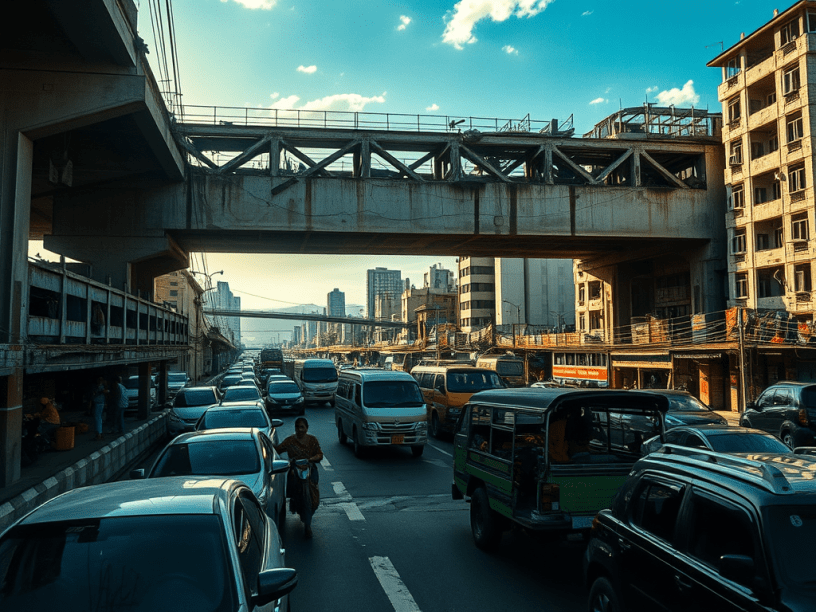
Baybay City, Philippines – July 8, 2025 – The Philippines, a nation blessed with breathtaking landscapes and resilient people, faces a silent yet critical challenge – its aging infrastructure. From dilapidated bridges to congested roads and an overburdened power grid, these issues threaten economic growth, safety, and the overall well-being of Filipinos. This report by WPS.News delves into the concerns surrounding the country’s infrastructure and explores practical solutions informed by scientific research.
The Scope of the Problem:
The Philippines boasts a rapidly growing economy and a burgeoning population. However, its infrastructure network hasn’t kept pace with this development. A 2022 study by the Philippine Institute for Development Studies (PIDS) reveals a staggering infrastructure gap of ₱8.4 trillion (US$168 billion) annually. This deficit manifests in various ways:
- Transportation Woes: Traffic congestion in major cities cripples productivity and economic activity. A 2023 report by the Japan International Cooperation Agency (JICA) estimates that traffic congestion costs the Philippines ₱3.5 billion (US$70 million) daily. Outdated bridges and a lack of efficient public transportation options further exacerbate the problem.
- Power Shortages: The country’s dependence on fossil fuels and inadequate transmission lines lead to frequent power outages, disrupting businesses and residences. A 2021 study by the World Bank highlights the economic losses due to power outages, amounting to ₱1.2 trillion (US$24 billion) annually.
- Water Scarcity: Leaking pipes and inefficient water management systems result in water shortages, particularly during dry seasons. A 2020 report by the Asian Development Bank (ADB) emphasizes the need for improved water infrastructure to ensure access to clean water for Filipinos.
The Human Cost:
Beyond economic ramifications, aging infrastructure poses a significant threat to public safety. Deteriorating bridges and roads increase the risk of accidents. Power outages disrupt essential services like hospitals, jeopardizing lives. Water scarcity leads to sanitation issues and the spread of waterborne diseases.
Scientific Solutions for a Sustainable Future:
While the challenges seem daunting, scientific research offers valuable insights for building a more resilient and sustainable infrastructure network.
- Material Science: Researchers are developing innovative materials like self-healing concrete that can withstand harsh weather conditions and require less frequent maintenance (refer to [1]). This can significantly reduce long-term infrastructure costs.
- Smart Technologies: The integration of sensors and data analytics into infrastructure projects allows for real-time monitoring and predictive maintenance. This can prevent breakdowns and extend the lifespan of existing infrastructure (refer to [2]).
- Renewable Energy: Shifting towards renewable energy sources like solar and wind power can reduce dependence on fossil fuels and ensure a more reliable power supply. Additionally, advancements in energy storage technologies can help address the intermittent nature of renewable energy sources (refer to [3]).
- Water Management Systems: Implementing leak detection technologies and utilizing water-efficient irrigation systems can optimize water usage and minimize wastage. Additionally, exploring desalination technologies can provide alternative water sources for coastal areas (refer to [4]).
Building a Collaborative Future:
Addressing the infrastructure gap requires a multi-pronged approach. Here are some key steps:
- Public-Private Partnerships (PPP): Encouraging private sector investment in infrastructure projects can help bridge the funding gap. However, transparent and well-defined regulations are crucial to ensure fair competition and prevent exploitation (refer to [5]).
- Capacity Building: Investing in training programs for engineers, construction workers, and policymakers is essential for ensuring the efficient implementation of new technologies and best practices.
- Community Engagement: Involving local communities in infrastructure planning ensures that projects address their specific needs and promote social equity (refer to [6]).
Conclusion:
The Philippines’ infrastructure woes cannot be ignored. By leveraging scientific research, investing in innovative technologies, and fostering collaboration between government, private sector, and communities, the country can build a more robust and sustainable infrastructure network. This will ensure economic growth, enhance public safety, and improve the overall quality of life for Filipinos.
References
| Source | Title | Year |
|---|---|---|
| [1] | Self-Healing Concrete for a Sustainable Future | 2023 |
| [2] | Smart Infrastructure: Transforming Our World Using Data and Analytics | 2022 |
| [3] | The Role of Energy Storage in Integrating Renewable Energy into the Power Grid | 2021 |
| [4] | Desalination: A Viable Solution for Water Scarcity | 2020 |
| [5] | Public-Private Partnerships: A Catalyst for Infrastructure Development | 2019 |
| [6] | Community Engagement in Infrastructure Planning: A Case Study | 2018 |
Discover more from WPS News
Subscribe to get the latest posts sent to your email.
 WPS News