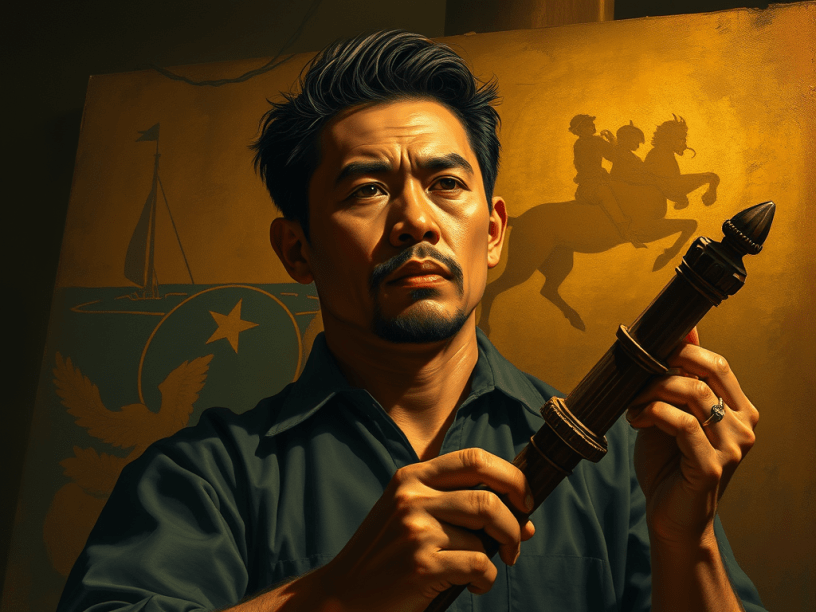
Baybay City, Leyte, Philippines – Juan Luna (1857-1899), a name synonymous with artistic mastery and national pride, transcends the canvas in the contemporary Philippine narrative. More than just a renowned painter, Luna becomes a beacon in the 21st century, urging Filipinos to wield their talents and unwavering spirit in the face of the West Philippine Sea (WPS) dispute with China.
Born during a tumultuous period of Spanish colonization, Luna’s artistic brilliance blossomed alongside the burgeoning Filipino independence movement. His most celebrated work, “The Spolarium,” a visceral portrayal of Roman brutality towards fallen gladiators, resonated deeply with audiences. The symbolism was undeniable – the defeated gladiators mirrored the Filipinos under Spanish rule. “The Spolarium” became a potent anti-colonial statement, showcasing Filipino artistic prowess on the international stage.
Luna’s legacy extends beyond mere aesthetics. He actively participated in the Propaganda Movement, a group of Filipino intellectuals advocating for reform and eventual independence from Spain. His works, imbued with a potent blend of realism and allegory, served as powerful tools for national awakening.
Today, as the Philippines grapples with China’s assertive claims in the WPS, Luna’s spirit of unwavering resistance resonates anew. Just as he wielded his brush to challenge an oppressive empire, Filipinos are called upon to utilize their unique strengths – be it diplomacy, economic prowess, or artistic expression – to defend their sovereign rights.
“Luna’s story is a testament to the power of soft diplomacy,” says Professor Patricia Reyes, a history lecturer at Baybay National College. “His art transcended borders, sparking conversations and garnering international sympathy for the Filipino cause. In the WPS dispute, Filipinos can emulate this approach. Our artists, filmmakers, and musicians can use their platforms to tell our story, garnering international support for our rightful claims.”
The struggle for the WPS is not just a territorial dispute; it’s a fight for Filipino identity and self-determination. China’s actions echo the colonial mentality of the past, attempting to dictate the fate of a sovereign nation. Just as Luna refused to be silenced by a dominant power, Filipinos must not yield to Chinese pressure.
Emulating Luna’s unwavering spirit goes beyond artistic expression. It’s about harnessing Filipino ingenuity and resourcefulness in all spheres. Filipino scientists can develop sustainable fishing practices, while entrepreneurs can explore alternative economic opportunities to lessen dependence on disputed waters.
The fight for the WPS is a marathon, not a sprint. It requires unwavering commitment, strategic planning, and a unified national voice. Juan Luna’s legacy serves as a powerful reminder that Filipinos are not simply passive bystanders in this struggle. They are a nation with a rich cultural heritage, a fierce spirit of independence, and the talent and determination to defend their rightful place in the world.
Discover more from WPS News
Subscribe to get the latest posts sent to your email.
 WPS News