By Cliff Potts, WPS News
VANCOUVER, British Columbia — July 28, 2025
VANCOUVER, British Columbia — July 28, 2025
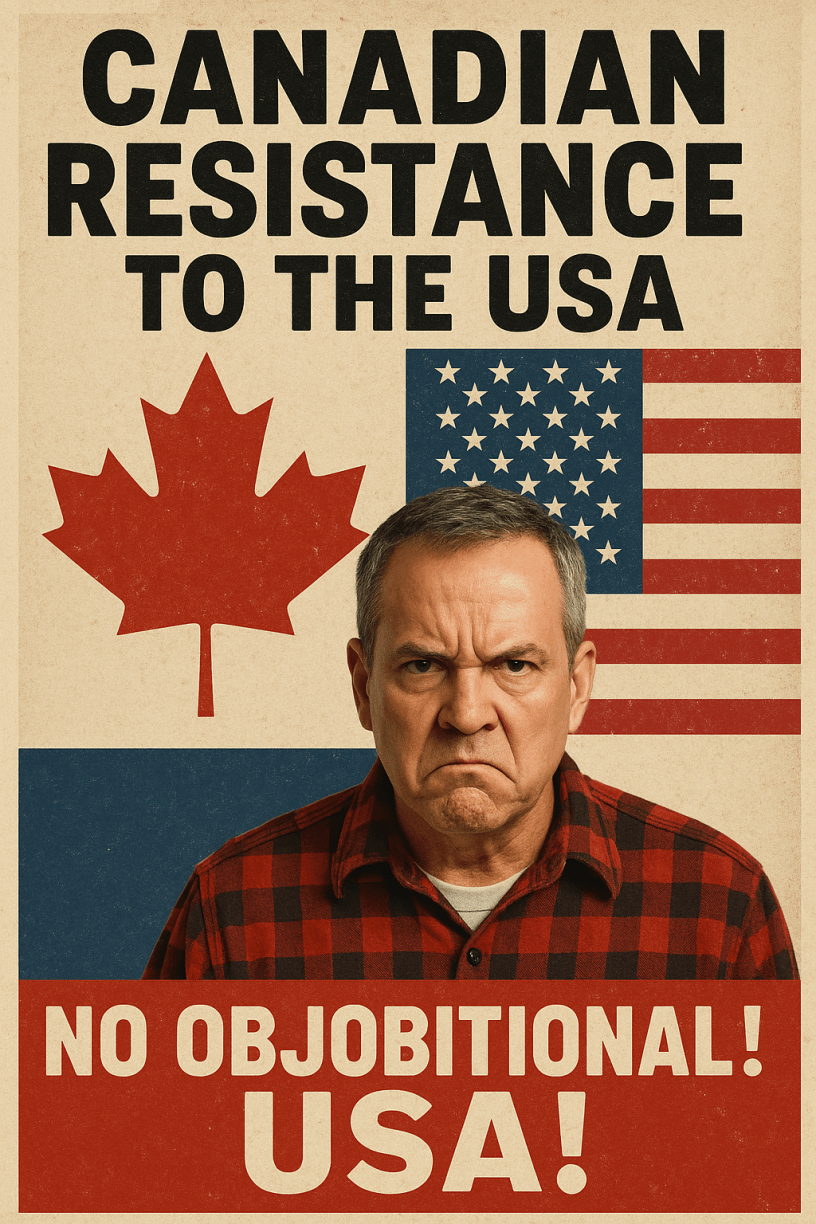
In the wake of rising authoritarianism in the United States, Canada has shifted from passive observer to proactive resistor. What began as diplomatic discomfort during the Trump administration has matured into a national posture of ideological defiance. Far from the caricature of maple syrup diplomacy and polite restraint, Canada is drawing clear lines against MAGA-fueled extremism—and doing so with resolve.
The breaking point for many Canadians came on January 6, 2021. The Capitol insurrection, broadcast globally, shattered the illusion that American instability was a temporary fever dream. Within days, Canadian editorial boards called it “an attempted coup” and “a crisis of democracy” (The Globe and Mail, 2021). Prime Minister Justin Trudeau condemned the attack within hours, warning of “a deeply troubling reflection of what unchecked populism can become.”
The transition has not been subtle. From rejecting U.S.-led trade coercion to publicly denouncing American rollbacks of civil rights, Canadian leaders, institutions, and citizens have signaled that the days of quiet neighborliness are over.
“Canada has watched the collapse of American democracy in real time,” said Dr. Angela Thompson, a political science professor at the University of Toronto. “And it has chosen self-preservation through principled opposition, rather than silent complicity.”
From Disgust to Defiance
Yet the political pivot had already begun. The Trump-era Muslim ban had prompted Canadian officials to issue guidance to asylum seekers on how to cross into Canada legally. Border cities like Emerson, Manitoba reported spikes in crossings as migrants fled the U.S. in fear (Aiello, 2017).
The pandemic further cemented the divide. As the United States fumbled its COVID-19 response, Canada sealed its border and rejected Trump-era pandemic diplomacy. In a moment of rare friction, Canada declined shipments of vaccine doses from the U.S., citing “quality control concerns” (Tasker, 2021). The message was unmistakable: American dysfunction was now a threat to Canadian public health.
Legislative and Cultural Resistance
In 2023, Canada’s Parliament passed the Digital Sovereignty Act, explicitly citing foreign disinformation campaigns originating from “hostile ideological movements, including American extremist factions” (Canada Parliament, 2023). The law empowered regulators to de-platform sources linked to white nationalist networks and QAnon-style conspiracies.
Meanwhile, Canadian media grew more vocal. In 2024, CBC News aired a special titled “The MAGA Threat to Canadian Democracy,” which outlined the infiltration of Canadian social networks by U.S. far-right groups. The national broadcaster openly stated that “the destabilization of the U.S. political system presents a clear and present danger to Canadian sovereignty” (CBC News, 2024).
Even in culture, the backlash is visible. Canadian authors, musicians, and comedians now treat American politics not as an inspiration but a cautionary tale. The Beaverton, Canada’s satirical news site, ran a viral headline in early 2025: “Canada to Build Wall to Keep Out American Fascism; Offers to Let Them Pay for It.”
A Strategic Realignment
Canada’s foreign policy is also evolving. Ottawa has increased defense coordination with European democracies while quietly disengaging from joint U.S. homeland security programs. A 2025 RAND report noted that “Canada is treating the U.S. less like a security partner and more like a geopolitical liability” (RAND Corporation, 2025).
Public opinion mirrors that shift. A Toronto Star poll in May 2025 found that 72% of Canadians believe “American democracy is in permanent decline,” and 61% support distancing Canada’s economy and digital infrastructure from U.S. influence.
In provinces like British Columbia and Quebec, local governments have passed resolutions declaring MAGA-aligned ideologies as “incompatible with Canadian civic norms.” These moves, while symbolic, reflect a deeper national anxiety—that the U.S. may not recover from its democratic backslide.
The Quiet Firewall
Canada’s resistance is not theatrical—it is bureaucratic, legislative, and cultural. It does not rely on bombast, but on insulation. Rather than confront American fascism head-on, Canada is walling it out. That strategy may frustrate some global activists, but it may prove more durable than protest marches or viral tweets.
As the U.S. careens toward a possible second Trump term, Canada’s posture has hardened. “We cannot control American politics,” Trudeau said at a June 2025 press conference, “but we can ensure that its worst impulses never define who we are.”
And so the northern firewall grows—quiet, resolute, and absolutely intentional.
APA Citations:
Aiello, R. (2017, March 3). RCMP says more asylum seekers crossing border into Manitoba. CTV News. https://www.ctvnews.ca/canada/rcmp-says-more-asylum-seekers-crossing-border-into-manitoba-1.3308813
Canada Parliament. (2023). Bill C-75: Digital Sovereignty Act. House of Commons of Canada. https://www.parl.ca/DocumentViewer/en/44-1/bill/C-75/first-reading
CBC News. (2024, September 12). The MAGA threat to Canadian democracy [Broadcast]. CBC Television.
Globe and Mail Editorial Board. (2021, January 7). The attack on the U.S. Capitol is a warning for Canada. The Globe and Mail. https://www.theglobeandmail.com/opinion/editorials/article-the-attack-on-the-us-capitol-is-a-warning-for-canada/
RAND Corporation. (2025). Strategic Drift: Canada’s Security Posture in the Shadow of U.S. Authoritarianism. https://www.rand.org/pubs/research_reports/RR5012.html
Tasker, J. P. (2021, March 15). Canada won’t accept AstraZeneca vaccine doses from U.S. over production concerns. CBC News. https://www.cbc.ca/news/politics/astrazeneca-vaccine-usa-rejected-1.5941822
Discover more from WPS News
Subscribe to get the latest posts sent to your email.
 WPS News