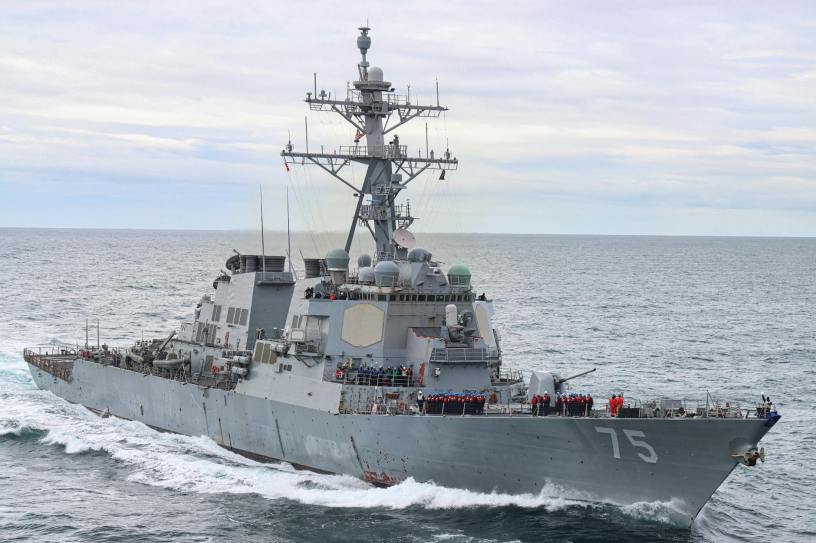
Tokyo, August 28, 2025 – As geopolitical tensions simmer in the South China Sea, the defense partnership between Japan and the Philippines has evolved rapidly throughout 2025, marked by joint exercises, ministerial agreements, and now, the prospective transfer of retired Japanese warships to bolster Manila’s naval capabilities. This year-long progression underscores a shared commitment to countering China’s growing military assertiveness, with the latest development involving the Abukuma-class destroyer escorts potentially representing Japan’s first major naval platform export in decades (Japan Times, 2025; Naval News, 2025).
The story traces back to early 2025, when bilateral relations gained momentum amid escalating maritime disputes. In February, Japanese and Philippine defense ministers convened to pledge enhanced cooperation, citing an “increasingly severe” security environment in the Indo-Pacific (Kyodo News, 2025; Department of National Defense, Philippines, 2025). Philippine Defense Secretary Gilberto Teodoro highlighted the need for stronger ties, while Japan’s Defense Minister Gen Nakatani stressed mutual concerns over freedom of navigation (Kyodo News, 2025).
By early February, practical collaboration materialized through multilateral maritime activities. On February 5, forces from Australia, Japan, the Philippines, and the United States conducted a cooperative exercise within the Philippines’ Exclusive Economic Zone, focusing on interoperability and maritime domain awareness (U.S. Embassy, Philippines, 2025). This event set the tone for a year of intensified engagements, reflecting a broader Quad-like framework to deter aggression.
March brought further advancements. Japan announced its full participation in the annual Balikatan exercises with the Philippines and the U.S., marking Tokyo’s debut as a full-fledged partner in the drills scheduled for later in the year (Philippine Star, 2025). This step was hailed as the culmination of years of budding security ties, enabling Japanese Self-Defense Forces to engage in complex scenarios alongside Filipino and American troops. Additionally, on March 28, another trilateral maritime cooperative activity involving Japan, the Philippines, and the U.S. underscored the trio’s resolve to uphold international law in contested waters (U.S. Naval Institute News, 2025).
Spring transitioned into high-level diplomacy. In late May, defense ministers from Australia, Japan, the Philippines, and the United States issued a joint statement reaffirming their commitment to a free and open Indo-Pacific (Australian Department of Defence, 2025). This quadrilateral dialogue paved the way for bilateral progress between Tokyo and Manila. On June 1, during the Shangri-La Dialogue in Singapore, Nakatani and Teodoro held a dedicated meeting, agreeing to accelerate defense industrial cooperation and explore equipment transfers (The Diplomat, 2025; Defense News, 2025).
A pivotal milestone came on June 6, when Japan’s parliament approved the Reciprocal Access Agreement (RAA) with the Philippines, easing restrictions on troop movements for joint exercises and disaster relief (Japan Ministry of Defense, 2025). This pact, set to enter force on September 11, 2025, following an exchange of diplomatic notes on August 12, facilitates deeper military integration, including logistics and personnel exchanges (Reuters, 2025; Nikkei Asia, 2025; Philippine Daily Inquirer, 2025). Officials from both nations celebrated the RAA as a cornerstone for ensuring regional peace and stability (Manila Bulletin, 2025).
The RAA’s approval coincided with discreet talks on hardware support. During the June Singapore meeting, Nakatani and Teodoro reportedly formalized discussions on transferring up to six Abukuma-class destroyer escorts, retired from Japan’s Maritime Self-Defense Force (JMSDF) due to fleet modernization and personnel constraints (Naval Technology, 2025; The Japan Times, 2025). These vessels, commissioned between 1989 and 1993, are being phased out by 2027 in favor of the advanced Mogami-class frigates (Naval-Technology, 2025).
Public reports emerged in early July, confirming the Philippine Navy’s interest in the Abukuma-class ships—each 109 meters long, displacing around 2,000-2,550 tons, and capable of 27 knots (Naval News, 2025; Japan Times, 2025; Naval Technology, 2025). Equipped with anti-submarine rockets, torpedoes, Harpoon missiles, a 76mm gun, and Phalanx CIWS, they offer versatile capabilities for anti-submarine and anti-surface warfare, aligning with Manila’s needs to patrol its vast archipelago (The Japan Times, 2025; Janes, 2025). The transfer, potentially free with refurbishment costs borne by the Philippines, would significantly upgrade the Philippine Navy, which currently lacks full-sized destroyers (Naval Technology, 2025; The Japan Times, 2025).
By mid-summer, a Philippine inspection team visited Japan for a 10-day assessment of the vessels (Japan Times, 2025; The Japan Times, 2025). Returning recently, the experts are now preparing recommendations for Navy Headquarters and the Department of National Defense, with a decision expected in the coming months (Japan Times, 2025). A senior Philippine official described the process as progressing smoothly, emphasizing the strategic value in countering regional threats (Japan Times, 2025).
This potential acquisition fits into Japan’s 2014 policy shift allowing defense equipment transfers to allies, and its broader strategy to support Southeast Asian nations (Asia Times, 2025; South China Morning Post, 2025). For the Philippines, it addresses a capability gap highlighted in reports like the 2025 Military Balance, where China’s 102 surface combatants dwarf Manila’s modest fleet (Naval Technology, 2025).
Analysts view these developments as a deterrent to Chinese expansionism, potentially tilting the balance in the South China Sea without direct confrontation. However, challenges remain, including integration costs and training (Naval Technology, 2025). As the RAA activates next month, expect further collaborations, including joint patrols and technology sharing (ABS-CBN News, 2025; Stars and Stripes, 2025).
In a year defined by proactive diplomacy, Japan and the Philippines have transformed rhetoric into action, fortifying their alliance against an uncertain future. The Abukuma transfer, if finalized, could symbolize this new era of partnership.
References
Australian Department of Defence. (2025). Joint statement by Australia, Japan, Philippines, and U.S. defense ministers.
Department of National Defense, Philippines. (2025). Joint statement on Japan-Philippines defense cooperation.
Japan Ministry of Defense. (2025). Approval of Reciprocal Access Agreement with the Philippines.
Japan Times. (2025, August 26). Philippines considers acquiring Japan’s retired Abukuma-class destroyer escorts. https://www.japantimes.co.jp/news/2025/08/26/japan/philippines-japan-abukuma-destroyer-escort/
Janes. (2025). Abukuma-class destroyer escort specifications.
Kyodo News. (2025). Japan, Philippines pledge enhanced defense ties amid regional tensions.
Manila Bulletin. (2025). Philippines, Japan celebrate RAA as cornerstone for regional stability.
Naval News. (2025). Japan’s Abukuma-class destroyer escorts considered for Philippine Navy.
Naval Technology. (2025). Philippines eyes Japan’s Abukuma-class ships to bolster naval capabilities.
Naval-Technology. (2025). Japan’s Mogami-class frigates to replace Abukuma-class by 2027.
Nikkei Asia. (2025). Japan-Philippines RAA to enter force in September.
Philippine Daily Inquirer. (2025). Diplomatic notes exchanged for Japan-Philippines RAA.
Philippine Star. (2025). Japan joins Balikatan exercises as full partner.
Reuters. (2025). Japan parliament approves defense pact with Philippines.
South China Morning Post. (2025). Japan’s defense equipment transfer policy supports Southeast Asia.
Stars and Stripes. (2025). Japan-Philippines defense ties deepen with joint patrols.
The Diplomat. (2025). Japan, Philippines accelerate defense cooperation at Shangri-La Dialogue.
U.S. Embassy, Philippines. (2025). Multilateral maritime cooperative activity in South China Sea.
U.S. Naval Institute News. (2025). Trilateral maritime exercise strengthens Indo-Pacific security.
Discover more from WPS News
Subscribe to get the latest posts sent to your email.
 WPS News