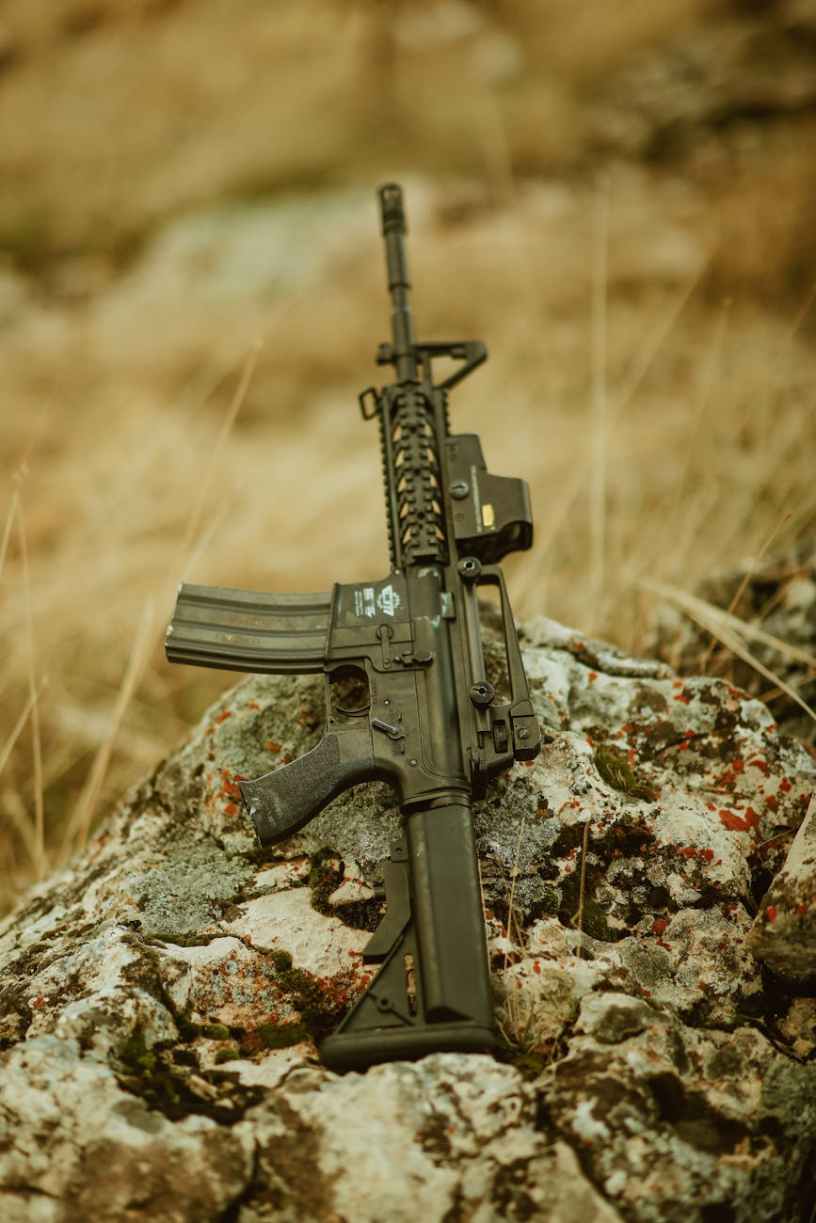
Manila, Philippines – September 6, 2025 – The West Philippine Sea, a critical maritime region rich in natural resources and vital shipping lanes, continues to be a flashpoint of geopolitical tension between the Philippines and China. Over the past week, from August 31 to September 6, joint military exercises involving the Philippines and its allies have underscored Manila’s commitment to asserting its sovereign rights, while Chinese vessels have maintained a vigilant presence, monitoring activities and prompting renewed concerns over potential escalations. These developments occur against a backdrop of longstanding disputes, with the Philippines emphasizing peaceful resolutions grounded in international law.
Brief Historical Overview
The West Philippine Sea refers to the portions of the South China Sea within the Philippines’ exclusive economic zone (EEZ), a designation formalized by Administrative Order No. 29 in 2012 under President Benigno Aquino III to assert territorial claims amid growing friction with China (Wikipedia, 2025). The disputes trace back to the post-World War II era, with the Philippines basing its claims on historical maps like the 1734 Velarde map and treaties such as the 1898 Treaty of Paris and the 1900 Treaty of Washington. In the 1970s, the Philippines occupied features in the Spratly Islands, declaring the Kalayaan Island Group as part of its territory via Presidential Decree No. 1596 in 1978.
Tensions escalated in the 1990s when China occupied Mischief Reef in 1994. The 2012 Scarborough Shoal standoff marked a turning point, leading the Philippines to file an arbitration case against China. In a landmark 2016 ruling by the Permanent Court of Arbitration in The Hague, China’s expansive “nine-dash line” claims were invalidated as incompatible with the United Nations Convention on the Law of the Sea (UNCLOS), affirming the Philippines’ rights within its EEZ (Wikipedia, 2025). China rejected the decision, continuing land reclamation and militarization efforts, including building airstrips and missile systems on features like Fiery Cross, Subi, and Mischief Reefs—despite a 2015 pledge by Chinese President Xi Jinping not to militarize the area.
In recent years, incidents have included collisions, water cannon attacks, and harassment of Filipino fishermen. As of April 2025, Google Maps updated its labeling to explicitly include “West Philippine Sea,” a move praised by Philippine officials but contested by China. Up to September 2025, the region has seen ongoing patrols, with China requesting the cancellation of a documentary on Philippine fishermen at a New Zealand festival in July and a vessel collision near Scarborough Shoal on August 11 (Wikipedia, 2025). The Philippines, under President Ferdinand Marcos Jr., has strengthened alliances, rejecting conciliatory approaches toward China and focusing on deterrence through laws like the Maritime Zones Act and modernization of its armed forces.
Events in the Last Seven Days
The week began on August 31 with the National Security Council (NSC) reaffirming the Philippines’ peaceful stance in the West Philippine Sea, emphasizing that Manila is not engaging in intimidation tactics amid ongoing disputes (Manila Bulletin, 2025). This came shortly after an amphibious assault exercise under Exercise ALON 2025 in Palawan on August 23, highlighting joint operations with Australia. On the same day, reports emerged of Manila facing Beijing’s criticism over an unofficial visit to Taiwan, further straining relations (Facebook, 2025).
By September 2, the Armed Forces of the Philippines (AFP) reported spotting at least 20 Chinese maritime militia vessels and four coast guard ships near Ayungin Shoal, a key outpost where the grounded BRP Sierra Madre serves as a Philippine garrison (ABS-CBN, 2025). Despite tensions, the Philippine Coast Guard successfully delivered supplies and personnel to the shoal, adhering to a provisional arrangement with China that requires prior notification and verification for humanitarian reasons (AP News, 2025). This mission underscored Manila’s resolve to maintain its presence without provocation.
Midweek, on September 2 and 3, the 10th Multilateral Maritime Cooperative Activity (MMCA) took place near Scarborough Shoal, involving the Philippine Navy’s BRP Jose Rizal, Australia’s HMAS Brisbane, and Canada’s HMCS Ville de Québec. The exercises included formation sailing and photo operations to demonstrate unity and freedom of navigation (Inquirer.net, 2025). However, two Chinese Navy ships shadowed the drills, a move described by Philippine officials as underscoring persistent tensions (Steve Anderson, 2025). The AFP noted this as part of China’s routine monitoring, aligning with broader patterns of surveillance in the region.
On September 5, additional reports confirmed Chinese vessels closely observing the joint exercises, with no direct confrontations but heightened vigilance from all sides (Philstar, 2025). Meanwhile, discussions on environmental damage continued, with experts noting China’s island-building activities have caused significant harm to marine habitats, prompting calls for international inquiries (Aisling, 2025). The National Maritime Council urged Filipinos to “stand tall” against maritime threats, emphasizing the protection of resources for future generations (YouTube, 2025).
These events reflect the Philippines’ strategy of enhancing maritime domain awareness and alliances under the Comprehensive Archipelagic Defense Concept, while avoiding aggression. President Marcos has reiterated that the country will not back down on its rights but seeks no confrontation, a position echoed in plans for 2025 that include bolstering deterrence and supporting fishermen (GMA News, 2025).
As the week concludes, the West Philippine Sea remains a symbol of broader Indo-Pacific rivalries, with the Philippines advocating for adherence to international rulings and multilateral cooperation to ensure peace and resource access.
References
ABS-CBN. (2025, September 2). 20 Chinese maritime militia, 4 coast guard ships spotted near Ayungin Shoal: AFP. https://www.abs-cbn.com/news/nation/2025/9/2/20-chinese-maritime-militia-4-coast-guard-ships-spotted-near-ayungin-shoal-afp-1853
Aisling. (2025, September 6). [X post]. https://x.com/Aisling_112233/status/1964334099457618088
AP News. (2025). Philippine forces deliver supplies and personnel to disputed South China Sea shoal despite tensions. https://apnews.com/article/philippines-second-thomas-shoal-south-china-sea-9f1b2234a57a607a6dbb15afc1364380
Facebook. (2025, August 31). LOOK: Manila Faces Beijing’s Ire Over Unofficial Taiwan Visit. https://www.facebook.com/groups/1592147124328145/posts/2764072410468938/
GMA News Online. (2025). West PH Sea tensions and what PH plans to do in 2025. https://www.gmanetwork.com/news/topstories/specialreports/931188/west-ph-sea-tensions-and-what-ph-plans-to-do-in-2025/story/
Inquirer.net. (2025). West Philippine Sea. https://www.inquirer.net/west-philippine-sea/
Manila Bulletin. (2025, August 31). NSC affirms peaceful stance in WPS: ‘We aren’t the ones doing intimidation’. https://mb.com.ph/2025/08/31/nsc-affirms-peaceful-stance-in-wps-we-arent-the-ones-doing-intimidation
Philstar. (2025, September 5). Chinese ships monitor latest West Philippine Sea joint exercise. https://www.philstar.com/headlines/2025/09/05/2470595/chinese-ships-monitor-latest-west-philippine-sea-joint-exercise
Steve Anderson. (2025, September 6). [X post]. https://x.com/SteveAn71083739/status/1964216761450189026
Wikipedia. (2025). Territorial disputes in the South China Sea. https://en.wikipedia.org/wiki/Territorial_disputes_in_the_South_China_Sea
Wikipedia. (2025). West Philippine Sea. https://en.wikipedia.org/wiki/West_Philippine_Sea
YouTube. (2025, September 2). NMC: Stand tall against looming shadow of maritime invasion posed. https://www.youtube.com/watch?v=nha9lmHdgeI
Discover more from WPS News
Subscribe to get the latest posts sent to your email.
 WPS News