Chapter 7: A Millennia of Maritime Marauding: The Evolution of Chinese Piracy
Introduction
For over a thousand years, piracy has been intricately woven into the rich tapestry of China’s maritime history, serving as a reflection of the socio-economic dynamics and geopolitical tensions that have defined the nation across various epochs. From the notorious Wokou of the late medieval era to contemporary controversies surrounding the Chinese Maritime Militia (CMM), the spectrum of piracy has broadened, adapting to technological advancements and shifting political landscapes. This chapter embarks on a comprehensive examination of the multifaceted nature of Chinese piracy, tracing its evolution from historical roots to the present day, where acts of aggression against international maritime law and resource theft persist.
Historical Context: Rise of the Wokou
The story of Chinese piracy begins during the Song and Ming dynasties, when the Wokou—often referred to as “Japanese pirates”—emerged as a formidable threat along China’s coasts. Contrary to the popular conception that these marauders were solely Japanese, the Wokou comprised a motley crew of Chinese and foreign pirates who engaged in looting and pillaging, frequently targeting merchant ships and coastal villages. Their activities were driven by economic desperation and the lack of effective state control over vast maritime territories. The Ming dynasty’s attempts to quash these groups through military campaigns revealed the challenges of governance and law enforcement in a period marked by expanding trade networks. The government’s sporadic crackdowns served as both a deterrent and, paradoxically, a source of resilience among these pirates, who often found ways to evade capture and continue their prolific raids. This turbulent era established a precedent for the complex relationship between state authority and maritime outlawry in China, illustrating themes of resistance and survival amid an increasingly commercialized world.
The Decline and Resurgence
As the centuries progressed, piracy in China saw an initial decline, only to reemerge in the 19th and early 20th centuries, propelled by socio-political turmoil. The Opium Wars, the collapse of the Qing dynasty, and the subsequent upheavals of the Republic of China created a vacuum of power along the coasts, enabling piracy to flourish once more. Coastal poverty and government disarray turned many desperate fishermen into pirates, paving the way for a new wave of maritime lawlessness. Coastal communities, left to fend for themselves amid waning state authority, often tacitly supported these illicit endeavors as a means of economic survival. However, the establishment of the People’s Republic of China in 1949 marked a significant shift in this narrative, as the new communist regime sought to eliminate open piracy through stringent maritime security policies. The state’s efforts initially stifled piracy, demonstrating a concerted attempt to restore order and reinforce national sovereignty over China’s extensive coastline.
Contemporary Landscape: The Maritime Militia
In the 21st century, the concept of piracy has morphed dramatically, giving rise to modern piracy manifested through the activities of the Chinese Maritime Militia. This organization embodies a calculated extension of Chinese national interests, utilizing a blend of civilian and paramilitary resources to assert dominance over contested maritime territories. The CMM operates without the overt markings of state military vessels, enabling it to navigate the gray areas of international law, effectively complicating states’ responses and undermining stability in critical maritime regions.
The use of gray zone tactics employed by the CMM blurs the distinctions between military aggression and civilian operations. By deploying civilian fishing boats, armed merchant vessels, and even disguising military assets, the CMM engages in a variety of aggressive operations under the guise of legitimate fishing and maritime activities. This strategy allows for plausible deniability, as China can assert that these vessels operate independently, even while coordinating complex operations that involve direct confrontation with rival states. Reports indicate that these CMM tactics include the theft of marine resources from waters claimed by neighboring countries, such as Vietnam and the Philippines. As these vessels encroach upon foreign territorial waters with little regard for international maritime laws, the activities reflect a calculated appropriation of ocean resources, intensifying regional tensions.
Moreover, deepening concerns regarding the CMM’s actions have been documented through encounters involving the United States Coast Guard (USCG). Reports have surfaced detailing incidents where CMM vessels aggressively attempted to ram USCG boats patrolling international waters off the Pacific coast of South America. Such behavior underscores a brazen disregard for established maritime protocols and international law, as these CMM vessels exhibit an increasingly criminal flair, demonstrating a willingness to escalate confrontations for the sake of asserting Chinese territorial claims. These confrontational tactics mirror practices reminiscent of piracy in more traditional forms, where aggressors acted without regard for the safety of others or the sanctity of internationally recognized boundaries. The ramifications of these aggressive maneuvers extend far beyond immediate skirmishes, as they sow discord and complicate diplomatic relations with nations who have legitimate claims in these contested waters.
Gray Tactics: A Blend of Coercion and Cooperation
Gray-zone tactics, synonymous with the CMM’s operational strategy, represent actions that occupy the ambiguous space between peace and war, often characterized by the use of non-traditional forces or operations that are difficult to classify within the framework of conventional military engagement. The Chinese Maritime Militia employs a range of such tactics, allowing the state to assert its claims while avoiding the definitive conflicts that would trigger international scrutiny or military retaliation.
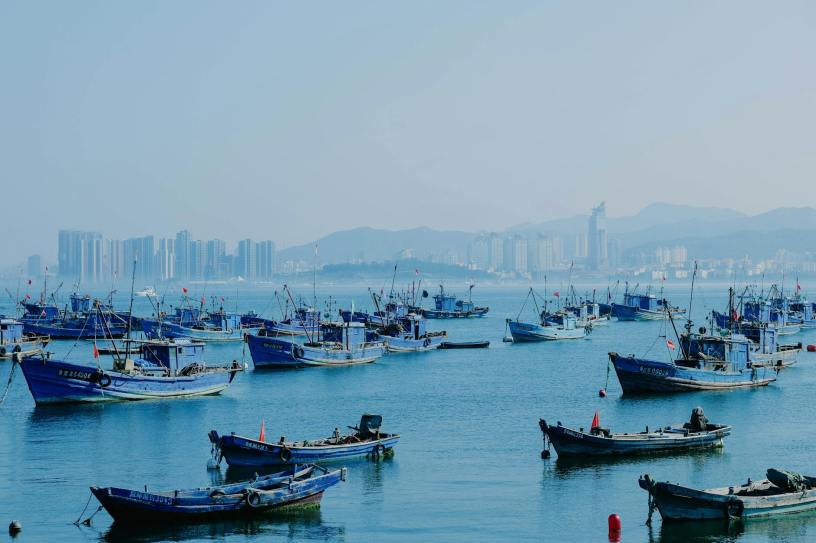
One significant component of these gray tactics involves the use of civilian fishing boats, which disguise military intentions under the veil of legitimate commercial interests. These vessels, often enmeshed in resource theft operations, illegally harvest marine life in waters claimed by neighboring countries. By employing ostensibly civilian vessels, China creates a narrative of plausible deniability around its aggressive actions, which complicates direct responses from rival states wary of escalating disputes into overt military confrontations. This strategic misrepresentation effectively masks the acts of piracy that are fundamentally rooted in resource appropriation, while also undermining the security of established fishing rights and regional economies.
Furthermore, the CMM’s operational model allows it to engage in strategic disruption of neighboring states’ maritime activities. By deploying fleets composed of civilian fishing boats in a show of force, the militia systematically challenges foreign vessels, asserting China’s claims to disputed maritime territories. The CMM’s actions have led to numerous confrontations that highlight the vulnerabilities of both regional maritime security and international maritime law. The strategy of employing these gray-zone tactics helps to erode the doctrine of a rules-based international system, raising questions about the efficacy of existing treaties and agreements meant to govern maritime conduct.
The increased aggressiveness and criminal-like behavior of the CMM have not gone unnoticed on the global stage, drawing condemnation from other nations and international organizations. Reports of confrontational encounters—ranging from aggressive maneuvers against research vessels to direct confrontations with law enforcement agencies—paint a troubling picture of a force that operates with little regard for established norms of maritime conduct. Such activities not only violate international law but also pose significant threats to regional stability, as the implications of these criminal undertakings extend well beyond the immediate impacts on resource exploitation.
Modern Implications and Accusations
The involvement of the Chinese Maritime Militia in questionable maritime activities has escalated tensions in the South China Sea and beyond, with numerous accusations of piracy and theft surfacing regularly. Reports from countries like the United States, Australia, and various Southeast Asian nations have indicated systemic patterns of aggressive behavior that serve to undermine regional security and undermine faith in international maritime agreements. The CMM’s tactics, often executed in tandem with diplomatic overtures from the Chinese government, create an atmosphere of ambiguity that hampers responses and complicates diplomatic efforts aimed at resolution.
As nations grapple with the reality of the CMM’s maritime behavior, calls for a more structured international response are growing. The USCG and other international maritime authorities are increasingly vocal about the need for collaborative efforts to deter unlawful actions at sea and uphold the principles of freedom of navigation. However, the challenge lies in effectively countering the combination of civilian and paramilitary strategies that the CMM employs. The actions of these militia vessels are reminiscent of traditional piracy, characterized by unlawful aggression, exploitation of resources, and a calculated disregard for the safety and rights of others.
Conclusion
The evolution of Chinese piracy encapsulates over a millennium of maritime history marked by adaptation, resilience, and transformation. The last thousand years of piracy have seen a transition from the sword-wielding marauders of ancient times to the complex operations of today’s Chinese Maritime Militia, which blends military strategy with civilian masquerade. As accusations of piracy and misappropriation of maritime resources proliferate, it is evident that the CMM embodies a new breed of criminality, one that undermines regional stability and complicates international relations. In an era of gray-zone tactics, it becomes essential for the international community to recognize these actions for what they are and to work collaboratively to uphold maritime law and deter further acts of aggression on the high seas.
- Photo by lee starry on Pexels.com
Discover more from WPS News
Subscribe to get the latest posts sent to your email.
 WPS News