Chapter 8: The Turtle Ship: A Korean Defense against Maritime Threats
Introduction
The Korean turtle ship, known as “Geobukseon,” is a remarkable symbol of naval innovation and military prowess in Korean history. While primarily famous for its role during the Imjin War against Japanese invaders in the late 16th century, its significance extended beyond that conflict. The design and functionality of the turtle ship also played a crucial role in defending the Korean coastline against various maritime threats, including Chinese pirates and notorious figures like Ching Shih.
The Turtle Ship: Design and Features
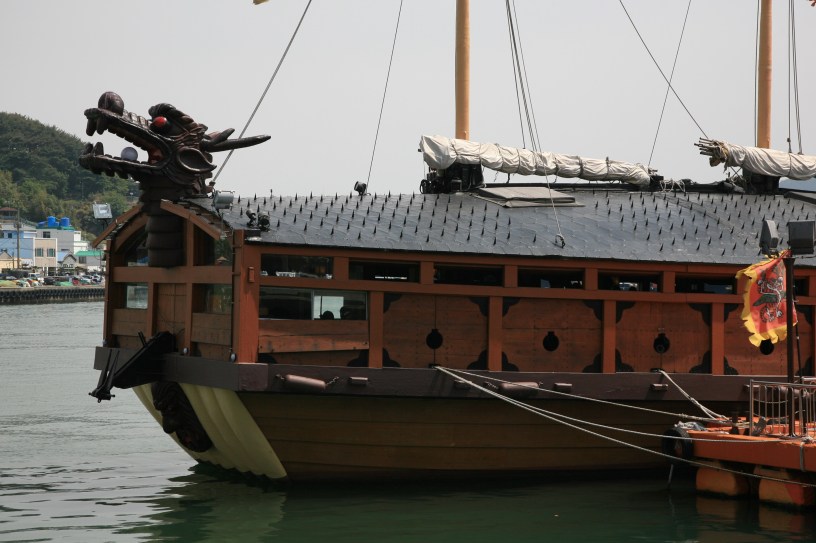
Developed by Admiral Yi Sun-sin, the turtle ship was a revolutionary maritime vessel that combined heightened defensive capabilities with offensive prowess. Its design was characterized by a covered deck, an innovation aimed at protecting the crew and preventing boarding by enemy forces. The deck was adorned with iron spikes, giving the ship a formidable appearance and deterring potential assailants from attempting to climb aboard.
The hull of the turtle ship was constructed to be both robust and seaworthy. It often utilized a curved design that improved its maneuverability in choppy waters. The ship typically featured multiple cannons positioned on the sides, enabling it to unleash a barrage of firepower on approaching enemies. In addition to its offensive capabilities, the protective cover served an essential defensive role, allowing the ship’s crew to operate without the immediate threat of projectiles from enemy ships.
Historical Context and Use Against Pirates
The turtle ship was initially created to confront the imminent danger posed by Japanese naval forces during the late 16th century. However, as piracy thrived in the region, particularly during the late 18th and early 19th centuries, the turtle ship’s role evolved. While Ching Shih and her fleet were primarily active in the South China Sea, the threat of piracy extended to Korean waters, where Chinese pirates often targeted coastal villages and merchant vessels.
To counter these threats, the Korean navy, bolstered by turtle ships, was crucial in safeguarding its maritime interests. The presence of the turtle ship-dominated naval force provided both a deterrent and a response capability against pirate raids. Its firepower allowed Korean forces to engage pirate ships effectively in battle and protect trade routes critical to the country’s economy.
Duration of Use and Effectiveness
Turtle ships were actively used during the Imjin War and continued to serve in various capacities in the ensuing years. They remained a part of the Korean naval arsenal for centuries, with documented usage into the 17th and 18th centuries. However, as naval warfare technology advanced and different military strategies evolved, the turtle ship gradually became less prominent.
Despite this decline in frequency of use, the effectiveness of the turtle ship during its operational period is evident through its successful engagements. The ship’s unique design and formidable armament made it a formidable opponent in battles against both Japanese invaders and Chinese pirates. Its reputation instilled confidence in the Korean navy and deterred some assaults from pirate factions that might have otherwise posed significant threats.
The innovative features of the turtle ship, particularly its combination of speed, agility, and firepower, allowed it to outmaneuver larger ships, making it an effective vessel for guerrilla-style naval engagements. This effectiveness contributed to maintaining safe maritime routes along Korea’s coast and protecting its maritime trade from foreign threats.
Legacy of the Turtle Ship
The legacy of the turtle ship endures as a symbol of Korea’s resilience and ingenuity in facing historical challenges. Although its operational period came to an end with the rise of new naval technologies, the turtle ship remains revered in Korean culture as a testament to the tactical innovation employed by Admiral Yi Sun-sin and his forces.
Modern interpretations of turtle ships can be found in cultural representations, such as films, literature, and museums dedicated to naval history. The impact of the turtle ship on Korea’s maritime defense against piracy, including figures like Ching Shih, is celebrated as an essential aspect of the country’s rich historical tapestry.
#### Conclusion
In summary, the Korean turtle ship stands out as a critical instrument of defense against maritime threats during a period marked by piracy and conflict. Its innovative design, combined with the strategic vision of Admiral Yi Sun-sin, enabled Korea to confront both Japanese invaders and Chinese pirates effectively. While the operational timeline of the turtle ship ultimately diminished, its contributions to Korean history and maritime warfare resonate to this day, underscoring the importance of adaptability and ingenuity in the face of adversity. The turtle ship is much more than a vessel; it is a source of national pride and a symbol of resistance against foreign threats on the seas.
Discover more from WPS News
Subscribe to get the latest posts sent to your email.
 WPS News