Chicago, IL — October 18, 2025
Cliff Potts, WPS.News
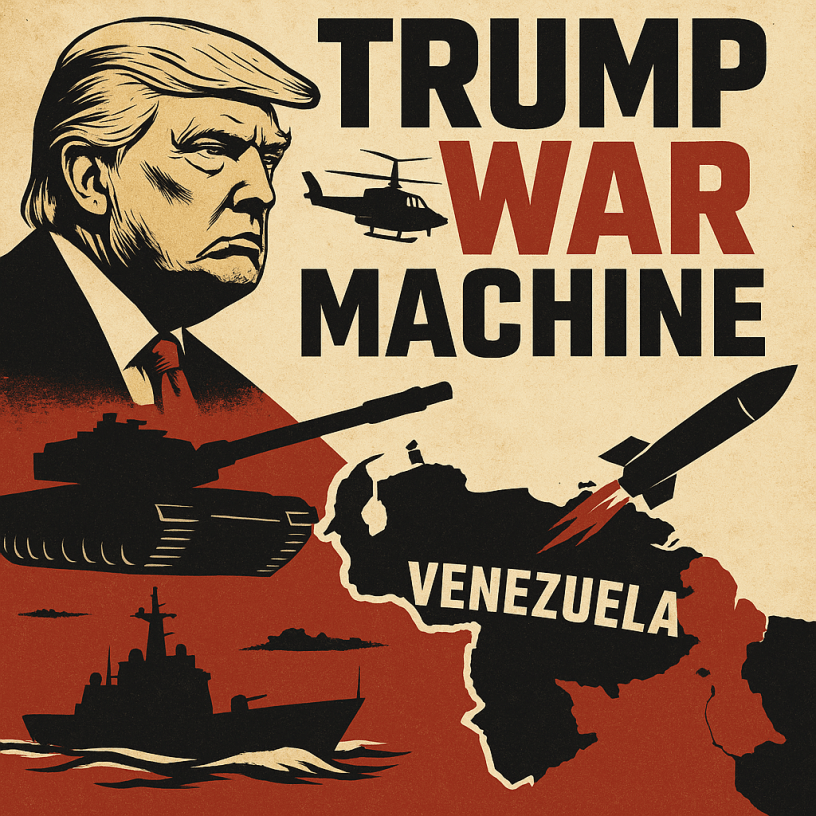
The short version: the Trump administration is escalating against Venezuela on multiple fronts—military, intelligence, and economic—while dangling selective oil licenses for U.S. firms. We’ve now seen U.S. strikes on suspected drug-smuggling vessels in the Caribbean with survivors captured at sea, a President boasting that Nicolás Maduro is ready to “give everything,” and confirmation that CIA covert operations are green-lit inside Venezuela. That is a combustible mix. Is this an anti-narcotics campaign? Or the opening beats of another manufactured war dressed up in “national security” language—Vietnam-style mission creep with oil politics in the background? The evidence points uncomfortably toward the latter (Associated Press, 2025; Al Jazeera, 2025; Reuters, 2025; The Guardian, 2025).
Here’s what’s actually happening:
- Armed strikes & detainees at sea. The U.S. military has conducted at least six lethal strikes since September on suspected semi-submersible “narco” vessels near Venezuela. The latest attack produced two survivors now held aboard a U.S. Navy ship, raising unresolved questions: Are these POWs or criminal defendants? Under what authority is the U.S. conducting lethal operations outside a declared war? Even on counter-drug grounds, the post-9/11 ‘armed conflict’ framework is a legal stretch—and Congress is finally asking hard questions (Associated Press, 2025; The Guardian, 2025).
- Open talk of regime leverage. Trump publicly claimed Maduro is willing to offer “everything,” including natural resources, to tamp down tensions—bragging that Caracas “doesn’t want to [mess] around” with the U.S. That’s not diplomacy; it’s a shakedown speech with oil in the subtext (Reuters, 2025; The Guardian, 2025).
- Covert operations inside Venezuela. The White House confirmed authorization for CIA operations—with talk that ground attacks could be next. When the intel arm moves first, the military footprint often follows. That’s the playbook we know too well (Al Jazeera, 2025).
- Oil licenses as carrots and sticks. After years of sanctions whiplash, the administration granted restricted, time-boxed licenses that let Chevron operate—while still walling off proceeds from Maduro. In practice, Washington holds the oil spigot handle and can turn it for friends, shut it for foes. That is power politics, not rule-based order (WLRN, 2025; Reuters, 2025; Rystad Energy, 2025; OFAC/US Treasury, 2024–2025).
- Regional flashpoints in the background. The simmering Essequibo crisis with Guyana provides another pretext for U.S. “security cooperation” postures along Venezuela’s flank. That tension didn’t start this month—but it adds kindling to the pile (CSIS, 2025).
Are we looking at another trumped-up war?
It’s not 1964, and there’s no Gulf of Tonkin resolution on the table. But the pattern rhymes: hyped threats, elastic legal theories, covert ops first, kinetic strikes justified as “self-defense” or “counter-narcotics,” and resource leverage humming under everything. Add a president publicly taunting a foreign leader and you have a crisis architecture that can slide into open conflict without a formal debate or vote (AP, 2025; Al Jazeera, 2025).
What it means for Americans: If this turns into sustained hostilities, we’ll be told it’s quick, clean, and necessary. It never is. Congress must force daylight: demand the legal memos, set bright red lines on use of force, and require sunset clauses on any authorities tied to Venezuela. If this is about drugs, use law enforcement and courts. If it’s really about oil and regime change, level with the public and take it to a vote.
What it means for Venezuela and the region: Venezuelans—already battered by authoritarianism and sanctions—could face worse: escalatory raids, proxy clashes, and a humanitarian squeeze. Guyana’s Essequibo dispute sits nearby as an ignition source. CARICOM and regional democracies should insist on de-escalation and transparent mediation, not sleepwalk into a Caribbean war.
Bottom line: This looks less like a targeted crime-control mission and more like pre-hostilities shaping—with oil leverage on one side and strongman survival on the other. We’ve seen this movie. We know how it ends. If the White House wants a war, it should say so, seek authorization, and face the country. Anything less is a Vietnam-style con in modern packaging.
References (APA)
Al Jazeera. (2025, October 16). Trump approves CIA operations in Venezuela: What we know, and what’s next.
Associated Press. (2025, October 18). US has seized survivors after strike on suspected drug-carrying vessel in Caribbean, AP sources say.
CSIS. (2025, March 5). What is the significance of Venezuela’s naval incursion toward Guyana?
Holland & Knight. (2024, April 19). OFAC revokes General License 44 related to Venezuela’s oil.
OFAC, U.S. Department of the Treasury. (n.d.). Venezuela-related sanctions (FAQs and license archive).
Reuters. (2025, July 30). Chevron granted restricted U.S. license to operate in Venezuela—sources.
Reuters. (2025, October 17). Trump says Venezuelan President Maduro “doesn’t want to [mess] around” with U.S.
Rystad Energy. (2025, August 28). US eases sanctions on Venezuela: Chevron, PDVSA, and the politics of oil.
The Guardian. (2025, October 17). Trump claims Maduro willing to give “everything” to ease U.S. tensions.
WLRN. (2025, July 26). Chevron cleared to pump oil in Venezuela under new U.S. license; critics say Maduro regime benefits.
Discover more from WPS News
Subscribe to get the latest posts sent to your email.
 WPS News