Scheduled Publication: Monday, October 20, 2025 | 11:00 AM CET / 5:00 AM EDT / 5:00 PM PHST | WPS.News
By Cliff Potts
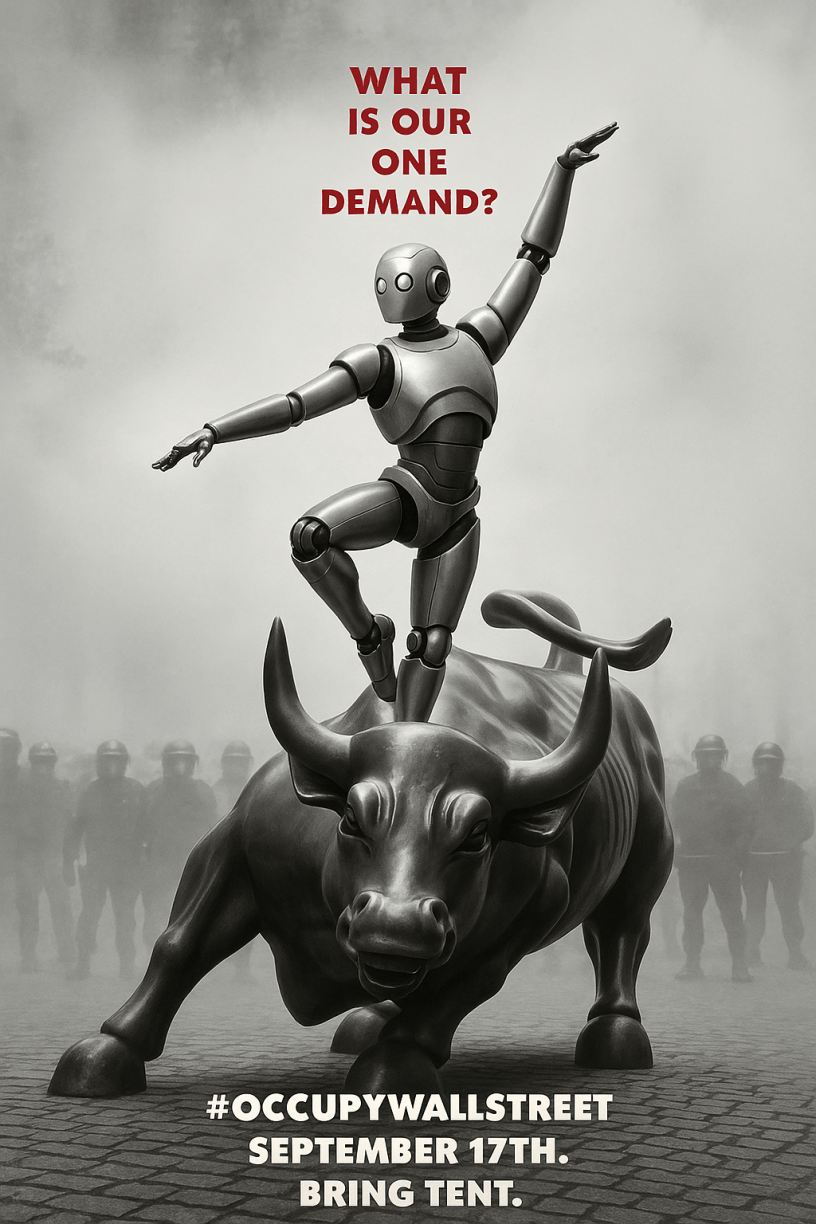
In 2011, a cardboard sign reading “We are the 99%” went viral—not only in the streets of New York but across the digital world. That sign, and the movement it symbolized, catalyzed a global shift in how protests are organized, documented, and amplified. While digital activism didn’t begin with Occupy Wall Street, it evolved significantly in its wake. Now in 2025, Occupy 2.5 picks up the torch—fully aware that the battleground has shifted: from public squares to fiber-optic cables, from bullhorns to bandwidth.
From Megaphones to Memes: A Decade of Digital Transformation
Occupy Wall Street made livestreaming a frontline tool. Protesters with smartphones broadcasted events in real time, bypassing traditional media filters (Juris, 2012). Platforms like Twitter and Tumblr were not just conduits for the message—they were the movement. Memes became protest art; hashtags became global rallying cries. This was activism engineered for virality.
What followed was a decade of decentralized digital uprisings. From the Arab Spring to Hong Kong’s Umbrella Movement to #BlackLivesMatter, social media played a central role (Tufekci, 2017). The internet became not just a megaphone, but a mobilization machine.
Encrypted and Decentralized: The New Activist’s Toolkit
Today’s digital activist faces a more sophisticated adversary. Surveillance capitalism, AI-driven facial recognition, and disinformation campaigns have made organizing more precarious (Zuboff, 2019).
In response, the tools have evolved. Signal, Mastodon, and Matrix offer secure communications; decentralized networks provide resilience when accounts are banned or hashtags throttled. Activists are increasingly turning to open-source alternatives, peer-to-peer file sharing, and VPNs to maintain operational security.
Where the 2010s prioritized going viral, today’s resistance values digital stealth for safety and sustainability.
Visibility vs. Virality: The Algorithm Is Not Neutral
Digital platforms promise reach—but at what cost? Algorithms optimize for engagement, not truth. Content critical of power is often deprioritized. Shadowbanning—covert downranking—disproportionately affects political activists and marginalized communities (Noble, 2018).
At the same time, the line between visibility and performativity blurs. A trending hashtag may raise awareness but fail to yield change. Occupy 2.5 understands this gap and uses digital tools not just to make noise, but to build durable, transnational solidarity.
The Real-World Cost of Digital Dissent
Digital activism carries very real consequences. From Egypt to Belarus to the United States, activists have been doxxed, arrested, or blacklisted for online actions (Morozov, 2011). A tweet can be evidence; a livestream can reveal a protester’s face.
Movements are adapting by developing protection strategies—technological, legal, and emotional. Digital trauma is real. The psychological toll of surveillance, harassment, and censorship is now part of the activist’s burden.
Occupy 2.5: A New Model for a Global Digital Front
Occupy 2.5 is more than a revival—it’s a response to a world more unequal, digitized, and unstable than in 2011. Leveraging platforms like WPS.News, WTFM.lol, and alternative video networks, the movement bypasses the algorithmic bottlenecks of corporate media.
It draws lessons from past failures and successes while inviting global participation—not as spectators, but as co-creators. Digital activism is no longer spectacle—it’s infrastructure: distributed, resilient, and hard to silence.
Europe, with its stronger digital privacy laws and deep traditions of civil resistance, plays a critical role. Occupy 2.5 poses a direct question: What does solidarity look like when borders, time zones, and languages are no longer barriers?
This isn’t just a protest. It’s a reclamation of power.
References (APA Style):
Juris, J. S. (2012). Reflections on #Occupy Everywhere: Social media, public space, and emerging logics of aggregation. American Ethnologist, 39(2), 259–279.
Tufekci, Z. (2017). Twitter and Tear Gas: The Power and Fragility of Networked Protest. Yale University Press.
Zuboff, S. (2019). The Age of Surveillance Capitalism. PublicAffairs.
Noble, S. U. (2018). Algorithms of Oppression: How Search Engines Reinforce Racism. NYU Press.
Morozov, E. (2011). The Net Delusion: The Dark Side of Internet Freedom. PublicAffairs.
Discover more from WPS News
Subscribe to get the latest posts sent to your email.
 WPS News