By WPS Staff Reporter | October 31, 2025
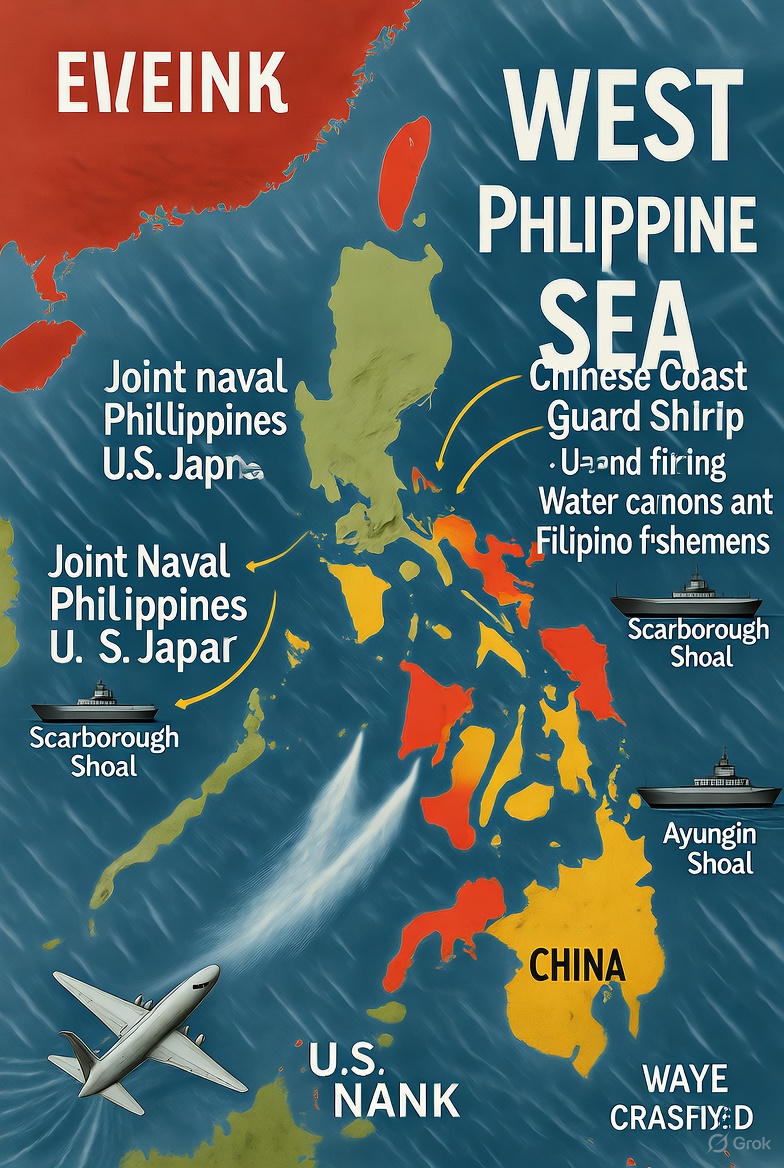
The West Philippine Sea (WPS), a vital area for fishing and trade, remains a hotspot for conflict. From October 27 to 31, 2025, serious events unfolded between the Philippines, China, and the United States. These included military patrols, vessel sightings, aircraft crashes, and diplomatic pushes. All info comes from open sources like news sites and social media posts on X (formerly Twitter). Tensions stem from China’s claims over nearly the entire South China Sea, rejected by a 2016 global court ruling.
This report breaks it down day by day. It highlights risks of bigger clashes in these rich waters, home to fish, oil, and key shipping lanes.
October 27: Diplomatic Warnings and U.S. Setbacks
On October 27, Philippine President Ferdinand Marcos Jr. spoke at the ASEAN-U.S. Summit in Kuala Lumpur. He urged stronger sea teamwork amid “dangerous maneuvers and coercive actions” by China in the WPS. Marcos pointed to blocked fishermen and hurt personnel. He did not name China but stressed the need for allies like the U.S. to protect free seas.
That same day, two U.S. Navy planes crashed into the South China Sea near the USS Nimitz carrier. First, an MH-60R Seahawk helicopter went down during takeoff. Then, 30 minutes later, an F/A-18F Super Hornet fighter jet crashed shortly after launch. All five crew members ejected safely and were rescued. The U.S. Pacific Fleet called it “routine operations” but launched probes. No deaths, but it raised questions about safety in tense waters.
These crashes happened as U.S. President Donald Trump eyed talks with China’s Xi Jinping. Some X users speculated foul play, but officials blamed possible bad fuel or errors. The incidents spotlight U.S. risks while challenging China’s claims via “freedom of navigation” patrols.
October 28: Philippine Patrols Challenge Chinese Ships
Action heated up on October 28. The Philippine Navy’s BRP Emilio Jacinto (PS-35) ran a “sovereignty patrol” off Zambales. It spotted a China Coast Guard (CCG) vessel and People’s Liberation Army (PLA) Navy frigate just 59 nautical miles from shore—inside the Philippines’ zone. The patrol aimed to assert rights and monitor intruders.
Later, the Philippine Coast Guard (PCG) flew an aerial patrol over Bajo de Masinloc (Scarborough Shoal). They saw five Chinese vessels lurking nearby. Scarborough, a rich fishing ground, has been Chinese-blocked since 2012. PCG called it illegal presence and shared photos on X.
Japan’s forces also tracked two PLA frigates (Binzhou 515 and Anyang 599) heading through Miyako Strait toward the Pacific. This shows China’s navy flexing beyond the WPS.
These patrols show Manila’s firm stance. Backed by U.S. treaties, Philippines won’t back down.
October 29-30: Resupplies Amid Harassment
Days 29-30 stayed busy. PCG and Bureau of Fisheries (BFAR) completed a key resupply and patrol mission in the WPS. Chinese ships hit them with water cannons and ramming. Despite this, the mission succeeded. The Department of Foreign Affairs filed a diplomatic protest. Fishermen told reporters of ongoing harassment.
X posts praised PCG bravery. Videos showed Chinese aggression, echoing past clashes like October 12 ramming near Thitu Island.
On October 30, Armed Forces of the Philippines (AFP) noted recent wins, like nabbing Chinese illegal fishers at Ayungin Shoal (Second Thomas Shoal) on October 24. Marines seized cyanide bottles—used for blast fishing that kills reefs.
October 31: Ongoing Watch
As of October 31, patrols continue. No major clashes reported today, but Chinese ships linger. X buzz focuses on U.S. crashes and PH resolve.
“We will not yield an inch of our territory.” – President Marcos Jr.ASEAN-U.S. Summit, Oct. 27
Why It Matters: Risks and Road Ahead
These five days show a pattern: China uses CCG and “fishing militias” for “gray zone” tactics—short of war but scary. Water cannons injure, ramming damages boats. Philippines responds with patrols, protests, and allies.
U.S. role: Crashes hurt readiness, but Washington reaffirms defense pacts. Recent drills like Sama Sama boost ties.
Dangers: One mistake—like the August Chinese self-collision chasing PH boats—could spark war. Over $3 trillion in trade passes here yearly.
Solutions? Marcos pushes talks, but China ignores rulings. ASEAN unity is weak. U.S.-PH drills and global pressure may deter Beijing.
Fishermen suffer most. Illegal fishing starves communities. Reefs die from poison.
The WPS tests if rules-based order holds. Philippines stands tall, backed by friends. Watch for Trump-Xi meets—they could calm or ignite fires.
(Word count: 1,028)
Sources: All from OSINT—Reuters, USNI News, Al Jazeera, X posts by @ABSCBNNews, @PTVph, @manilabulletin, and more.
Discover more from WPS News
Subscribe to get the latest posts sent to your email.
 WPS News