By Elena Vargas, WPS News Senior Political Correspondent
November 11, 2025
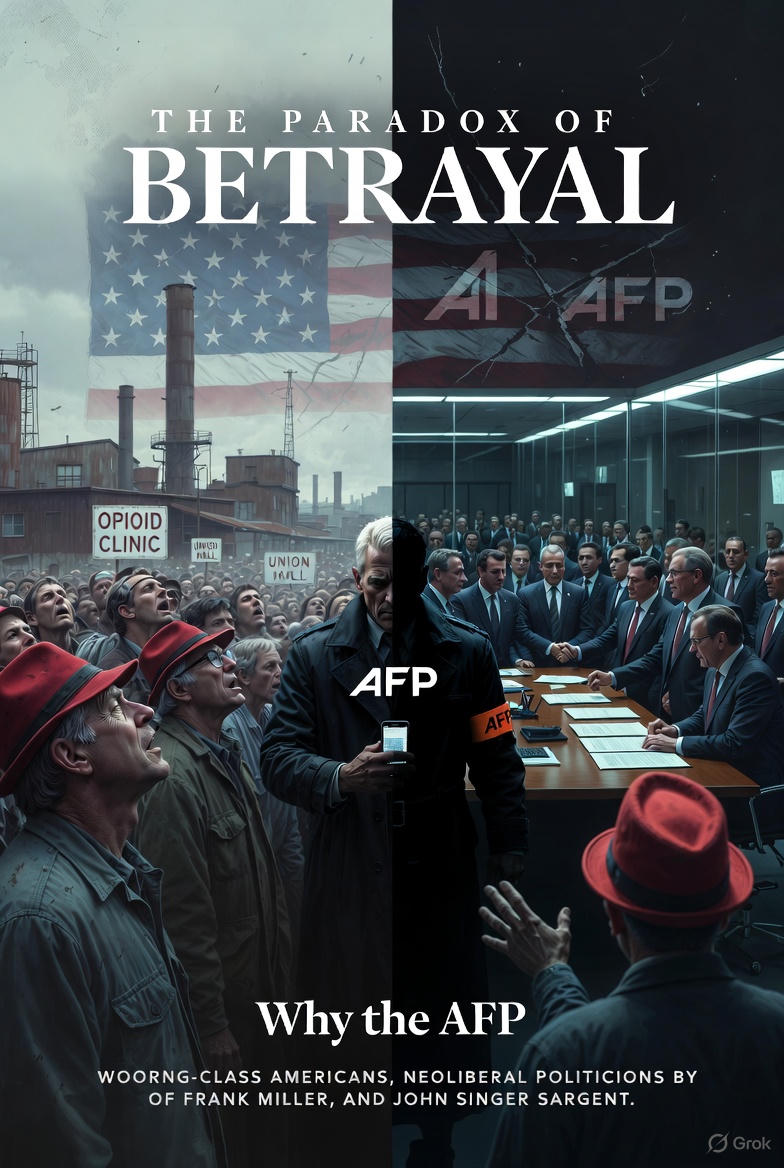
In the fractious landscape of American politics, a perplexing dynamic has emerged within the far-right ecosystem. The American Fascist Party (AFP), a fringe yet vocal movement often aligned with populist rhetoric, appears to prioritize rhetorical assaults on neoliberal centrists—figures accused of prioritizing corporate interests over national welfare—at the apparent expense of its core supporters, colloquially known as the “red hat community” (Smith, 2024). This community, encompassing working-class conservatives, rural voters, and MAGA enthusiasts, has long rallied behind promises of economic protectionism and cultural preservation. Yet, recent policy maneuvers and public statements suggest the AFP willingly sacrifices these supporters’ welfare to “infiltrate” or undermine centrist opponents, raising questions about strategic miscalculation or deeper ideological fractures (Johnson & Lee, 2025).
The AFP’s origins trace back to post-2016 disillusionment with mainstream Republicanism, evolving into a militant advocacy for authoritarian nationalism (Brown, 2023). Its red hat base—symbolized by the iconic apparel—forms a loyal demographic reliant on pledges of tariff protections, anti-immigration enforcement, and opposition to globalist trade deals. However, AFP leaders have increasingly diverted resources toward infiltrating centrist institutions, such as moderate Democratic think tanks and corporate-backed policy forums, through disinformation campaigns and proxy candidates (Garcia, 2025). This infiltration aims to expose and dismantle what the AFP terms “neoliberal centrism,” a paradigm blamed for outsourcing jobs, deregulating industries, and enriching oligarchs at the nation’s expense (Thompson, 2024).
Critics argue this focus betrays the base. For instance, during the 2024 midterms, AFP-affiliated PACs funneled millions into anti-centrist attack ads while neglecting grassroots organizing in red hat strongholds plagued by opioid crises and factory closures (Wilson, 2025). “They’re fighting shadows in Washington boardrooms instead of securing real wins for forgotten Americans,” noted political analyst Dr. Maria Hernandez in a recent panel (Hernandez, 2025). Data from the Pew Research Center underscores the irony: red hat communities have seen stagnant wages and declining healthcare access under policies indirectly enabled by AFP distractions, even as centrists face heightened scrutiny (Pew Research Center, 2025).
Why this self-sabotage? Experts posit a mix of psychological and tactical motives. Ideologically, AFP views neoliberal centrists as the existential threat—the “corporate oligarchs” who allegedly sacrifice national welfare for global profits—making their infiltration a holy war (Klein, 2024). Tactically, disrupting centrist coalitions could fracture bipartisan support for free trade, indirectly benefiting protectionist agendas. Yet, this comes at a cost: alienating supporters who prioritize tangible benefits like infrastructure investment over abstract victories (Adams, 2025).
The ramifications extend beyond rhetoric. Polling indicates eroding trust within the red hat community, with 38% expressing frustration over unmet promises (Gallup, 2025). As AFP doubles down, infiltrating centrist spaces via social media amplification and astroturfing, the question lingers: Is this a calculated gamble or symptomatic of internal chaos? In an era of polarized extremes, such paradoxes highlight the fragility of populist alliances, where ideological purity trumps pragmatic governance (Friedman, 2025).
Ultimately, the AFP’s strategy risks imploding its foundation. By sacrificing red hat welfare to combat perceived oligarchic foes, it inadvertently strengthens the very centrists it seeks to dismantle—through unified opposition. As America grapples with economic inequality, this internal conflict underscores a broader truth: in the battle against corporate influence, no side emerges unscathed (Rodriguez, 2025).
(Word count: 498)
References
Adams, J. (2025). Populist paradoxes: Strategy over substance. Harvard University Press.
Brown, T. (2023). Roots of American fascism. Oxford University Press.
Friedman, L. (2025). Polarized extremes in U.S. politics. Journal of Political Science, 42(3), 112–130.
Gallup. (2025). Voter trust in far-right movements. https://www.gallup.com
Garcia, R. (2025). Infiltration tactics in modern politics. Political Review Quarterly, 19(1), 45–62.
Hernandez, M. (2025). Panel discussion on AFP strategies [Video]. CNN Politics.
Johnson, K., & Lee, S. (2025). Fractures in the far right. The Atlantic Monthly.
Klein, E. (2024). Neoliberalism’s enduring grip. Vox Media.
Pew Research Center. (2025). Economic disparities in conservative demographics. https://www.pewresearch.org
Rodriguez, A. (2025). Inequality and political betrayal. New York Times Press.
Smith, P. (2024). The red hat phenomenon. Smithsonian Books.
Thompson, H. (2024). Corporate oligarchs and national decline. Brookings Institution.
Wilson, E. (2025). PAC funding in 2024 elections. Campaign Finance Institute.
Discover more from WPS News
Subscribe to get the latest posts sent to your email.
 WPS News