December 15, 2025 — WPS News
by Cliff Potts
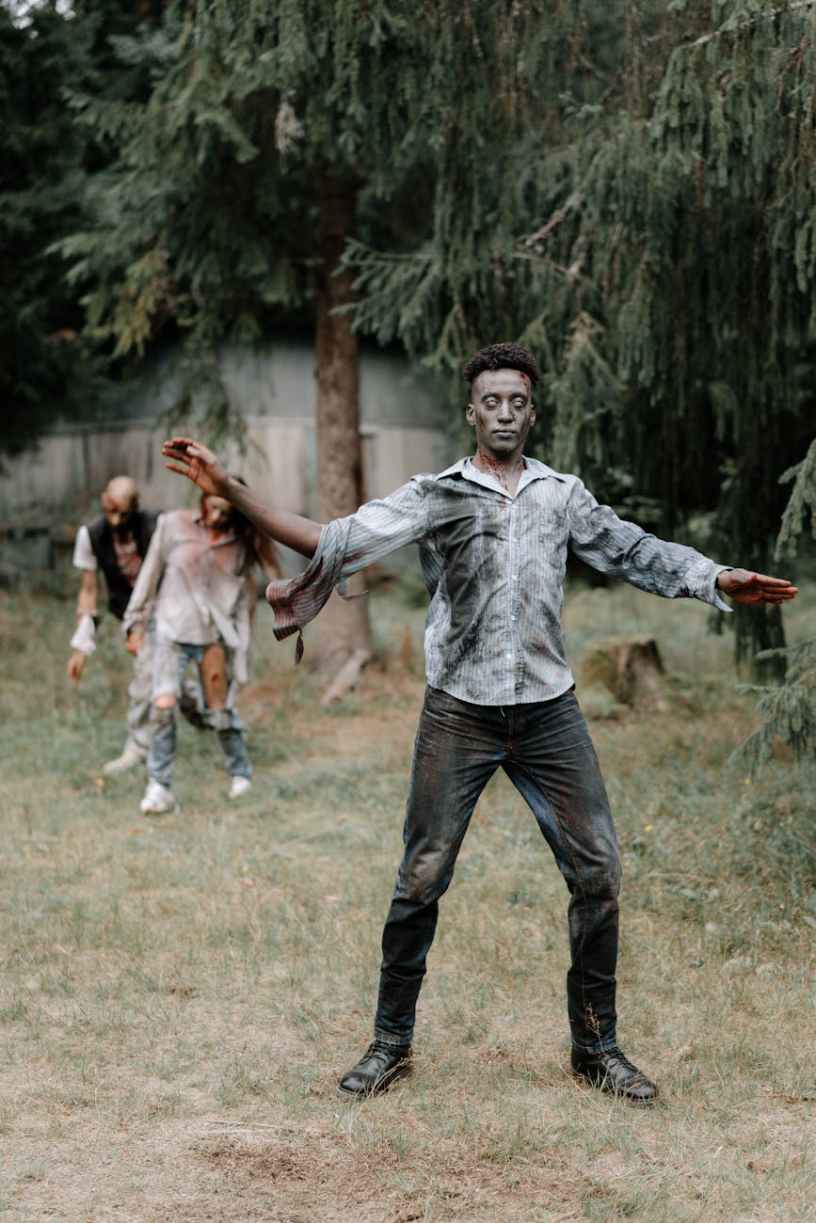
If you want to understand how people actually behave in a crisis, The Walking Dead is one of the worst places to look. Yes, it’s entertaining. Yes, it’s a cultural milestone. And yes, every one of us has yelled at the screen when a walker sneaks up on someone who somehow didn’t hear the moaning corpse five feet behind them. But the real problem isn’t the zombies. It’s the fiction the show builds around human nature.
I’ve been watching the series again on Netflix, and I keep coming back to the same thought: these writers have never lived through a real emergency in their lives. They think people immediately become warlords and cannibals the moment the lights go out. In the real world, and I mean the actual one we live in, people do not instantly devolve into murder tribes. They collaborate. They organize. They protect each other. They save strangers. They do the work of staying human.
But on The Walking Dead? Everyone you meet is one bad day away from becoming a Saturday morning cartoon villain with a baseball bat.
Let’s start with Merle hacking off his own hand. Come on. Suspension of disbelief is one thing, but a grown man sawing through bone, tendon, muscle, and nerves with a dull hacksaw—while dehydrated, panicked, and alone—is complete Hollywood fantasy. The real escape method, known to anyone who has ever been inside a prison system, is simple: dislocate the thumb, slip the cuff, relocate it later. Painful? Yes. Doable? Absolutely. Sawing off your own hand? Not unless you’re in a fever dream.
Then you get to the endless parade of villains. The Governor. Negan. Alpha. The Claimers. Every five episodes someone else is out there building a nightmare society based on torture, fear, and the world’s shakiest supply chain. In reality, these kinds of groups collapse almost instantly. You can’t run a functioning community on fear alone; your logistics fall apart. Morale collapses. People defect. Food runs out. A real collapse is slow, grinding, unglamorous, and defined by cooperation, not bat-swinging monologues.
But television loves cruelty because cruelty sells.
The tragedy is that people start to believe this nonsense. They think that in any real crisis, their neighbors will become enemies, that trust is weakness, and that the only moral code is “every man for himself.” And that mindset does more damage in society than any zombie outbreak ever could.
I once heard a real story from Iraq: a soldier in a firefight drops an enemy combatant, neutralizes the threat, and then—because the threat is over—drags the wounded man out of the line of fire and patches him up. That’s human nature. That’s what people actually do when the fear drains and morality kicks back in. We don’t suddenly become monsters. Most of us try to be decent even in hell.
That human truth never makes it into The Walking Dead because the show isn’t about people. It’s about spectacle. It’s about trauma as a plot device. It’s about the aesthetic of collapse, not the lived reality of it.
Yes, the series has its moments—its emotional arcs, its reflections on loss, its reminders that grief can remake a person from the inside out. But if you’re looking for a show that teaches anything realistic about survival, society, or human nature, this isn’t it. Zombies don’t exist. Human beings do. And we’re a hell of a lot better than the writers seem to think.
For more social commentary, see Occupy 2.5 at https://Occupy25.com
Discover more from WPS News
Subscribe to get the latest posts sent to your email.
 WPS News