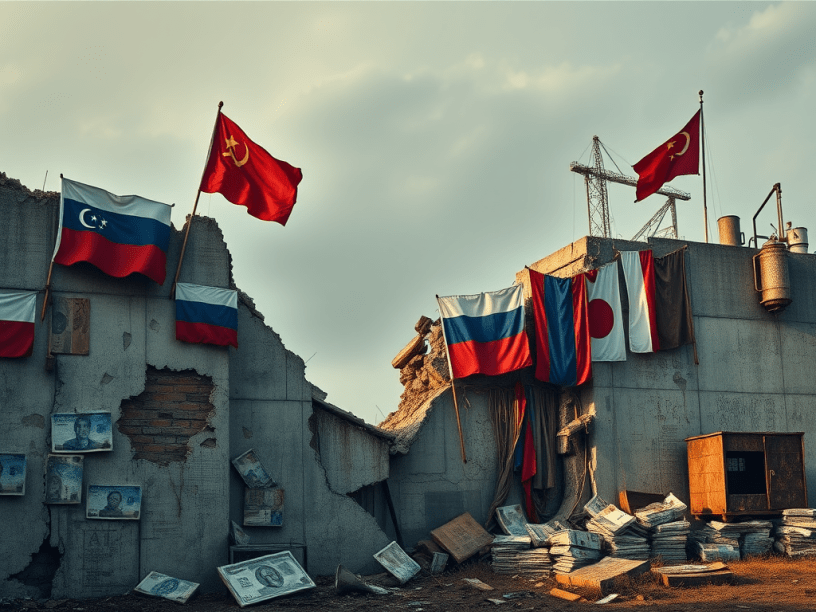
The collapse of the Soviet Union in 1991 (34 years ago this Christmas) remains a pivotal moment in recent history. Decades later, the narrative surrounding its demise is often politicized, with simplistic explanations overshadowing the complex web of factors that led to its dissolution.
Beyond Reagan’s Rhetoric:
While President Ronald Reagan’s assertive stance against the Soviet Union undoubtedly played a role in the Cold War dynamic, attributing the USSR’s downfall solely to his policies is a vast oversimplification. The Soviet Union was grappling with internal issues long before Reagan entered the White House.
The Cracks Within:
- Economic Stagnation: The Soviet command economy, once a source of rapid growth, had become stagnant. Centralized planning stifled innovation and consumer goods remained scarce.
- Ethnic Tensions: The USSR was a multi-ethnic state, with simmering resentment between various nationalities. Policies favoring the dominant Russian population fueled separatist movements.
- The Chernobyl Disaster: The 1986 nuclear catastrophe exposed the flaws in the Soviet system’s transparency and accountability. It eroded public trust in the government.
- Gorbachev’s Reforms: Mikhail Gorbachev’s attempts at reform, Glasnost (openness) and Perestroika (restructuring), aimed to revitalize the economy and society. However, these reforms inadvertently loosened the Soviet Union’s grip on its satellite states and emboldened nationalist movements within its own borders.
The Legality of Dissolution:
The dissolution of the Soviet Union was a complex legal and political process. While there may be arguments about the legality of specific actions taken by individual republics, the USSR itself lacked a clear legal framework for its own dissolution. However, the international community overwhelmingly recognized the independence of the newly formed states, effectively legitimizing the process.
Collectivism vs. History:
The idea that the Soviet collapse disproves the viability of collectivism is debatable. Historical context matters. While collectivization may have found initial success in a war-torn and rapidly industrializing nation, its rigidity ultimately proved unsustainable.
A More Nuanced View:
The fall of the Soviet Union was a product of a confluence of factors – economic stagnation, ethnic tensions, leadership missteps, and the unintended consequences of reform. While the US-Soviet rivalry played a part, it was far from the sole cause. Recognizing this complexity allows for a more nuanced understanding of a pivotal historical event.
WPS.News strives to deliver objective reporting, free from political bias. We encourage our readers to seek out diverse perspectives on historical events.
Discover more from WPS News
Subscribe to get the latest posts sent to your email.
 WPS News