By Cliff Potts, CSO, and Editor-in-Chief of WPS News
Monsters Are Easier Than Systems
In the 1950s, Hollywood understood something modern prestige television often forgets: people do not fear abstractions well.
They fear monsters.
Nuclear annihilation, infiltration, and loss of control were too large and too invisible to confront directly, so American cinema gave audiences giant ants, pod people, and things from the ice. Those films were not really about aliens or radiation. They were about the low-grade terror of living under forces no one could stop.
The monsters gave fear a shape.
Fear Needs a Face
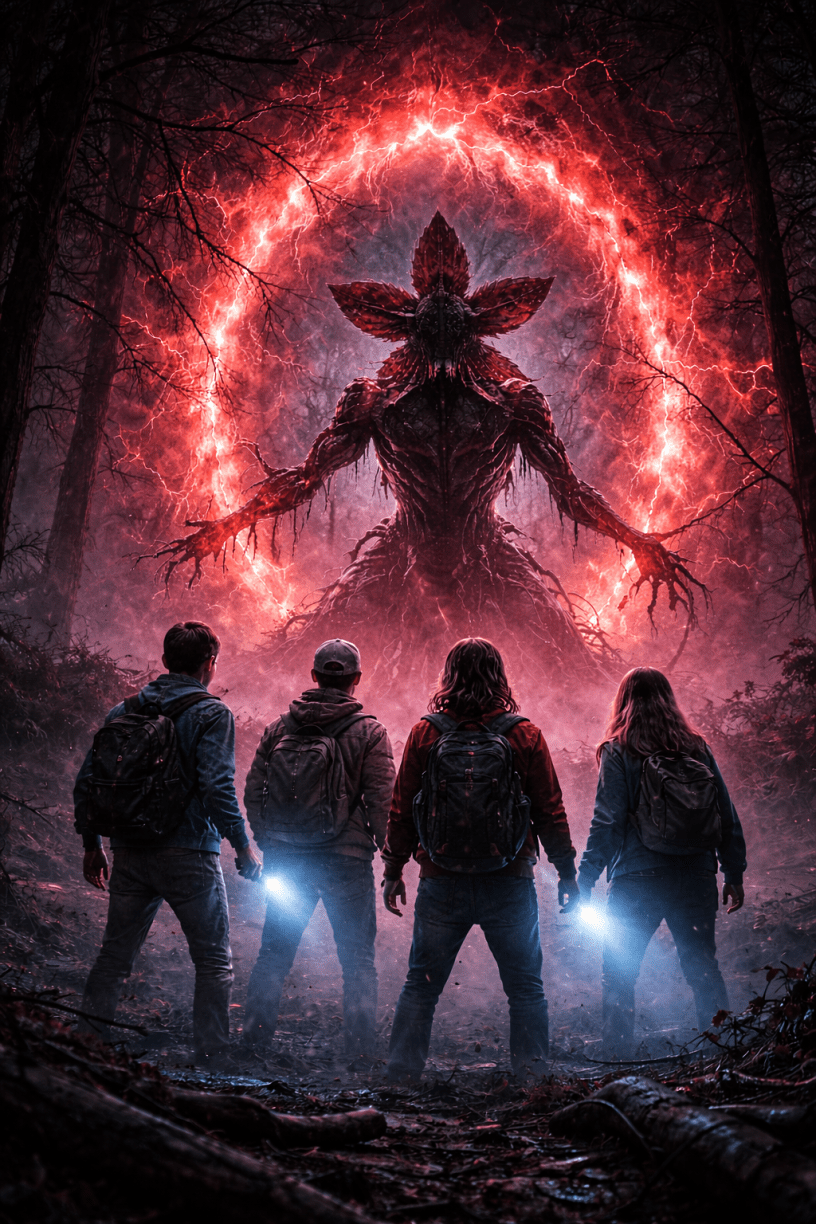
That same cultural logic drives Stranger Things.
Late-stage capitalism, imperial decline, permanent precarity, and institutional failure are psychologically unbearable because they are ambient. They have no single villain, no lair, and no final battle.
So the show offers the Upside Down.
A place you can point at.
An enemy you can name.
A rupture that looks like what the audience already feels.
The function is not realism. It is containment.
Collapse, But Contained
The Upside Down is collapse with rules. Vecna is cruelty with a face. Hawkins is America breaking, but in a way that can still be narratively managed.
There is a team.
There is a fight.
There is the promise of an ending.
Real life offers none of these comforts.
That is why viewers forgive military absurdities, collective amnesia, and consequences that evaporate. They are not watching for institutional plausibility. They are watching for the reassurance that fear can be survived.
Why This Works Now
The show’s popularity is not accidental, and it is not primarily nostalgic.
It succeeds because it lets people feel what they already fear without having to confront the fact that the real threat has no borders, no boss fight, and no season finale.
That relief matters more than logic.
What the Monster Tells Us
When a culture turns to monsters, it is usually because it cannot speak honestly about what is breaking it.
Cold War cinema did this with aliens.
Depression-era spectacle did it with choreography.
Streaming-era television does it with nostalgia and horror.
This does not make the stories stupid.
It makes them diagnostic.
They tell us what people are afraid to name.
Discover more from WPS News
Subscribe to get the latest posts sent to your email.
 WPS News