By Just Another Friendly Occupier
January 9, 2026 — 4:20 p.m. PhST
Due to the gravity of the subject matter and its implications for public trust and institutional accountability, this analysis is being elevated from Occupy 2.5 to WPS News.
The issues raised here warrant treatment as a matter of record, not commentary alone.
What Changed—and Why People Noticed
In Minneapolis, a civilian death involving a federal officer has moved from tragedy to legitimacy test. The change did not come from street protests alone. It came when federal authorities assumed sole control of the investigation and state investigators were excluded from further participation. That decision—lawful on paper—has real consequences for public trust.
Federal Control, State Exclusion
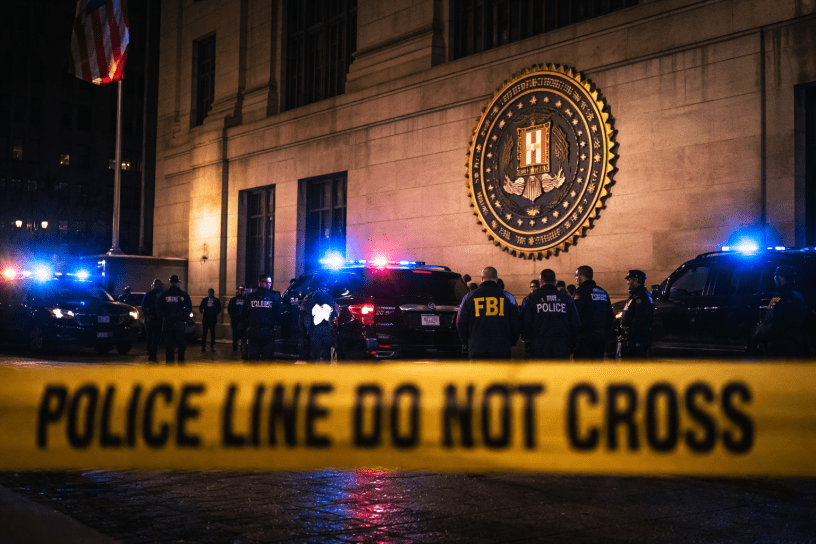
Reporting indicates that the Federal Bureau of Investigation is leading the investigation into the Minneapolis shooting, while the Minnesota Bureau of Criminal Apprehension—which initially responded—has been barred from continued access to evidence and investigative steps. Federal prosecutors cited jurisdiction and procedure. State officials have said the exclusion prevents them from meeting their own investigative standards.
This is the fault line. When the alleged shooter is a federal officer, and the investigating authority is federal, exclusivity creates an appearance problem even if every investigator acts in good faith.
Why This Is Not “Business as Usual”
Ordinary cases tolerate centralized control because no single institution bears reputational exposure. This case is different. The federal government has direct institutional interests at stake—legal, political, and narrative. In such circumstances, legitimacy depends not only on outcomes but on process visibility. Independent participation is not a courtesy; it is a credibility safeguard.
Narrative Risk vs. Factual Accountability
Public concern is not that evidence will be fabricated. It is that scope, framing, and emphasis can be narrowed without independent eyes in the room. Language choices matter. Context choices matter. The difference between “incident” and “shooting,” between “threat assessment” and “unnecessary force,” shapes public understanding long before a charging decision.
When state investigators are excluded, the investigation may remain lawful, yet become legitimacy-fragile.
The Political Context People Are Reacting To
Critics argue that confidence is further strained because senior federal leadership is aligned with the current administration, which many Americans already view with deep skepticism. Whether that skepticism is fair or not, it exists—and legitimacy collapses on perception as much as on proof. Systems cannot compel trust; they must earn it.
Why This Escalates Tension
The state–federal split matters because states answer directly to local communities and are not responsible for defending federal enforcement policy. Cutting them out concentrates authority at precisely the moment when dispersion would reassure the public. The result is predictable: suspicion grows, rhetoric hardens, and consent weakens.
What This Moment Requires
No one is calling for violence. Many are calling for transparency that can be seen. Parallel access, shared evidence, and independent oversight would not prejudice the facts; they would protect them. Absent that, every finding—whatever it concludes—will be contested as managed.
Conclusion
This case cannot be treated as routine without cost. When an institution investigates itself behind narrowed doors, legitimacy erodes even if the final report is accurate. In moments like this, the question is not only what happened, but whether the public can believe the process that claims to tell them.
That belief is fragile. And once lost, it is difficult to restore.
References (APA Style)
Chenoweth, E., & Stephan, M. J. (2011). Why civil resistance works: The strategic logic of nonviolent conflict. Columbia University Press.
Dahl, R. A. (1971). Polyarchy: Participation and opposition. Yale University Press.
Huntington, S. P. (1968). Political order in changing societies. Yale University Press.
Levitsky, S., & Ziblatt, D. (2018). How democracies die. Crown.
Tyler, T. R. (2006). Why people obey the law. Princeton University Press.
Discover more from WPS News
Subscribe to get the latest posts sent to your email.
 WPS News