By Cliff Potts, CSO, and Editor-in-Chief of WPS News
Washington, D.C., USA
Published: 10 January 2026
Two Statements That Refuse to Go Away
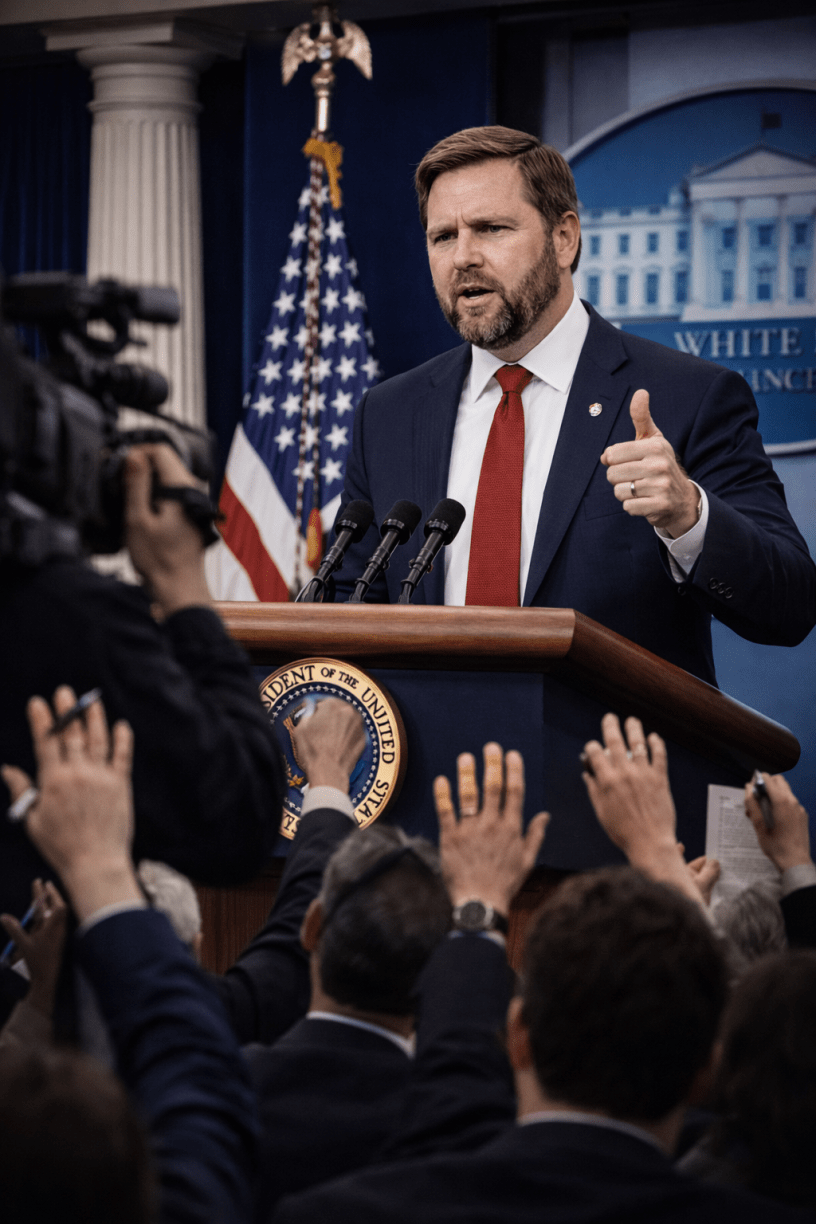
In early January 2026, comments linked to Vice President J.D. Vance set off a political firestorm that has not gone away. The remarks were made during a White House press briefing and were reported by journalists who were present in the room.
The first comment focused on immigration enforcement. Reporters said Vance described Immigration and Customs Enforcement, known as ICE, expanding its work to include “door-to-door” efforts to find people who are in the country without legal permission. The second comment caused even more alarm. According to multiple accounts, Vance suggested that ICE agents are protected by “absolute immunity” while doing their jobs.
Together, these two ideas raised serious concerns about how much power federal law enforcement should have, and whether there are limits on that power.
Adding to the controversy is what happened afterward. The official White House transcript of the briefing does not include the specific phrases “door-to-door” or “absolute immunity.” Even though journalists reported hearing those words or ideas clearly, they do not appear in the written record. That gap has become part of the story itself.
What Was Said — and What Was Omitted
The comments came at a tense moment. A fatal ICE shooting in Minneapolis had sparked public anger and questions about whether federal agents should face investigation or prosecution. During the briefing, Vance strongly defended ICE and criticized those who questioned the agency’s actions.
According to reporting from several outlets, Vance went further than a general defense. He argued that ICE agents acting as part of their official duties were protected from prosecution. Observers summarized this as a claim of “absolute immunity.”
This wording is important. In the U.S. legal system, absolute immunity is very rare. It usually applies only to judges or lawmakers when they are carrying out specific constitutional roles. Police officers and federal agents do not normally receive this level of protection. Instead, they may receive “qualified immunity” in civil lawsuits, and they can still face criminal charges if they break the law.
Because of this, critics say Vance’s comments overstated the legal protections ICE agents actually have. The fact that the strongest language did not appear in the official transcript has led some to question whether the remarks were later softened or removed to avoid controversy.
White House transcripts are not exact word-for-word records. They are edited documents. When statements raise legal or constitutional concerns, it is common for sensitive wording to be changed or left out. Still, the absence of language widely reported by journalists has fueled public distrust.
The Door-to-Door Problem
The idea of “door-to-door” immigration enforcement raises separate and serious issues. Federal agents do not have the authority to knock on doors across the country and demand proof of legal status without warrants or clear legal justification.
The U.S. Constitution protects people from unreasonable searches and seizures. Any policy that appears to allow routine checks of private homes would immediately raise Fourth Amendment concerns.
Even if the phrase was used casually, its use by a Vice President matters. Statements from top officials can influence how laws are enforced and how safe or threatened people feel in their own communities. That is why the difference between what was reported and what was officially recorded deserves close attention.
From Enforcement to Imperial Power
When these two statements are taken together, critics argue they point to a broader view of government power. That view places strong authority in the executive branch and gives wide freedom to law enforcement, while limiting oversight from courts and the public.
This matters because impeachment is not only about punishing past actions. It is also meant to protect the country from future harm.
If President Donald Trump were impeached and removed from office, the Vice President would become President. In that situation, Congress would have a responsibility to consider whether the Vice President’s views on law enforcement power, legal immunity, and accountability fit within constitutional limits.
This is not about party politics. It is about whether the next person in line for the presidency respects the balance of power that protects individual rights.
The Framers of the Constitution feared unchecked authority. Impeachment was designed as a safeguard against what could be described as imperial force — government power backed by armed enforcement with too little accountability.
The Constitutional Question Ahead
The Constitution gives the House of Representatives the sole power to impeach and the Senate the sole power to conduct impeachment trials. Impeachment does not require a criminal conviction. It requires judgment about whether an official has abused power or threatens constitutional order.
Whether that standard has been met is for Congress to decide. But the public has a right to ask questions. Do statements that suggest sweeping enforcement powers and near-total immunity show a dangerous lack of respect for constitutional limits?
That question is not going away. As debates over accountability and executive power continue, it will only become more important.
For more social commentary, please see Occupy 2.5 at https://Occupy25.com
Notes on Archiving
WPS.News essays are archived and compiled into monthly WPS News Briefings, available in print and digital formats via Amazon.
References (APA)
Associated Press. (2026, January 8). Vice president defends ICE agent amid shooting controversy.
Common Dreams. (2026, January 8). Vance remarks on immigration enforcement spark alarm.
U.S. Constitution, Article I, Sections 2–3; Article II, Section 4.
Washington Post. (2026, January 8). White House briefing raises questions on ICE accountability.
Discover more from WPS News
Subscribe to get the latest posts sent to your email.
 WPS News