Baybay City, Leyte, Philippines
By Cliff Potts, CSO, and Editor-in-Chief of WPS News
A Nationwide Uprising Meets State Violence
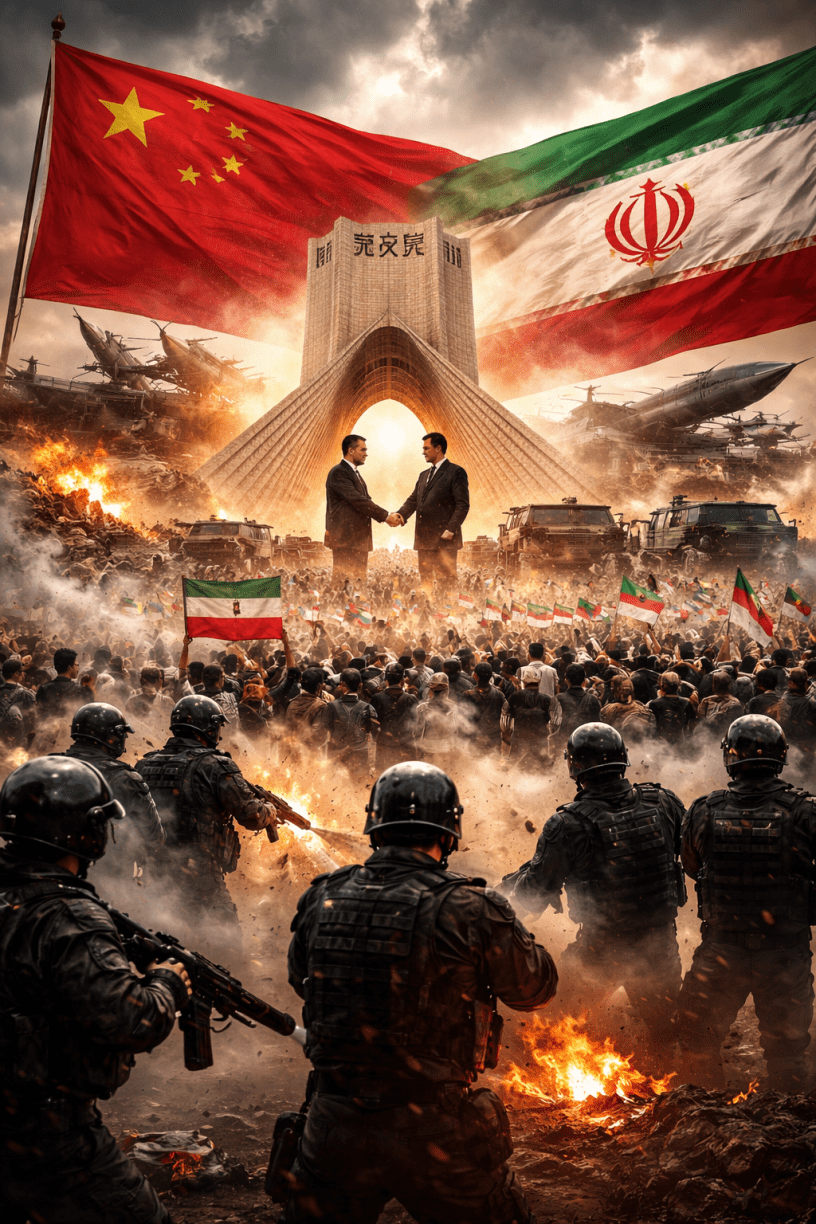
Iran is in the middle of a deadly crackdown as protests spread across cities and provincial towns. Since late December 2025, demonstrations that began as outrage over economic collapse—soaring prices, currency freefall, and shrinking wages—have widened into direct political defiance. Protesters are no longer asking for minor reforms. In many places, they are openly challenging the legitimacy of the Islamic Republic.
The state has answered with force. Security services and allied forces have used live ammunition, mass arrests, and aggressive raids to break up demonstrations. Human rights groups and news reporting based on activist documentation estimate that at least 490 protesters have been killed, and that total deaths exceed 500 when security personnel are included. The numbers are difficult to verify independently because the government tightly controls information, but multiple credible outlets are converging on the same grim picture: a large-scale killing campaign aimed at intimidation and exhaustion.
Blackouts, Arrests, and the Machinery of Fear
Iran’s authorities have also leaned hard on information control. Internet disruptions and communications shutdowns have been reported as the crackdown intensifies, a classic tactic to block organizing and keep images of violence from reaching the outside world. Alongside the digital clampdown is the physical one: thousands detained, many held without transparent charges or due process, and families pressured to stay quiet.
State media messaging follows the usual authoritarian script—blame outsiders, label protesters as criminals, and frame lethal repression as “security.” This propaganda isn’t just for foreign audiences. It is meant to discourage fence-sitters at home and justify brutality to loyalists.
International Reactions, Limited Leverage
International condemnation has grown louder, particularly in Europe, while Washington has issued warnings and expressions of support for protesters. Iran, in turn, has threatened retaliation if foreign powers intervene. The net effect so far is a familiar stalemate: outrage without decisive leverage. Tehran appears to be betting that the world will move on and that fear will thin the crowds before the regime’s security forces fracture.
China’s Calculated Support for Tehran
China’s role matters because it helps explain why the Iranian leadership believes it can endure. Beijing has not celebrated the crackdown, but it continues to treat Iran as a strategic partner—maintaining diplomatic engagement and protecting the broader relationship that includes energy ties and regional influence.
China’s priority is regime stability. It opposes popular uprisings that topple entrenched governments because it fears the precedent, and because instability threatens trade and energy supply. So China’s “non-interference” posture becomes de facto support for the ruling authorities. When the choice is between an authoritarian state and a protest movement, Beijing’s incentives push it toward the state—quietly, consistently, and with real geopolitical weight.
For more social commentary, please see Occupy 2.5 at https://Occupy25.com
This article will be archived in the WPS News Monthly Brief, available at Amazon.
References
Associated Press. (2026, January 11). Death toll in crackdown on protests in Iran spikes to at least 544, activists say.
Reuters. (2026, January 11). Iran protest deaths rise to more than 500, rights group says.
The Guardian. (2026, January 11). Iran arrests protest leaders as crackdown intensifies amid threat of U.S. intervention.
Discover more from WPS News
Subscribe to get the latest posts sent to your email.
 WPS News