By Cliff Potts, CSO, and Editor-in-Chief of WPS News
A Story That Worked
Stranger Things was good. That matters. It landed culturally, it entertained, and it created characters people cared about. That alone puts it ahead of most modern television. It didn’t need defending. It didn’t need explaining. And it didn’t need to be shouted about after the fact.
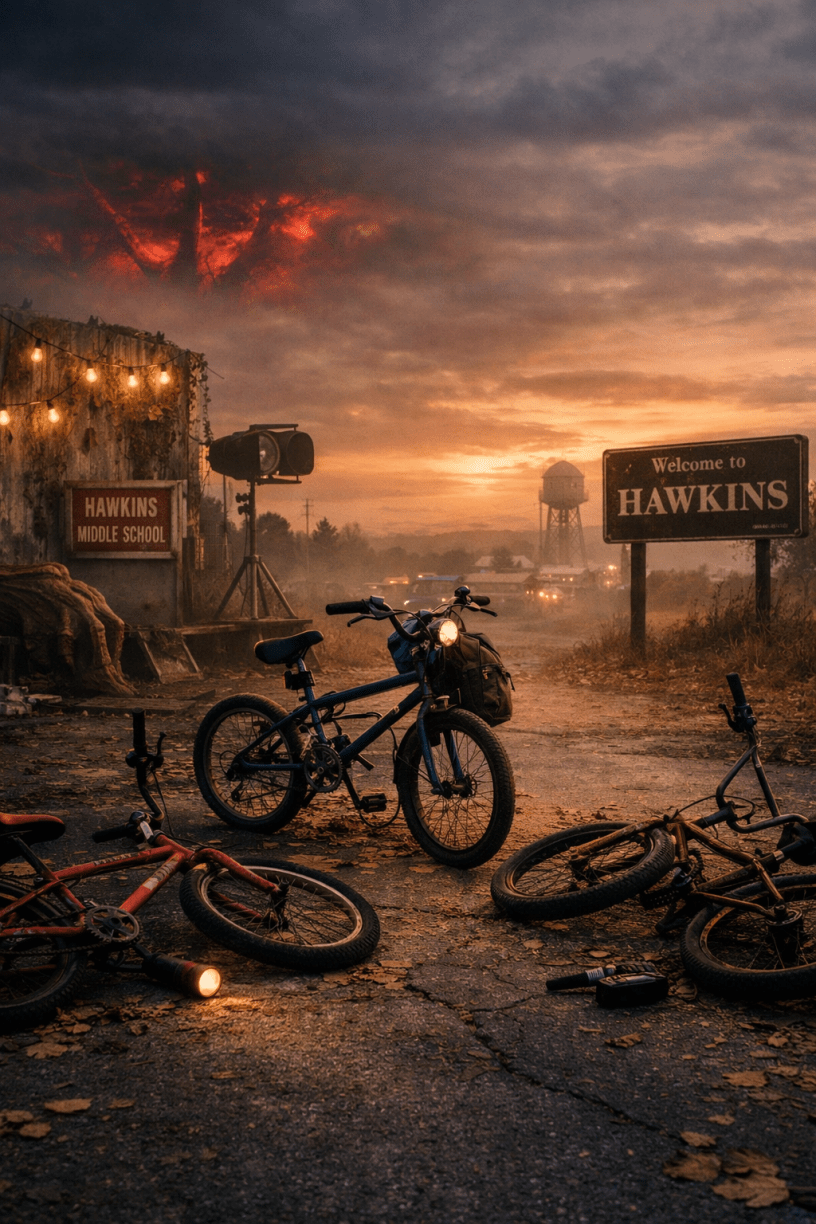
There was real magic in the early restraint—kids on bikes, small-town unease, a mystery that trusted the audience. That core worked because it was human first and supernatural second.
The Cast Did the Heavy Lifting
The actors showed up and delivered. Across the board.
Nancy’s clarity and backbone made her compelling to watch. Dustin brought humor without turning into a gimmick. Steve’s arc—accidental, earned, and humane—remains one of the best character turns in modern TV. Eddie resonated because he embodied every misunderstood outsider society labels as dangerous. Robin’s energy was sharp, fast, and alive.
And it didn’t stop there: Lucas, Mike, Will, Erica, Hopper, Joyce, Murray, Bob, Barb, Billy, Henry, Vecna—every role was treated like a person, not a prop. Even the villains were allowed to be unsettling rather than cartoonish. Eleven, played by Millie Bobby Brown, carried enormous emotional weight with skill and range far beyond her years.
This was a cast doing exactly what they’re supposed to do. They earned their praise.
Scale Without Restraint
Structurally, the entire five-season arc could have fit into a tight two-hour film. The longer the show ran, the more the mythology expanded while the emotional center stayed the same. The series stretched itself thin not because it lacked talent, but because it refused to stop while it was ahead.
That isn’t a moral failure. It’s a business decision.
When Celebration Turns Into Noise
What followed the ending is the real problem. The stat dumps. The endless interviews. The algorithmic flood of “impact” and “records.” This isn’t fandom—it’s brand management.
Netflix isn’t talking to viewers here. It’s talking to investors, competitors, and its own internal justifications. The message isn’t “thank you.” The message is “this was worth the money.”
For audiences, it lands as noise.
Context Matters
We’re living through wars, political instability, economic stress, and collective exhaustion. Attention is scarce because reality is heavy. In that context, flooding social feeds with reminders about a show everyone already finished feels tone-deaf.
Not malicious. Not cruel. Just disconnected.
There used to be an afterlife for television—reruns, syndication, slow cultural settling. Streaming doesn’t have that. So platforms manufacture a loud, compressed victory lap instead. It’s artificial, and people can feel it.
Knowing When to Stop
The cast deserves respect. The story earned its place. But endings have dignity only if they’re allowed to end.
The right response now isn’t amplification. It’s restraint.
It was good.
We were there.
It’s over.
Let it be.
For more social commentary, please see Occupy 2.5 at https://Occupy25.com
This essay will be archived as part of the ongoing WPS News Monthly Brief Series. Archives are available through Amazon.
References (APA)
Netflix. (2016–2025). Stranger Things [TV series]. Netflix.
Wikipedia contributors. (2025). Stranger Things. Wikipedia.
Discover more from WPS News
Subscribe to get the latest posts sent to your email.
 WPS News