By Cliff Potts, CSO, and Editor-in-Chief of WPS News
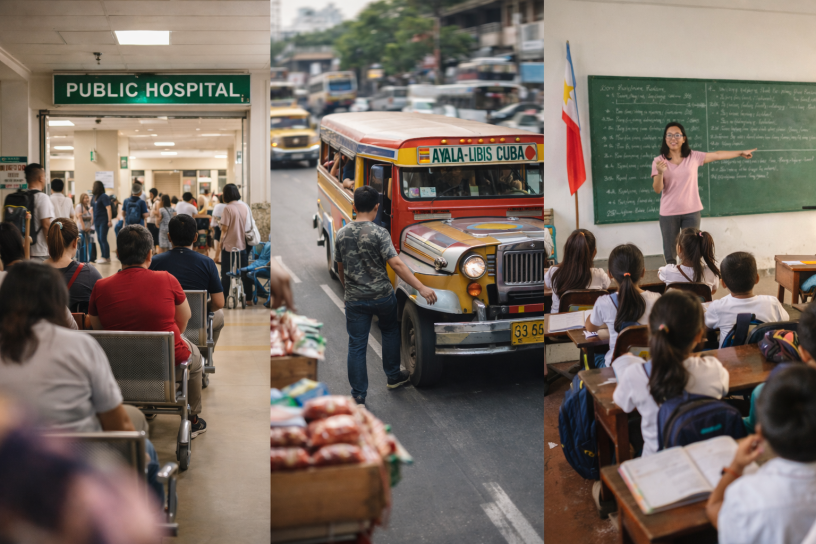
When Filipinos talk about government performance, public services are where opinion becomes most personal. Roads are driven daily, clinics are visited when someone is sick, and public transport is felt in hours lost or saved. Unlike macroeconomic indicators, service delivery is judged through lived experience.
Across surveys and interviews, Filipinos acknowledge modest improvements in public services—but those gains have only raised expectations, not reduced demands.
Where Filipinos See Progress
Many Filipinos credit the government for gradual improvements in service access, particularly in infrastructure-linked areas. Road repairs, bridge construction, and expanded transport routes are frequently cited as visible and tangible progress.
Digital services are another area where improvements are noticed. Online portals for government transactions, appointment systems, and digital payments have reduced paperwork and waiting time in some agencies. For younger and urban Filipinos, this shift signals modernization.
Health services also receive cautious praise. Expanded health insurance coverage and improved facilities in some public hospitals have eased access, especially for lower-income families. While not perfect, these changes are viewed as steps in the right direction.
The Gap Between Access and Quality
Despite these gains, quality remains the dominant concern. Filipinos consistently report that access alone is not enough if services remain slow, overcrowded, or inconsistent.
Common frustrations include:
- Long wait times in public hospitals
- Inconsistent availability of medicines
- Overcrowded classrooms and limited school resources
- Aging transport systems struggling to meet demand
For many citizens, the problem is not the absence of services, but their uneven reliability.
Regional Inequality Remains a Core Issue
One of the strongest themes in public feedback is disparity between regions. Filipinos outside major urban centers often feel improvements arrive late—or not at all.
Rural communities report:
- Fewer healthcare specialists
- Limited transport options
- Slower infrastructure rollout
- Reduced access to digital government services
This unevenness reinforces perceptions that progress is concentrated in metropolitan areas, even when national figures suggest improvement.
Expectations Are Rising, Not Falling
Importantly, Filipinos do not interpret modest improvements as a reason to lower expectations. Instead, progress has sharpened demands.
Many citizens now expect:
- Faster service delivery
- Better-trained frontline staff
- Transparent timelines for projects
- Clear accountability when services fail
The public mood is pragmatic. Filipinos recognize that transformation takes time, but they increasingly expect measurable improvement, not just announcements.
Services as a Measure of Trust
Public services function as a daily referendum on governance. When systems work smoothly, trust grows quietly. When they fail repeatedly, frustration accumulates.
Filipinos are not calling for dramatic overhauls. What they want is consistency: clinics that function reliably, transport that respects time, and schools that prepare students for real opportunities.
As one respondent noted, “May ginagawa, pero dapat mas maayos.”
(They’re doing something, but it should be better.)
Tomorrow’s installment will examine corruption and accountability—areas where patience is thinner and expectations sharper.
References
Department of Health. (2024). Public hospital performance and access report. Manila, Philippines.
Social Weather Stations. (2024). Citizen satisfaction with public services. Manila, Philippines.
World Bank. (2023). Philippines public service delivery and regional equity. Washington, DC.
Discover more from WPS News
Subscribe to get the latest posts sent to your email.
 WPS News